Research & Development World

  • R&D World Home
  • Topics
    • Aerospace
    • Automotive
    • Biotech
    • Careers
    • Chemistry
    • Environment
    • Energy
    • Life Science
    • Material Science
    • R&D Management
    • Physics
  • Technology
    • 3D Printing
    • A.I./Robotics
    • Software
    • Battery Technology
    • Controlled Environments
      • Cleanrooms
      • Graphene
      • Lasers
      • Regulations/Standards
      • Sensors
    • Imaging
    • Nanotechnology
    • Scientific Computing
      • Big Data
      • HPC/Supercomputing
      • Informatics
      • Security
    • Semiconductors
  • R&D Market Pulse
  • R&D 100
    • 2025 R&D 100 Award Winners
    • 2025 Professional Award Winners
    • 2025 Special Recognition Winners
    • R&D 100 Awards Event
    • R&D 100 Submissions
    • Winner Archive
  • Resources
    • Research Reports
    • Digital Issues
    • Educational Assets
    • R&D Index
    • Subscribe
    • Video
    • Webinars
    • Content submission guidelines for R&D World
  • Global Funding Forecast
  • Top Labs
  • Advertise
  • SUBSCRIBE

New Pacemaker Doesn’t Need Batteries

By Kenny Walter | June 6, 2017

A new wireless pacemaker can be implanted directly into a patient’s heart without needing batteries.

Researchers from Rice University and the Texas Heart Institute (THI) introduced the new product that harvests energy wirelessly from radio frequency radiation transmitted by an external battery pack.

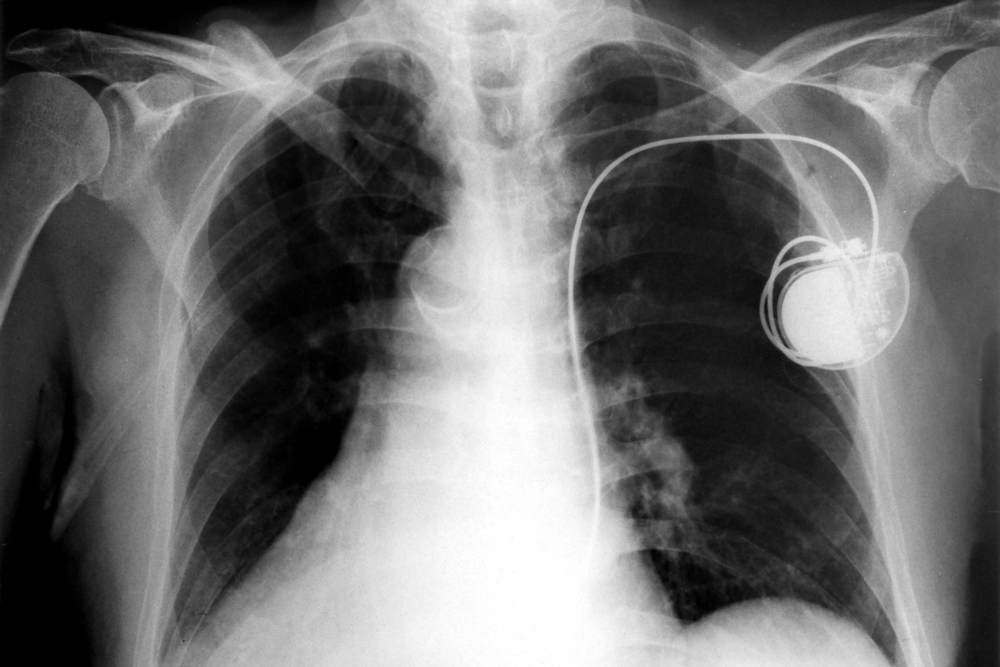
Current pacemakers use electrical signals to prompt the heart to keep a steady beat. However, they are generally implanted away from the heart where surgeons can periodically replace their onboard batteries with minor surgery.

This often can lead to complications related to the leads—wires that transmit electrical signals to the heart—including bleeding and infection.  

Some other pacemakers do not include leads and mitigate some of the complications. However, their form factors limit them to a single heart chamber and they are unable to provide dual chamber or biventricular pacing.

The Rice pacemaker does not require batteries or leads and wirelessly powered microchips can be implanted directly to pace multiple points inside or outside the heart.

“This technology brings into sharp focus the remarkable possibility of achieving the ‘Triple Crown’ of treatment of both the most common and most lethal cardiac arrhythmias: external powering, wireless pacing and—far and away most importantly—cardiac defibrillation that is not only painless but is actually imperceptible to the patient,” Dr. Mehdi Razavi, director of clinical arrhythmia research and innovation at THI and an assistant professor at Baylor College of Medicine, said in a statement.

The pacemaker includes a chip at the system’s heart that is less than 4 millimeters wide and incorporates the receiving antenna, an AC-to-DC rectifier, a power management unit and a pacing activation signal. The chip is joined on the circuit board by a capacitor and switch.

The frequency of the pacing signals produced by the pacemaker can be adjusted by increasing or decreasing power transmitted to the receiving antenna, which stores it until it reaches a predetermined threshold and is released as an electrical charge to the heart.

The pacemaker was tested in a pig and analysis showed that it could tune the animal’s heart rate from 100 to 172 beats per minute.

Related Articles Read More >

R&D 100 Winner Spotlight: A closer look at Thermo Fisher Scientific’s trio of R&D 100 wins in 2025
Life sciences M&A hit $240B in 2025 as Big Pharma preps for patent cliffs
Hansoh Bio signs 32,000-sq.-ft. lab lease at Research Square in Rockville, MD
Inhaled nitric oxide could help combat antibiotic resistance
rd newsletter
EXPAND YOUR KNOWLEDGE AND STAY CONNECTED
Get the latest info on technologies, trends, and strategies in Research & Development.
RD 25 Power Index

R&D World Digital Issues

Fall 2025 issue

Browse the most current issue of R&D World and back issues in an easy to use high quality format. Clip, share and download with the leading R&D magazine today.

R&D 100 Awards
Research & Development World
  • Subscribe to R&D World Magazine
  • Sign up for R&D World’s newsletter
  • Contact Us
  • About Us
  • Drug Discovery & Development
  • Pharmaceutical Processing
  • Global Funding Forecast

Copyright © 2026 WTWH Media LLC. All Rights Reserved. The material on this site may not be reproduced, distributed, transmitted, cached or otherwise used, except with the prior written permission of WTWH Media
Privacy Policy | Advertising | About Us

Search R&D World

  • R&D World Home
  • Topics
    • Aerospace
    • Automotive
    • Biotech
    • Careers
    • Chemistry
    • Environment
    • Energy
    • Life Science
    • Material Science
    • R&D Management
    • Physics
  • Technology
    • 3D Printing
    • A.I./Robotics
    • Software
    • Battery Technology
    • Controlled Environments
      • Cleanrooms
      • Graphene
      • Lasers
      • Regulations/Standards
      • Sensors
    • Imaging
    • Nanotechnology
    • Scientific Computing
      • Big Data
      • HPC/Supercomputing
      • Informatics
      • Security
    • Semiconductors
  • R&D Market Pulse
  • R&D 100
    • 2025 R&D 100 Award Winners
    • 2025 Professional Award Winners
    • 2025 Special Recognition Winners
    • R&D 100 Awards Event
    • R&D 100 Submissions
    • Winner Archive
  • Resources
    • Research Reports
    • Digital Issues
    • Educational Assets
    • R&D Index
    • Subscribe
    • Video
    • Webinars
    • Content submission guidelines for R&D World
  • Global Funding Forecast
  • Top Labs
  • Advertise
  • SUBSCRIBE