Research & Development World

  • R&D World Home
  • Topics
    • Aerospace
    • Automotive
    • Biotech
    • Careers
    • Chemistry
    • Environment
    • Energy
    • Life Science
    • Material Science
    • R&D Management
    • Physics
  • Technology
    • 3D Printing
    • A.I./Robotics
    • Software
    • Battery Technology
    • Controlled Environments
      • Cleanrooms
      • Graphene
      • Lasers
      • Regulations/Standards
      • Sensors
    • Imaging
    • Nanotechnology
    • Scientific Computing
      • Big Data
      • HPC/Supercomputing
      • Informatics
      • Security
    • Semiconductors
  • R&D Market Pulse
  • R&D 100
    • 2026 R&D 100 Award Winners
    • 2026 Professional Award Winners
    • 2026 Special Recognition Winners
    • R&D 100 Awards Event
    • R&D 100 Submissions
    • Winner Archive
  • Resources
    • Research Reports
    • Digital Issues
    • Educational Assets
    • Subscribe
    • Video
    • Webinars
    • PharmSci360
    • Content submission guidelines for R&D World
  • Global Funding Forecast
  • Top Labs
  • Advertisers
    • Advertise
    • PR Submissions
    • Eblast Submissions
  • SUBSCRIBE

Newly discovered mechanism propels micromotors

By R&D Editors | October 15, 2013

This image shows a possible application of chemical micromotors. Image: Daigo Yamamoto/DoshishaScientists studying the behavior of platinum particles immersed in hydrogen peroxide may have discovered a new way to propel microscopic machines. The new mechanism is described in The Journal of Chemical Physics, which is produced by AIP Publishing.

Micro-sized machines operate under very different conditions than their macro-sized counterparts. The high surface-area-to-mass ratio of tiny motors means they require a constant driving force to keep them going. In the past, researchers have relied on asymmetric chemical reactions on the surface of the motors to supply the force. For example, Janus motors, are spherical particles coated with a different material on each side. One of the sides is typically made of a catalyst like platinum, which speeds up the reaction that converts hydrogen peroxide into water and oxygen. When the Janus motor is immersed in hydrogen peroxide, oxygen bubbles form more quickly on the platinum side, pushing the sphere forward.

Researchers from Doshisha Univ. in Kyoto, Japan have now discovered, however, that two-sided materials aren’t necessary to make micromotors move. The researchers placed tiny spheres made only of platinum in hydrogen peroxide and observed the particles’ movement through a microscope. Although the individual spheres bounced about randomly, the researchers noticed that clumps of particles began to exhibit regular motions. The clumps shaped like teardrops moved forward, those that resembled windmills started to spin, and the boomerang shaped clumps traveled in a circle. After creating a theoretical model of the forces at work, the researchers realized they could explain the regular motions by the asymmetrical drag generated by the different shapes.

The researchers envision combining their new type of motors with existing motors to create easily controllable machines with a versatile range of motions.

Micro- and nano-sized machines may one day ferry drugs around the body or help control chemical reactions, but the Japanese team also sees a more fundamental reason to study such tiny systems.

“Micromotors may be used not only as a power source for micromachines and microfactories, but may also give us significant insight regarding mysterious living phenomenon,” said Daigo Yamamoto, a researcher in the Molecular Chemical Engineering Laboratory at Doshisha University and an author on the paper that describes the new motors.

Catalytic micromotor generating self-propelled regular motion through random fluctuation

Source: American Institute of Physics

Related Articles Read More >

Inside the Lab: Can AI Solve the Critical Materials Challenge?
Two Science papers catch altermagnets by handedness
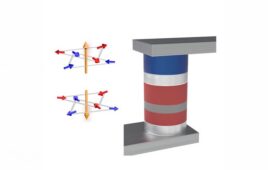
Illustration of an antiferromagnetic tunnel junction pillar beside the two spin configurations of platinum-manganese that store a bit.
Northwestern and Western Digital demonstrate a new way to write magnetic memory
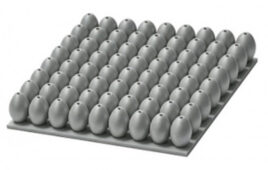
Eggshell-inspired shield cut projectile speed by 65% in simulation, but light-gas gun testing has not confirmed it 
rd newsletter
EXPAND YOUR KNOWLEDGE AND STAY CONNECTED
Get the latest info on technologies, trends, and strategies in Research & Development.

R&D World Digital Issues

Fall 2026 issue

Browse the most current issue of R&D World and back issues in an easy to use high quality format. Clip, share and download with the leading R&D magazine today.

R&D 100 Awards
Research & Development World
  • Subscribe to R&D World Magazine
  • Sign up for R&D World’s newsletter
  • Contact Us
  • About Us
  • Drug Discovery & Development
  • Pharmaceutical Processing
  • Global Funding Forecast

Copyright © 2026 Arrowfly LLC. All Rights Reserved. The material on this site may not be reproduced, distributed, transmitted, cached or otherwise used, except with the prior written permission of Arrowfly
Privacy Policy | Advertising | About Us

Search R&D World

  • R&D World Home
  • Topics
    • Aerospace
    • Automotive
    • Biotech
    • Careers
    • Chemistry
    • Environment
    • Energy
    • Life Science
    • Material Science
    • R&D Management
    • Physics
  • Technology
    • 3D Printing
    • A.I./Robotics
    • Software
    • Battery Technology
    • Controlled Environments
      • Cleanrooms
      • Graphene
      • Lasers
      • Regulations/Standards
      • Sensors
    • Imaging
    • Nanotechnology
    • Scientific Computing
      • Big Data
      • HPC/Supercomputing
      • Informatics
      • Security
    • Semiconductors
  • R&D Market Pulse
  • R&D 100
    • 2026 R&D 100 Award Winners
    • 2026 Professional Award Winners
    • 2026 Special Recognition Winners
    • R&D 100 Awards Event
    • R&D 100 Submissions
    • Winner Archive
  • Resources
    • Research Reports
    • Digital Issues
    • Educational Assets
    • Subscribe
    • Video
    • Webinars
    • PharmSci360
    • Content submission guidelines for R&D World
  • Global Funding Forecast
  • Top Labs
  • Advertisers
    • Advertise
    • PR Submissions
    • Eblast Submissions
  • SUBSCRIBE