Research & Development World

  • R&D World Home
  • Topics
    • Aerospace
    • Automotive
    • Biotech
    • Careers
    • Chemistry
    • Environment
    • Energy
    • Life Science
    • Material Science
    • R&D Management
    • Physics
  • Technology
    • 3D Printing
    • A.I./Robotics
    • Software
    • Battery Technology
    • Controlled Environments
      • Cleanrooms
      • Graphene
      • Lasers
      • Regulations/Standards
      • Sensors
    • Imaging
    • Nanotechnology
    • Scientific Computing
      • Big Data
      • HPC/Supercomputing
      • Informatics
      • Security
    • Semiconductors
  • R&D Market Pulse
  • R&D 100
    • 2026 R&D 100 Award Winners
    • 2026 Professional Award Winners
    • 2026 Special Recognition Winners
    • R&D 100 Awards Event
    • R&D 100 Submissions
    • Winner Archive
  • Resources
    • Research Reports
    • Digital Issues
    • Educational Assets
    • Subscribe
    • Video
    • Webinars
    • PharmSci360
    • Content submission guidelines for R&D World
  • Global Funding Forecast
  • Top Labs
  • Advertise
  • SUBSCRIBE

Energy-Recycling Stairs Might Make Climbing Easier

By PLOS | July 13, 2017

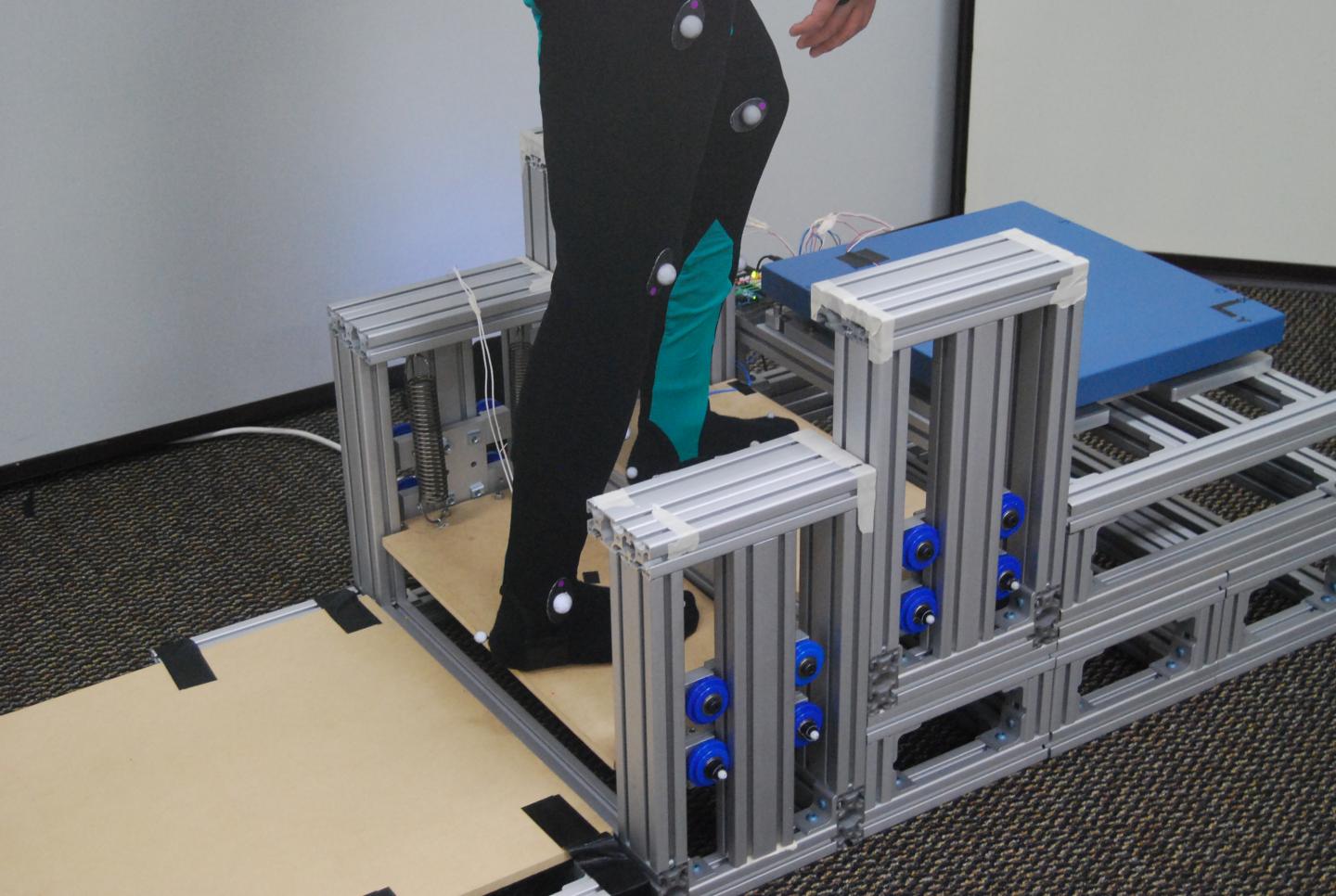
Energy-recycling stairs may assist people with stair negotiation by absorbing and returning their own energy, according to a study published July 12, 2017 in the open-access journal PLOS ONE by Yun Seoung Song from the Missouri University of Science and Technology, USA. The work was performed at Georgia Institute of Technology in collaboration with Karen Liu and Lena Ting.

Many elderly and disabled people have difficulty negotiating stairs, and existing alternatives such as elevators, stair lifts, and escalators are expensive and require a lot of energy. The authors of the present study investigated the use of energy-recycling assistive stair technology, which they hypothesized could offer a less expensive and more practical alternative for people with reduced motor function who can nonetheless negotiate stairs.

Song and colleagues built a prototype of these energy-recycling stairs which used latching springs to store energy during stair descent and return it to the user during ascent. They recorded nine participants ascending and descending the stairs and analyzed patterns of energy use.

Although further investigation is required, the authors suggest that the reduction in work while ascending and descending the stairs could reduce the expenditure of metabolic energy as well as muscle and joint forces that could cause pain. With the development of future low-cost, low-power prototypes, such energy-recycling stairs could be more practical and affordable than escalators or elevators.

“Current solutions for people who need help aren’t very affordable. Elevators and stair-lifts are often impractical to install at home,” Liu said. “Low-cost, easily-installed assistive stairs could be a way to allow people to retain their ability to use stairs and not move out of their homes.”


Related Articles Read More >

Smart contact lenses move from glucose to stress and mood
Speaker Giving a Talk at Business Meeting. Audience in the conference hall. Business and Entrepreneurship. Panoramic composition suitable for banners.
BioPharma Supply Chain & Logistics Nexus returns to San Diego in November
How Cypris evolved from selling patent reports to agentic R&D intelligence
New video series: Travel for engineers
rd newsletter
EXPAND YOUR KNOWLEDGE AND STAY CONNECTED
Get the latest info on technologies, trends, and strategies in Research & Development.

R&D World Digital Issues

Fall 2026 issue

Browse the most current issue of R&D World and back issues in an easy to use high quality format. Clip, share and download with the leading R&D magazine today.

R&D 100 Awards
Research & Development World
  • Subscribe to R&D World Magazine
  • Sign up for R&D World’s newsletter
  • Contact Us
  • About Us
  • Drug Discovery & Development
  • Pharmaceutical Processing
  • Global Funding Forecast

Copyright © 2026 Arrowfly LLC. All Rights Reserved. The material on this site may not be reproduced, distributed, transmitted, cached or otherwise used, except with the prior written permission of Arrowfly
Privacy Policy | Advertising | About Us

Search R&D World

  • R&D World Home
  • Topics
    • Aerospace
    • Automotive
    • Biotech
    • Careers
    • Chemistry
    • Environment
    • Energy
    • Life Science
    • Material Science
    • R&D Management
    • Physics
  • Technology
    • 3D Printing
    • A.I./Robotics
    • Software
    • Battery Technology
    • Controlled Environments
      • Cleanrooms
      • Graphene
      • Lasers
      • Regulations/Standards
      • Sensors
    • Imaging
    • Nanotechnology
    • Scientific Computing
      • Big Data
      • HPC/Supercomputing
      • Informatics
      • Security
    • Semiconductors
  • R&D Market Pulse
  • R&D 100
    • 2026 R&D 100 Award Winners
    • 2026 Professional Award Winners
    • 2026 Special Recognition Winners
    • R&D 100 Awards Event
    • R&D 100 Submissions
    • Winner Archive
  • Resources
    • Research Reports
    • Digital Issues
    • Educational Assets
    • Subscribe
    • Video
    • Webinars
    • PharmSci360
    • Content submission guidelines for R&D World
  • Global Funding Forecast
  • Top Labs
  • Advertise
  • SUBSCRIBE