The National Institutes of Health (NIH) Clinical Center has suspended operations of its Pharmaceutical Development Section (PDS) due to the discovery of serious manufacturing problems and lack of compliance with standard operating procedures. Upon receipt of a complaint, Food and Drug Administration representatives inspected the PDS between May 19 and May 29, and found a series of deficiencies that will require the NIH Clinical Center to take a number of corrective actions.
The facility makes products for certain clinical research studies conducted in the hospital and collaborating facilities. In April, two vials of albumin, used for the administration of the drug interleukin in experimental studies, were found to have fungal contamination. Vials made from the same batch were administered to six patients, although it is unknown whether those or other vials were contaminated. The six patients have been notified and are being followed closely for any signs of infection. At this time, none has developed signs of infection or illness.
 “This is a distressing and unacceptable situation,” says NIH Director Francis S. Collins, M.D., Ph.D. “The fact that patients may have been put in harm’s way because of a failure to follow standard operating procedures in the NIH Clinical Center’s Pharmaceutical Development Section is deeply troubling. I will personally oversee the steps to protect the safety of patients and remedy the situation as swiftly as possible.”
Among the problems the FDA identified in their inspection were deficiencies in the physical facility, including flaws in the air handling system, and operational failures including inadequate quality control, insufficient employee training, and lack of compliance with standard operating procedures. Deficiencies of lesser significance were identified in the Clinical Center Pharmacy. The FDA inspection reports are available here: http://www.cc.nih.gov/phar/pdfs/483.pdf.
Observations include:
- Protective apparel is not worn as necessary to drug products from contamination. Specifically, an operator was observed processing sterile drug products with an exposed wrist from a gap between their gloves and their gown. The same operator had exposed facial hair.
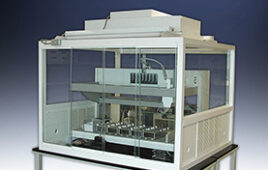
- Systems for maintaining equipment used to control aseptic conditions in the aseptic processing areas are deficient. Specifically, there are no air flow pattern studies performed in the ISO 5 horizontal airflow hood used to prepare total parenteral nutritional drug products and no dynamic airflow pattern studies were performed to determine whether products are protected from non-sterility risks in any of the five ISO 5 hoods used to make other drug products intended to be sterile.
- The system for cleaning and disinfecting the room and equipment in the aseptic processing areas to produce aseptic conditions are deficient. Specifically, the cleaning and disinfection program for the ISO 7 and ISO 5 areas does not include a sporicidal disinfection agent.
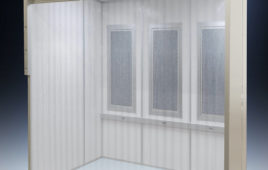
- An exhaust vent, approximately one foot in diameter, is located in the ceiling above the autoclave exit door in the ISO 7 cleanroom where the ISO 5 horizontal air flow hood is located.
Read More: NIH Lab Closed After FDA Finds Fungi in Drugs
The following steps are being taken immediately to protect patients:
- Operations of The Pharmaceutical Development Section have been suspended and no products will be made or distributed until all problems are fully understood and corrected. Materials produced by the Section are being systematically tested for contamination.
- Of the participants in the 46 studies that are potentially affected, approximately 250 are currently scheduled to receive products manufactured by the PDS. NIH has notified the individual principal scientists responsible for each of those protocols, and is in the process of notifying the participants in these protocols. The vast majority of these patients are not immediately due for treatment and NIH is working to secure alternative sources for the products.
- An external group of experts in microbiology and sterile manufacturing practices will be appointed to conduct a thorough review, including an assessment of all standard operating procedures, policies, staffing, and training, and make recommendations to the NIH director on the corrective actions required.
- In addition to the immediate steps NIH is taking, it will provide an interim corrective action plan to the FDA by Friday, June 19, 2015.
“Our first responsibility is the safety and care of our patients,” says Dr. Collins. “NIH leadership is determined to identify and correct all of the deficiencies that have led to this situation.”
Release Date: June 4, 2015
Source: National Institutes of Health