 When researchers tuned in to the National Science Foundation’s (NSF’s) public webinars on its new $1.5 billion X-Labs initiative, including one held on June 30, they got a consistent answer to nearly every question about eligibility, IP ownership, milestone design and selection criteria: it depends, and we’ll work it out with you. The NSF X-Labs initiative is designed around flexibility, with terms negotiated between the agency and each team rather than prescribed in advance.
But with proposals for the quantum systems topic due July 24 and the Phase 1 selection criteria not yet written, the line between a program built to be flexible and one still being built is not always easy to find.
One theme that is clear is that senior key personnel who receive NSF X-Labs can’t hold citizenship in China, Russia, Iran or North Korea (dual citizenship included), though citizens of those countries can serve in non-senior roles.
A new model for federal research funding
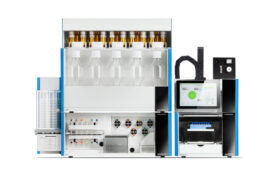
In May, the NSF announced the $1.5 billion X-Labs initiative. The initiative aims to “tackle pressing scientific challenges through novel and innovative research partnerships,” according to the press release. The first round of X-Labs funding opportunities invites proposals on two topics: scientific instrumentation for sensing and imaging and quantum systems.
The initiative is “guided by the ambition of President Donald Trump’s mandate to revitalize and strengthen America’s science and technology ecosystem,” the press release states.
The initiative is split into three phases. Phase 0 is set to start in December and last nine months, during which selected teams will receive funding of up to $1.5 million for the formation and planning of the project. At the end of this phase, the NSF will select the teams to move on to Phase 1. The organization has not specified how many teams will be awarded Phase 0 funding or how many will move forward to Phase 1.
Selected teams will receive additional funding of $10 million to $50 million per year to execute their projects over 24 to 36 months. During this phase, senior personnel will work full-time on their projects. Teams will go through a second go/no-go selection after Phase 1 before moving to Phase 2, which will follow the same structure, funding and timeline as Phase 1.
Any domestic responsible entity may submit a Phase 0 proposal. One lead organization per team will sign the contract with the NSF. That organization can then subcontract with partners.
Details on the program from IP to selection criteria remain pending. Some details seem to have been intentionally left out to allow for flexibility. For example, the NSF does not specify how affiliations or employee arrangements should be structured because it sees “a wide range of possibilities for this,” said Rebecca Chmiel, associate program director at the NSF Directorate for Technology, Innovation and Partnerships (TIP).
Specifics around on IP were also not provided in the most recent webinar. “The tough and hopefully reassuring component of this is that there’s not a prescribed one-size-fits-all answer,” Joda Thongnopnua, special advisor at TIP, said on the topic.
Questions remain
Other missing details tell a story of a hastily thrown-together program that no one has really figured out. Most notably, when asked how much of the budget could go toward building out lab infrastructure, Patrick Breen, senior procurement executive and deputy office head in the Office of the Chief Financial Officer, answered, “That’s the hard question to answer,” and “I’m not sure I can answer that question specifically.”
Chmiel said the budget “is not really high enough to support building a new fab, but it is high enough to support some realistic options in that kind of area.”
The master solicitation was also amended shortly before the webinar, reframing what NSF had called an “autonomy factor test” into what Joda Thongnopnua, special advisor at TIP, called the “autonomy factor assessment,” clarifying it is “not a set of bright-line rules,” in an earlier webinar. With the amendment, the NSF clarifies that the list isn’t exhaustive. As Thongnopnua put it, a team could satisfy every listed factor and still hit a snag: “there may be a factor that wasn’t listed there, but does create a real autonomy or independence problem
Phase 0 teams will produce a set of paid milestones, including a Phase 1 milestone plan, budget, IP management plan and governance structure plan, which the NSF will evaluate against predetermined selection criteria.
The selection criteria for this, however, are noticeably absent. Chmiel stated the NSF will give these to Phase 0 teams at an unspecified time.
When webinar attendees asked about IP specifics, Thongnopnua said, “We can’t provide a ton of specifics, because I think that’s what they were hoping that you will provide in your proposals themselves.”
Teams are not required to have a finalized IP management plan at the Phase 0 proposal stage, but it is a milestone before Phase 1.