Research & Development World

  • R&D World Home
  • Topics
    • Aerospace
    • Automotive
    • Biotech
    • Careers
    • Chemistry
    • Environment
    • Energy
    • Life Science
    • Material Science
    • R&D Management
    • Physics
  • Technology
    • 3D Printing
    • A.I./Robotics
    • Software
    • Battery Technology
    • Controlled Environments
      • Cleanrooms
      • Graphene
      • Lasers
      • Regulations/Standards
      • Sensors
    • Imaging
    • Nanotechnology
    • Scientific Computing
      • Big Data
      • HPC/Supercomputing
      • Informatics
      • Security
    • Semiconductors
  • R&D Market Pulse
  • R&D 100
    • 2025 R&D 100 Award Winners
    • 2025 Professional Award Winners
    • 2025 Special Recognition Winners
    • R&D 100 Awards Event
    • R&D 100 Submissions
    • Winner Archive
  • Resources
    • Research Reports
    • Digital Issues
    • Educational Assets
    • R&D Index
    • Subscribe
    • Video
    • Webinars
    • Content submission guidelines for R&D World
  • Global Funding Forecast
  • Top Labs
  • Advertise
  • SUBSCRIBE

RED-CRISPR doubles knock-in efficiency

By Julia Rock-Torcivia | December 15, 2025

Traditional CRISPR-Cas9 methods have revolutionized genetics, but large functional sections of DNA, called payloads, still cannot be inserted into the genome without compromising cell viability or creating unwanted effects. Standard Homology-Directed Repair (HDR) dramatically loses efficacy for payloads exceeding 1 kilobase, compromising cell viability and increasing off-target edits.
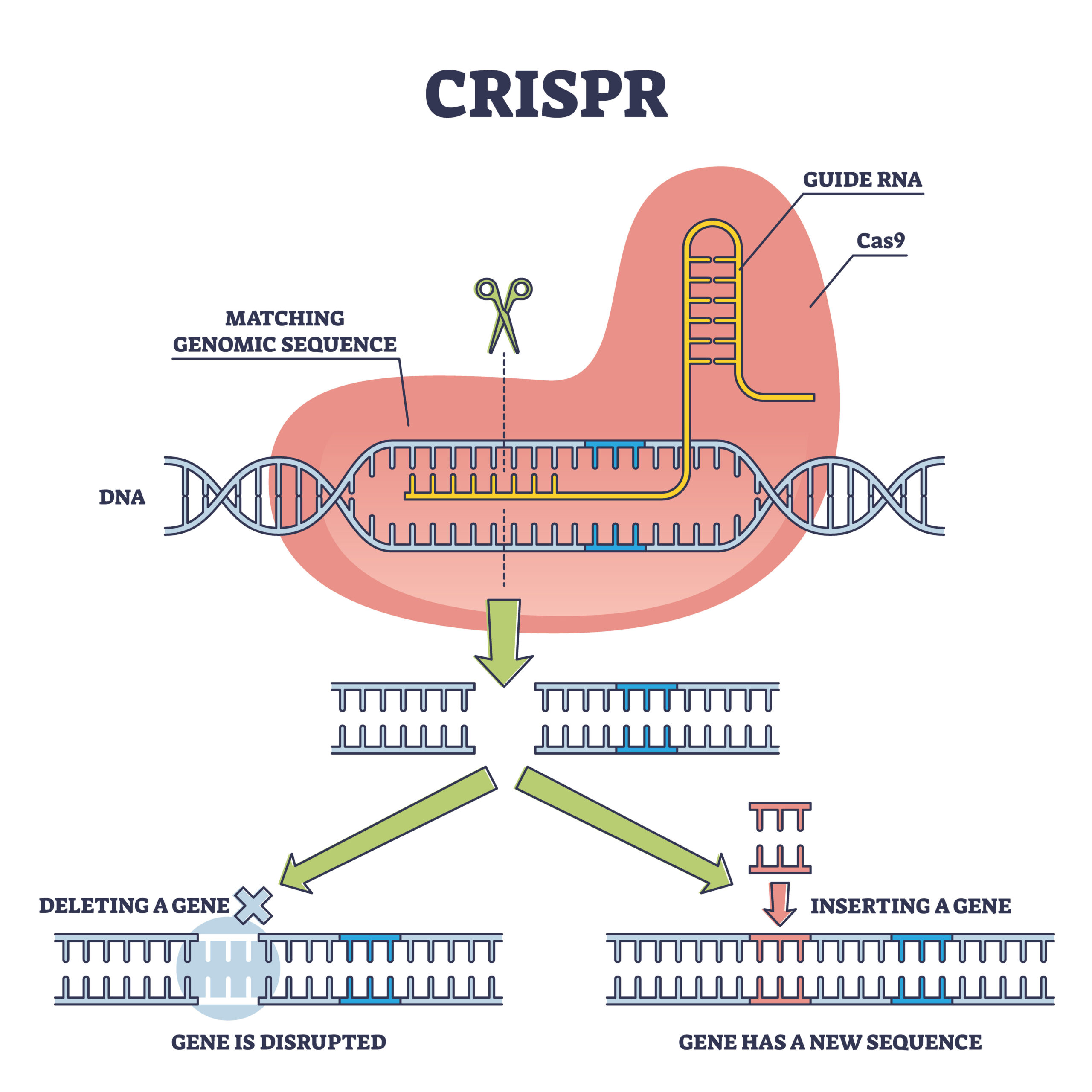
CRISPR-Cas9 methods use Cas9 to cut the DNA. Adobe

The 1 kb problem

CRISPR, which stands for “clustered regularly interspaced short palindromic repeats,” allows scientists to modify DNA. It is a natural defense mechanism found in bacteria and consists of DNA sequences derived from DNA fragments from a bacteriophage that infected the host, allowing the bacteria to “remember” past viruses and respond more effectively. 

CRISPR-Cas9 is a common method for gene editing that uses the Cas9 enzyme to cut DNA. This method can edit multiple genes at once, making it efficient and cost-effective. However, it cannot efficiently integrate DNA payloads larger than 1 kb. 

A full human gene is, on average, 62 kb including introns, meaning that Cas9 methods struggle to replace a full gene in order to correct a disease such as cystic fibrosis that is caused by mutations in a single gene. 

Now, researchers have developed a Recombinases (Redα/β)-enhanced DNA integration technology called RED-CRISPR that delivers a two- to fivefold increase in “knock-in” efficiency for large DNA cargos compared to Cas9-HDR methods. 

How recombinases achieve 5x higher efficiency

Recombinases (Redα/β) are recombination enzymes that enable functions such as excision and insertion, inversion, translocation and expression of genes. In RED-CRISPR, the Cas9 creates the precise DSB, the landing site, and the recombinases thread the donor DNA into the break site. 

When engineering CAR-T cells, a cell therapy for cancer, RED-CRISPR demonstrated an insertion efficiency of up to 45%. Current commercial CAR-T relies on viral vectors which insert the gene randomly, creating a major safety risk. RED-CRISPR allows for site-specific integration, making the CAR-T cell treatment much safer. 

When inserting a complex 8 kb payload into mouse embryonic stem cells, RED-CRISPR achieved a 43% knock-in rate for generation of genetically modified mice. Comparatively, Cas9 methods have a knock-in rate of approximately 15% for payloads larger than 1 kb. 

The method also showed a reduction in chromosomal translocation — which can lead to cancer — and off-target editing, making the edits cleaner and more stable. 

Tell Us What You Think! Cancel reply

You must be logged in to post a comment.

Related Articles Read More >

Thermo Fisher adds chemically defined E. coli fermentation medium and feed to Gibco Bacto line
JLL: 2026 could be a realignment year for life science labs
How Prelude and QDX are using quantum chemistry to discover cancer treatments
US political drama is pushing life sciences talent toward Switzerland, Basel leader says
rd newsletter
EXPAND YOUR KNOWLEDGE AND STAY CONNECTED
Get the latest info on technologies, trends, and strategies in Research & Development.
RD 25 Power Index

R&D World Digital Issues

Fall 2025 issue

Browse the most current issue of R&D World and back issues in an easy to use high quality format. Clip, share and download with the leading R&D magazine today.

R&D 100 Awards
Research & Development World
  • Subscribe to R&D World Magazine
  • Sign up for R&D World’s newsletter
  • Contact Us
  • About Us
  • Drug Discovery & Development
  • Pharmaceutical Processing
  • Global Funding Forecast

Copyright © 2025 WTWH Media LLC. All Rights Reserved. The material on this site may not be reproduced, distributed, transmitted, cached or otherwise used, except with the prior written permission of WTWH Media
Privacy Policy | Advertising | About Us

Search R&D World

  • R&D World Home
  • Topics
    • Aerospace
    • Automotive
    • Biotech
    • Careers
    • Chemistry
    • Environment
    • Energy
    • Life Science
    • Material Science
    • R&D Management
    • Physics
  • Technology
    • 3D Printing
    • A.I./Robotics
    • Software
    • Battery Technology
    • Controlled Environments
      • Cleanrooms
      • Graphene
      • Lasers
      • Regulations/Standards
      • Sensors
    • Imaging
    • Nanotechnology
    • Scientific Computing
      • Big Data
      • HPC/Supercomputing
      • Informatics
      • Security
    • Semiconductors
  • R&D Market Pulse
  • R&D 100
    • 2025 R&D 100 Award Winners
    • 2025 Professional Award Winners
    • 2025 Special Recognition Winners
    • R&D 100 Awards Event
    • R&D 100 Submissions
    • Winner Archive
  • Resources
    • Research Reports
    • Digital Issues
    • Educational Assets
    • R&D Index
    • Subscribe
    • Video
    • Webinars
    • Content submission guidelines for R&D World
  • Global Funding Forecast
  • Top Labs
  • Advertise
  • SUBSCRIBE