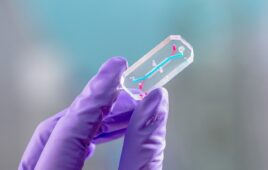
Researchers have created an immune-capable “cervix-on-a-chip” that replicates the human cervical environment. The research, published in Science Advances, aims to model how infections develop and spread.

Adobe
Sexually transmitted infections (STIs) of the cervicovaginal mucosa are among the most common global infections. Current monolayer cell culture and animal models fail to reproduce the multilevel complexity required to investigate host-microbiota-pathogen relationships simultaneously and with sufficient physiological relevance.
“A key goal was to develop a complex model system that is both practical and accessible, enabling researchers outside of bioengineering labs to adopt it and apply it to answer important biological questions,” said Jason Gleghorn, associate professor of biomedical engineering, who led the model’s development.
Replicating infection dynamics in vitro
Unlike traditional lab methods that rely on simplified cell cultures or animal models, the cervix-on-a-chip integrates human cervical cells, immune cells and microbiomes commonly found in the vagina within a dynamic, fluid-flow environment. This allows researchers to simulate real biological conditions and observe how infections behave inside the human body.
The organ-on-a-chip is a microphysiological system (MPS) that models human cervical tissue and its microbiota and is susceptible to infection by two prominent genital pathogens, Chlamydia trachomatis and Neisseria gonorrhoeae. The platform recapitulates essential dynamic, polymicrobial, immune, and pathogenic features of chlamydial and gonococcal infections as they occur in humans.
This is the first immune-capable cervix-on-a-chip. An earlier device, made by a team at Harvard’s Wyss Institute in 2024, modeled mucus production, hormone responses and microbiome interactions. That chip modeled innate immune responses, but did not incorporate active immune cells in the same way as the new chip.
The device works by culturing cervical epithelial cells and fibroblasts on a membrane inside a small cassette, with fluid flowing through channels on either side to mimic physiological conditions. Chlamydia trachomatis was shown to complete its full developmental cycle within the device’s cervical cells. Neisseria gonorrhoeae infected the epithelial cells and triggered immune responses, including neutrophil migration through the tissue membrane.
Microbiome composition shapes infection outcomes
The researchers also modeled how the vaginal microbiome influences infection. An optimal microbiota consortium provided measurable protection against chlamydial infection compared to a nonoptimal one. They also found that different microbiota compositions produced distinct immune cytokine profiles.
The device does not require specialized equipment or specific expertise and was experimentally validated across multiple nonengineering, remotely located laboratories, demonstrating its transferability and reproducibility. The platform provides a tool for research into genital infections in a system that closely mimics the cervical epithelium, an important advance over existing models.
This advancement could accelerate research into STI vaccines, treatments and the role of the microbiome in sexual health without relying on animal models that don’t accurately reflect human cervical biology.