 Solid-state cells, wide-bandgap chips and cheaper chemistries are converging to sink EV costs, faster than most forecasts predicted.
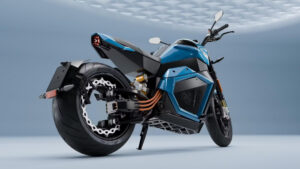
The first production vehicle with an all-solid-state battery is shipping this quarter. It is not a Toyota or a BYD. It is not a car at all. It is the Verge TS Pro, a Finnish-designed electric motorcycle built in Estonia with cells from Donut Lab, a sister company. The cycle can go about 370 miles on a charge on a larger park, according to Verge. Roughly 350 units ship in Q1 2026, half to Europe, half to California.
Verge also claims sub-10-minute charging and cell-level energy density near 400 Wh/kg. Those numbers, if they hold, would represent a meaningful jump over today’s best lithium-ion. IEEE Spectrum, Electrek and Battery Technology flag that real-world charging logs, thermal telemetry and manufacturing yield data over the coming months will determine whether the claims survive contact with production.
That makes the Verge TS Pro more of a potential harbinger of what may come rather than a market inflection just yet. Battery economics do not yet favor solid-state over conventional lithium-ion at scale. The real inflection for solid-state depends on three converging technology tracks: solid-state batteries approaching passenger-car scale, wide-bandgap semiconductors already delivering measurable efficiency gains in production EVs and battery chemistry economics that continue to favor cheaper, safer cells.
Solid-state batteries go from pilots to production timelines

[Courtesy of Adobe Stock]
Limited or semi-solid deployments in premium and niche vehicles from 2026 through 2028; true mass-market all-solid-state passenger cars around 2030. China’s national solid-state standard takes effect in July 2026. Analysts such as TrendForce project solid-state battery demand will surpass 206 GWh by 2030 and 740 GWh by 2035.
The engineering case for solid state is clear. Energy density jumps from today’s 250–300 Wh/kg to 400-plus, enabling 600- to 1,000-km ranges, 5- to 10-minute fast charging, and inherently safer cells with no flammable liquid electrolyte. The barrier is no longer materials science. It is manufacturing yields and interface stability at volume. Costs will start above current lithium-ion but are projected to fall toward $75/kWh at pack level as production scales.
Table 1. Solid-state battery commercialization timeline
| Company | Target | Claimed Performance | Status / Notes |
| Verge / Donut Lab | Q1 2026 | 400 Wh/kg; <10 min charge | First deliveries late Q1 2026; new U.S. orders to Q4; claims unverified by independent lab |
| Dongfeng | 2026 | 350 Wh/kg; 620+ mi range | Semi-solid packs in passenger EVs |
| Toyota | 2027–2028 | 450–500 Wh/kg; sulfide | Small-scale production; revised from earlier 2025 target |
| BYD | 2027 demo | 400 Wh/kg; 5C charging | Mass production after 2030 |
| Samsung SDI | 2027 | 900 Wh/L; sulfide | S-Line pilot; sample deliveries to OEMs |
| Factorial / Karma | 2027 | Solid-state for supercar | Kaveya vehicle platform |
| QuantumScape | Late decade | Ceramic; >95% @ 1,000 cycles (PowerCo-validated); >844 Wh/L | Eagle Line inaugurated Feb. 2026; B-samples to auto OEMs |
Sources: Manufacturer announcements cross-checked with IEEE Spectrum, Battery Technology, Electrek, InsideEVs, electrive.com, QuantumScape/PowerCo validation data, Samsung SDI InterBattery 2024, and company filings.
Wide-bandgap semiconductors combine efficiency with concentrated supply
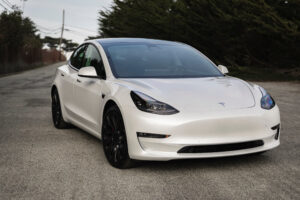
Tesla put silicon carbide MOSFETs in the Model 3 inverter in 2018. By Q3 2025, global SiC inverter installations hit a record 1.5 million units, according to TrendForce’s January 2026 report. Adoption reached 18 percent of all EVs and 22 percent among new-energy vehicles in China.
[Adobe Stock]
The geopolitical dimension deserves attention. China now accounts for roughly 75 percent of all SiC inverter installations, while demand in Europe and the U.S. is declining, per TrendForce. That structural concentration, compounded by tariffs and export controls on both sides, creates supply-chain risk that Western automakers and their Tier 1 suppliers will struggle to diversify quickly. CHIPS Act and EU Chips Act funding is flowing to domestic SiC fabrication, but new capacity takes years to qualify for automotive applications.
Battery chemistry economics: LFP dominates, sodium-ion enters
BloombergNEF’s December 2025 battery price survey, the industry’s benchmark, reports that global lithium-ion pack prices averaged $108/kWh in 2025, down 8 percent year-over-year despite rising metal costs. In China, packs averaged $84/kWh. LFP packs came in at $81/kWh across all segments. NMC packs: $128/kWh. BEV-specific packs averaged $99/kWh, below the $100 threshold for the second consecutive year.
LFP now commands nearly half the global EV battery market, per the IEA, and roughly 80 percent of new stationary storage deployments. The chemistry is cheaper, thermally more stable, longer-lasting and free of nickel and cobalt supply volatility. Energy density is lower, roughly 180 Wh/kg versus 240 Wh/kg for NMC, but sufficient for mass-market vehicles and fleet applications. Ford’s $3 billion BlueOval Battery Park in Michigan is dedicated to LFP production.
Sodium-ion is the next entrant. CATL and Changan launch a mass-production sodium-ion passenger vehicle mid-2026, offering 10–30 percent lower costs at scale with abundant, geopolitically safe materials. Energy density sits between 100–175 Wh/kg, targeting entry-level EVs and grid storage, not premium vehicles. The practical impact: sodium-ion competes with LFP at the bottom of the market, pushing the price floor lower and further insulating the industry from lithium supply shocks. Argonne National Laboratory’s 2025 modeling shows average U.S. pack costs near $103/kWh at 100,000-unit scale, with its cost curve modeling a trajectory from $140/kWh in 2023 toward $86/kWh by 2035.
Table 2. Lithium-Ion Battery Pack Prices, 2025 (BloombergNEF)
| Metric | $/kWh | Change YoY |
| Global average (all segments) | $108 | −8% |
| China average | $84 | −13% |
| LFP packs (all segments) | $81 | — |
| NMC packs (all segments) | $128 | — |
| BEV packs (transport) | $99 | −1% |
| Stationary storage | $70 | −45% |
| Lowest observed LFP cell | $36 | — |
| Lowest observed LFP pack | $50 | — |
Source: BloombergNEF 2025 Lithium-Ion Battery Price Survey, Dec. 9, 2025. Volume-weighted averages.
Where the cost curves converge
The three technology tracks are self-reinforcing. A standard 75-kWh LFP pack at $81/kWh costs $6,075. In architectures that trade SiC efficiency gains for pack downsizing rather than extra range, the required pack shrinks by roughly 5–7 percent, saving $300–425 in cell costs alone. Solid-state cells, once they reach volume, promise up to 50 percent more energy per kilogram at the cell level, cutting pack weight and enabling either smaller packs at the same range or significantly longer range at the same weight. Sodium-ion pushes the floor lower still for entry-level vehicles and storage.
Automakers are already pricing some LFP-based models in the low $30,000s in China and near $40,000 in the U.S. after incentives. BNEF projects pack prices will decline another 3 percent in 2026 to roughly $105/kWh globally. Over the medium term, LFP and sodium-ion overcapacity, continued wafer scaling for SiC, and incremental solid-state deployment all push in the same direction: cost-competitive EVs without subsidy dependence.
The risks are concrete. Solid-state manufacturing yields remain unproven at automotive volumes. Silicon carbide substrate supply is geopolitically concentrated. Sodium-ion scale-up is early-stage. And the tariff environment adds cost friction that offsets some of the technology-driven gains in Western markets.


Tell Us What You Think!
You must be logged in to post a comment.