Research & Development World

  • R&D World Home
  • Topics
    • Aerospace
    • Automotive
    • Biotech
    • Careers
    • Chemistry
    • Environment
    • Energy
    • Life Science
    • Material Science
    • R&D Management
    • Physics
  • Technology
    • 3D Printing
    • A.I./Robotics
    • Software
    • Battery Technology
    • Controlled Environments
      • Cleanrooms
      • Graphene
      • Lasers
      • Regulations/Standards
      • Sensors
    • Imaging
    • Nanotechnology
    • Scientific Computing
      • Big Data
      • HPC/Supercomputing
      • Informatics
      • Security
    • Semiconductors
  • R&D Market Pulse
  • R&D 100
    • 2025 R&D 100 Award Winners
    • 2025 Professional Award Winners
    • 2025 Special Recognition Winners
    • R&D 100 Awards Event
    • R&D 100 Submissions
    • Winner Archive
  • Resources
    • Research Reports
    • Digital Issues
    • Educational Assets
    • Subscribe
    • Video
    • Webinars
    • Content submission guidelines for R&D World
  • Global Funding Forecast
  • Top Labs
  • Advertise
  • SUBSCRIBE

Scientists Find Way to Make More Realistic Computer Graphics

By UC San Diego | July 25, 2016

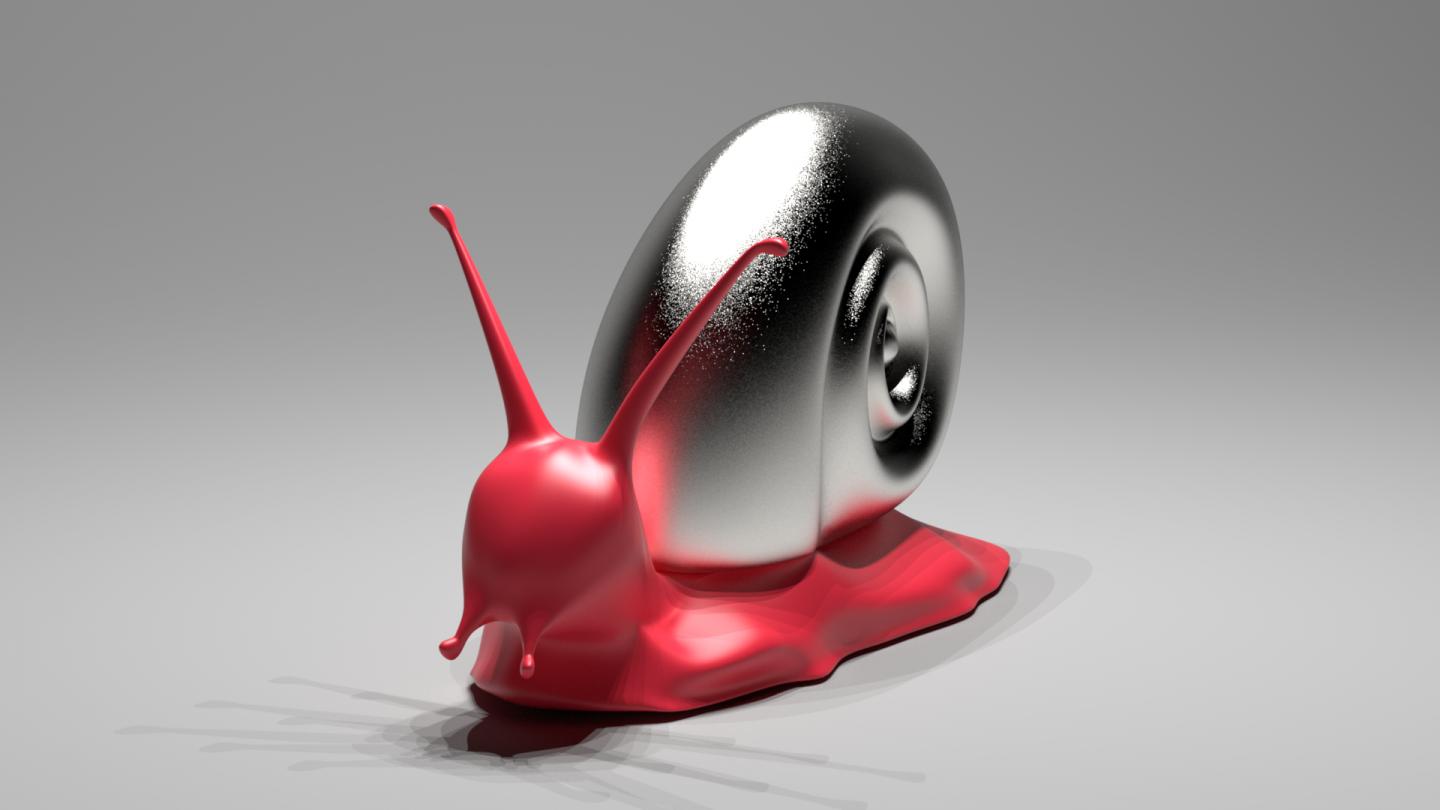
Researchers used their method to model the glittery shell of this snail. Source: Jacobs School of Engineering/UC San Diego

Iron Man’s suit. Captain America’s shield. The Batmobile. These all could look a lot more realistic thanks to a new algorithm developed by a team of U.S. computer graphics experts.

The researchers, led by Professor Ravi Ramamoorthi at the University of California San Diego, have created a method to improve how computer graphics software reproduces the way light interacts with extremely small details, called glints, on the surface of a wide range of materials, including metallic car paints, metal finishes for electronics and injection-molded plastic finishes.

The method developed by Ramamoorthi and colleagues is 100 times faster than the current state of the art. They are presenting their work this month at SIGGRAPH 2016 in Anaheim, California. The method requires minimal computational resources and can be used in animations. Current methods can only reproduce these so-called glints in stills.

Accurate rendering of a material’s appearance has always been a critical feature of computer graphics, Ramamoorthi said. It has become even more important with the advent of today’s ever-higher display resolutions.

The standard approach to modeling the way surfaces reflect light assumes that the surfaces are smooth at the pixel level. But that’s not the case in the real world for metallic materials as well as fabrics, wood finishes and wood grain, among others. As a result, with current methods, these surfaces will appear noisy, grainy or glittery.

“There is currently no algorithm that can efficiently render the rough appearance of real specular surfaces,” Ramamoorthi said. “This is highly unusual in modern computer graphics, where almost any other scene can be rendered given enough computing power.”

The researchers’ solution was to break down each pixel of an uneven, intricate surface into pieces covered by thousands of light-reflecting points smaller than a pixel, called microfacets. The team then computed the vector that is perpendicular to the surface of the materials for each microfacet, called the point’s normal. The normal is key to figuring out how light reflects off a surface.

For any specific computer-generated scene, the microfacets on a surface reflect light back to the computer’s virtual camera only if its normal is located exactly halfway between the ray from the light source and the light ray that bounces back from the surface. Computer scientists calculated the normals’ distribution within each patch of microfacets. Then they used the distribution to determine which normals where in that halfway position.

The key to the algorithm’s speed is its ability to approximate this normal distribution at each surface location, called a “position-normal distribution.” This enables the algorithm to easily computer the amount of net reflected light with a speed that is orders of magnitude faster than previous methods. Using a distribution rather than trying to calculate how light interacts with every single microfacet resulted in considerable time and computer power savings.


Related Articles Read More >

Who has access to Claude Mythos-tier models (and beyond) will redefine cybersecurity, including in R&D
Abstract of modern high tech internet data center room with rows of racks with network and server hardware. 3d rendering
A startup says it found hidden memory behavior in NVIDIA GPUs and is building a security layer around it
NTT Research launches Scale Academy with SaltGrain, a zero-trust data security suite
LabWare advances SaaS LIMS strategy at Pittcon 2026, one year after ASSURE launch
rd newsletter
EXPAND YOUR KNOWLEDGE AND STAY CONNECTED
Get the latest info on technologies, trends, and strategies in Research & Development.

R&D World Digital Issues

Fall 2025 issue

Browse the most current issue of R&D World and back issues in an easy to use high quality format. Clip, share and download with the leading R&D magazine today.

R&D 100 Awards
Research & Development World
  • Subscribe to R&D World Magazine
  • Sign up for R&D World’s newsletter
  • Contact Us
  • About Us
  • Drug Discovery & Development
  • Pharmaceutical Processing
  • Global Funding Forecast

Copyright © 2026 WTWH Media LLC. All Rights Reserved. The material on this site may not be reproduced, distributed, transmitted, cached or otherwise used, except with the prior written permission of WTWH Media
Privacy Policy | Advertising | About Us

Search R&D World

  • R&D World Home
  • Topics
    • Aerospace
    • Automotive
    • Biotech
    • Careers
    • Chemistry
    • Environment
    • Energy
    • Life Science
    • Material Science
    • R&D Management
    • Physics
  • Technology
    • 3D Printing
    • A.I./Robotics
    • Software
    • Battery Technology
    • Controlled Environments
      • Cleanrooms
      • Graphene
      • Lasers
      • Regulations/Standards
      • Sensors
    • Imaging
    • Nanotechnology
    • Scientific Computing
      • Big Data
      • HPC/Supercomputing
      • Informatics
      • Security
    • Semiconductors
  • R&D Market Pulse
  • R&D 100
    • 2025 R&D 100 Award Winners
    • 2025 Professional Award Winners
    • 2025 Special Recognition Winners
    • R&D 100 Awards Event
    • R&D 100 Submissions
    • Winner Archive
  • Resources
    • Research Reports
    • Digital Issues
    • Educational Assets
    • Subscribe
    • Video
    • Webinars
    • Content submission guidelines for R&D World
  • Global Funding Forecast
  • Top Labs
  • Advertise
  • SUBSCRIBE