Research & Development World

  • R&D World Home
  • Topics
    • Aerospace
    • Automotive
    • Biotech
    • Careers
    • Chemistry
    • Environment
    • Energy
    • Life Science
    • Material Science
    • R&D Management
    • Physics
  • Technology
    • 3D Printing
    • A.I./Robotics
    • Software
    • Battery Technology
    • Controlled Environments
      • Cleanrooms
      • Graphene
      • Lasers
      • Regulations/Standards
      • Sensors
    • Imaging
    • Nanotechnology
    • Scientific Computing
      • Big Data
      • HPC/Supercomputing
      • Informatics
      • Security
    • Semiconductors
  • R&D Market Pulse
  • R&D 100
    • 2025 R&D 100 Award Winners
    • 2025 Professional Award Winners
    • 2025 Special Recognition Winners
    • R&D 100 Awards Event
    • R&D 100 Submissions
    • Winner Archive
  • Resources
    • Research Reports
    • Digital Issues
    • Educational Assets
    • R&D Index
    • Subscribe
    • Video
    • Webinars
    • Content submission guidelines for R&D World
  • Global Funding Forecast
  • Top Labs
  • Advertise
  • SUBSCRIBE

Spider Silk: The Biology Behind the Incredible Material

By Kenny Walter | April 9, 2019

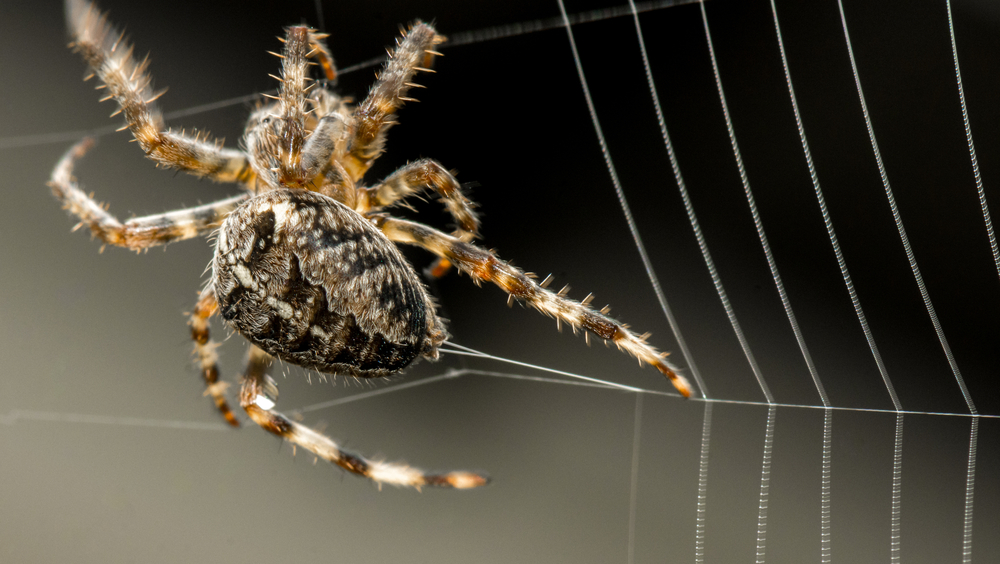
Spider silk has long been touted as a valuable material, due to its lightweight and superior strength and numerous applications in areas such as drug delivery, smart textiles and artificial muscles.

While many scientists are focused on finding novel ways  to use this super strong silk, one researcher has focused her career on getting a better molecular understanding of exactly how and why these insects create their impressive silk.

Cheryl Hayashi, PhD, the curator in Invertebrate Zoology, professor in the Richard Gilder Graduate School, Leon Hess Director of Comparative Biology Research, and the director of the Sackler Institute for Comparative Genomics at the American Museum of Natural History, explained at the American Association for the Advancement of Science (AAAS) Annual meeting how important spider silk actually is for spiders.

“It is really absolutely essential for understanding almost all aspects of a spider’s life,” Hayashi said. “Spiders and their silks are ancient and incredibly diverse. If you look at the fossil record, spiders go back to well over 350 million years and a defining trait of spiders is the presence of spinnerets. That means every spider that has ever existed has been able to spin silk.”

Spiders are among the oldest and most diverse group of animals on the planet, with three different suborders—meosthelae, mygalomorphae and araneomorphae spiders.

Spiders use their silk in a number of ways, including for reproduction, protection, dispersal, making their homes and slowing down potential prey. In fact, some spiders no longer even use venom to hunt and kill prey, opting to suffocating their next meal with their silk.

Hayashi explained that each spider can produce several different types of silk and each spider web is made from multiple silk types.

“When you are looking at something like a spider web, what you’re looking at is the product of many kinds of silk,” she said. “To make the spider web we are talking about five different kinds of silk coming out of one animal.” 

The key to spiders producing silk rests in the spinnerets, which contain glands of different sizes and shapes.

Hayashi explained how she studies the silk glands for many of the 35,000-plus different species of spiders known worldwide.

“Spinnerets are this pair of spinning organs,” Hayashi said. “If you look at each spinneret, there’s spigots on there and the spigot is where the silk actually comes out of. I would take a particular silk gland that I’m interested in and I would collect just those silk glands. I would use really fine forceps and I would collect those silk glands and make an expression library.”

Hayashi said the different glands of different spider species gives researchers a better molecular understanding of this silk producing process. Through genome sequencing, researchers have found unique protein clusters that are extremely large and repetitive to enable silk production.

“It is very clear that there is a very unique family of proteins called spidroins, these very large structural proteins that are found only in spiders and that’s the dominant protein in the silk glands,” she said.

Spider silk has a number of properties that make it popular for new technology in athletic gear, protective clothing and wearable technology. Scientists have long known that spider silk is incredibly strong, stretchy, immune-compatible and lightweight.

Related Articles Read More >

Parallel Bio’s embraces in-house drug development as FDA backs animal testing alternatives
R&D 100 Winner Spotlight: A closer look at Thermo Fisher Scientific’s trio of R&D 100 wins in 2025
Life sciences M&A hit $240B in 2025 as Big Pharma preps for patent cliffs
Hansoh Bio signs 32,000-sq.-ft. lab lease at Research Square in Rockville, MD
rd newsletter
EXPAND YOUR KNOWLEDGE AND STAY CONNECTED
Get the latest info on technologies, trends, and strategies in Research & Development.
RD 25 Power Index

R&D World Digital Issues

Fall 2025 issue

Browse the most current issue of R&D World and back issues in an easy to use high quality format. Clip, share and download with the leading R&D magazine today.

R&D 100 Awards
Research & Development World
  • Subscribe to R&D World Magazine
  • Sign up for R&D World’s newsletter
  • Contact Us
  • About Us
  • Drug Discovery & Development
  • Pharmaceutical Processing
  • Global Funding Forecast

Copyright © 2026 WTWH Media LLC. All Rights Reserved. The material on this site may not be reproduced, distributed, transmitted, cached or otherwise used, except with the prior written permission of WTWH Media
Privacy Policy | Advertising | About Us

Search R&D World

  • R&D World Home
  • Topics
    • Aerospace
    • Automotive
    • Biotech
    • Careers
    • Chemistry
    • Environment
    • Energy
    • Life Science
    • Material Science
    • R&D Management
    • Physics
  • Technology
    • 3D Printing
    • A.I./Robotics
    • Software
    • Battery Technology
    • Controlled Environments
      • Cleanrooms
      • Graphene
      • Lasers
      • Regulations/Standards
      • Sensors
    • Imaging
    • Nanotechnology
    • Scientific Computing
      • Big Data
      • HPC/Supercomputing
      • Informatics
      • Security
    • Semiconductors
  • R&D Market Pulse
  • R&D 100
    • 2025 R&D 100 Award Winners
    • 2025 Professional Award Winners
    • 2025 Special Recognition Winners
    • R&D 100 Awards Event
    • R&D 100 Submissions
    • Winner Archive
  • Resources
    • Research Reports
    • Digital Issues
    • Educational Assets
    • R&D Index
    • Subscribe
    • Video
    • Webinars
    • Content submission guidelines for R&D World
  • Global Funding Forecast
  • Top Labs
  • Advertise
  • SUBSCRIBE