Research & Development World

  • R&D World Home
  • Topics
    • Aerospace
    • Automotive
    • Biotech
    • Careers
    • Chemistry
    • Environment
    • Energy
    • Life Science
    • Material Science
    • R&D Management
    • Physics
  • Technology
    • 3D Printing
    • A.I./Robotics
    • Software
    • Battery Technology
    • Controlled Environments
      • Cleanrooms
      • Graphene
      • Lasers
      • Regulations/Standards
      • Sensors
    • Imaging
    • Nanotechnology
    • Scientific Computing
      • Big Data
      • HPC/Supercomputing
      • Informatics
      • Security
    • Semiconductors
  • R&D Market Pulse
  • R&D 100
    • 2025 R&D 100 Award Winners
    • 2025 Professional Award Winners
    • 2025 Special Recognition Winners
    • R&D 100 Awards Event
    • R&D 100 Submissions
    • Winner Archive
  • Resources
    • Research Reports
    • Digital Issues
    • Educational Assets
    • R&D Index
    • Subscribe
    • Video
    • Webinars
    • Content submission guidelines for R&D World
  • Global Funding Forecast
  • Top Labs
  • Advertise
  • SUBSCRIBE

The Fight Against Tooth Decay Gets Help With a New Smart Material

By University of Toronto Faculty of Applied Science & Engineering | January 30, 2018

When patients go to the dentist to fill a cavity, they’re trying to solve a problem—not create a new one. But many dental patients get some bad news: bacteria can dig under their tooth-coloured fillings and cause new cavities, called recurrent caries. These recurrent caries affect 100 million patients every year and cost an additional US$34 billion to treat.

Now, a research collaboration between the Department of Materials Science & Engineering, Faculty of Dentistry, and the Institute of Biomaterials and Biomedical Engineering at the University of Toronto has resulted in a novel way to minimize recurrent caries.

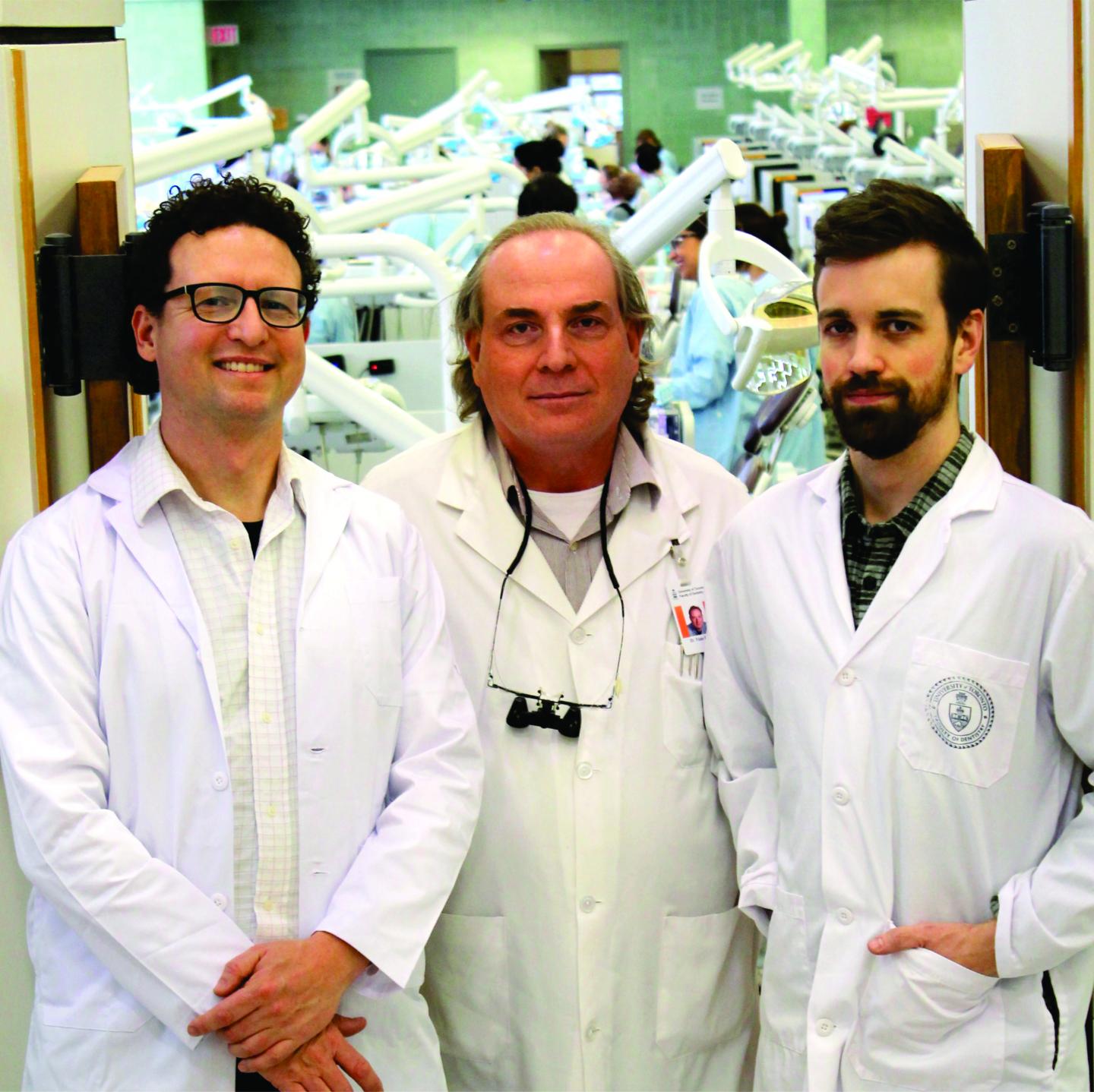
In a recent paper published in the journal Scientific Reports, professors Ben Hatton, Yoav Finer and PhD student Cameron Stewart tackled the issue and proposed a novel solution: a filling material with tiny particles made by self-assembly of antimicrobial drugs, designed to stop bacteria in its tracks. These particles may solve one of the biggest problems with antibacterial filling materials: how do you store enough drug within the material to be effective for someone’s entire life?

“Adding particles packed with antimicrobial drugs to a filling creates a line of defense against cavity-causing bacteria,” says Hatton. “But traditionally there’s only been enough drug to last a few weeks. Through this research we discovered a combination of drugs and silica glass that organize themselves on a molecule-by-molecule basis to maximize drug density, with enough supply to last years.” This discovery of using antimicrobials which self-assemble means the team can pack 50 times as much of the bacteria-fighting drugs into the particles.

“We know very well that bacteria specifically attack the margins between fillings and the remaining tooth to create cavities,” says Finer. “Giving these materials an antimicrobial supply that will last for years could greatly reduce this problem.”

Looking ahead, the research team plans on testing these new drug-storing particles in dental fillings, monitoring their performance when attacked by bacteria and saliva in the complex environment in the mouth. With some fine-tuning, this new ‘smart’ material could create a stronger filling and fewer trips to the dentist.
Related Articles Read More >

Lead-free piezoelectric material converts motion to power without lead
R&D 100 Winners protecting nuclear materials
R&D Winners turn fruit waste into ‘leather’
R&D 100 winner: How one startup is eliminating the century-old ‘dirty step’ in rare earth alloy manufacturing
rd newsletter
EXPAND YOUR KNOWLEDGE AND STAY CONNECTED
Get the latest info on technologies, trends, and strategies in Research & Development.
RD 25 Power Index

R&D World Digital Issues

Fall 2025 issue

Browse the most current issue of R&D World and back issues in an easy to use high quality format. Clip, share and download with the leading R&D magazine today.

Research & Development World
  • Subscribe to R&D World Magazine
  • Sign up for R&D World’s newsletter
  • Contact Us
  • About Us
  • Drug Discovery & Development
  • Pharmaceutical Processing
  • Global Funding Forecast

Copyright © 2025 WTWH Media LLC. All Rights Reserved. The material on this site may not be reproduced, distributed, transmitted, cached or otherwise used, except with the prior written permission of WTWH Media
Privacy Policy | Advertising | About Us

Search R&D World

  • R&D World Home
  • Topics
    • Aerospace
    • Automotive
    • Biotech
    • Careers
    • Chemistry
    • Environment
    • Energy
    • Life Science
    • Material Science
    • R&D Management
    • Physics
  • Technology
    • 3D Printing
    • A.I./Robotics
    • Software
    • Battery Technology
    • Controlled Environments
      • Cleanrooms
      • Graphene
      • Lasers
      • Regulations/Standards
      • Sensors
    • Imaging
    • Nanotechnology
    • Scientific Computing
      • Big Data
      • HPC/Supercomputing
      • Informatics
      • Security
    • Semiconductors
  • R&D Market Pulse
  • R&D 100
    • 2025 R&D 100 Award Winners
    • 2025 Professional Award Winners
    • 2025 Special Recognition Winners
    • R&D 100 Awards Event
    • R&D 100 Submissions
    • Winner Archive
  • Resources
    • Research Reports
    • Digital Issues
    • Educational Assets
    • R&D Index
    • Subscribe
    • Video
    • Webinars
    • Content submission guidelines for R&D World
  • Global Funding Forecast
  • Top Labs
  • Advertise
  • SUBSCRIBE