Research & Development World

  • R&D World Home
  • Topics
    • Aerospace
    • Automotive
    • Biotech
    • Careers
    • Chemistry
    • Environment
    • Energy
    • Life Science
    • Material Science
    • R&D Management
    • Physics
  • Technology
    • 3D Printing
    • A.I./Robotics
    • Software
    • Battery Technology
    • Controlled Environments
      • Cleanrooms
      • Graphene
      • Lasers
      • Regulations/Standards
      • Sensors
    • Imaging
    • Nanotechnology
    • Scientific Computing
      • Big Data
      • HPC/Supercomputing
      • Informatics
      • Security
    • Semiconductors
  • R&D Market Pulse
  • R&D 100
    • 2025 R&D 100 Award Winners
    • 2025 Professional Award Winners
    • 2025 Special Recognition Winners
    • R&D 100 Awards Event
    • R&D 100 Submissions
    • Winner Archive
  • Resources
    • Research Reports
    • Digital Issues
    • Educational Assets
    • R&D Index
    • Subscribe
    • Video
    • Webinars
    • Content submission guidelines for R&D World
  • Global Funding Forecast
  • Top Labs
  • Advertise
  • SUBSCRIBE

Tiny Crystals Could Aid in Volcanic Eruption Predictions

By Kenny Walter | January 23, 2018

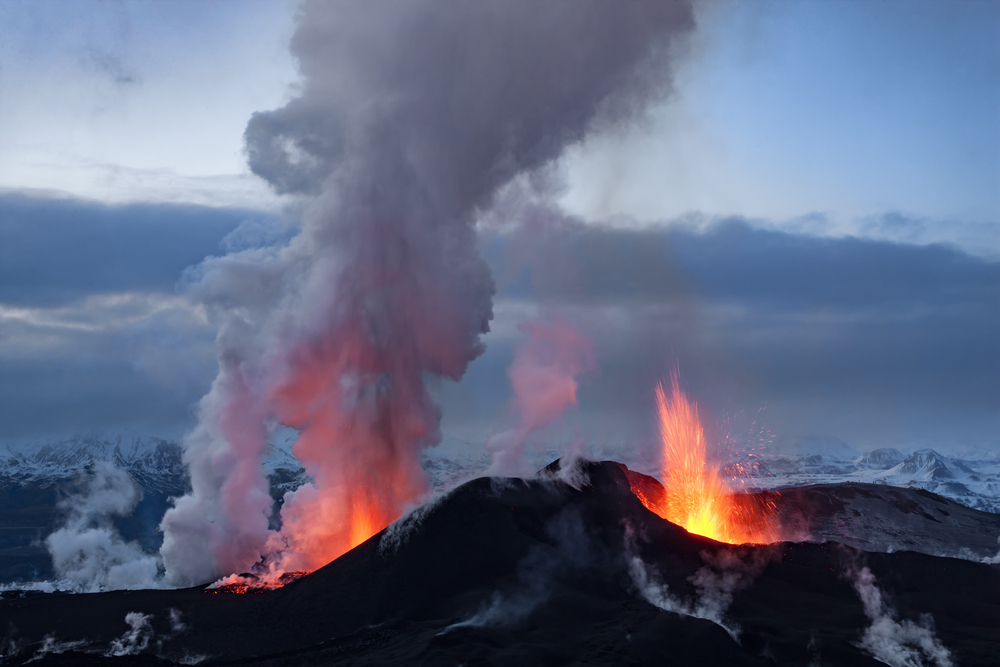
Small crystals in volcanic rocks could be the best predictor of when volcanic eruptions may occur.

Researchers from Trinity College Dublin and the University of Queensland have found that the crystals that form inside a volcano when molten rock start moving upwards from depths of up to 30 km towards the Earth’s surface. The erupting magma carries the crystals, which continue to grow in change in composition as they are transported to the surface.

“The new approach may also prove useful for studying volcanoes that have remained dormant, such as the currently erupting volcano on Kadovar Island, Papua New Guinea,” Balz Kamber, a professor of Geology and Mineralogy at Trinity, said in a statement. “For many volcanoes there is no eruption history, but geologists can collect lavas from past eruptions and study their crystals.”

The researchers used a laser technique to examine the inside of the crystals and discovered that they contain a memory in the form of growth layers that look similar to tree rings. The research was conducted on Mount Etna in Sicily, the most active volcano in Europe.

“They essentially ‘record’ the processes right before the eruption starts,” Teresa Ubide, Ph.D., from the University of Queensland, said in a statement. “At Mount Etna, we found that the arrival of new magma at 10 km depth is a very efficient trigger of eruptions—and within only two weeks.

“In this case, therefore, earth tremors at the depth of magma recharge must be taken as serious signs of potential imminent eruptions,” she added. “At other volcanoes, the method will allow to establish the relationship between recharge depth, recharge frequency and eruption efficiency. This can then help scientists to better relate physical signs of recharge to eruption potential.”

According to the study, magma mixing efficiently triggered volcanism with a success rate up to 90 percent, within only two weeks of arrival mafic intrusions.

The team will now expand the approach to other volcanoes around the world and then combine the information with geophysical signs of magma movement.

Predicting volcanic eruptions remains extremely difficult. Mount Agung in Bali erupted in November after two months of precursory earthquakes, leading to the evacuation of over 70,000 people and causing massive disruptions in air traffic and tourism, impacting over 100,000 travelers.

The study was published in Nature Communications.
Related Articles Read More >

R&D 100 winner: How one startup is eliminating the century-old ‘dirty step’ in rare earth alloy manufacturing
AmazonFACE: Simulating the carbon future of the Amazon
R&D 100 winners predict disease risk on a continental scale
6 R&D advances this week: a quantum computer in space and a record-breaking lightning bolt
rd newsletter
EXPAND YOUR KNOWLEDGE AND STAY CONNECTED
Get the latest info on technologies, trends, and strategies in Research & Development.
RD 25 Power Index

R&D World Digital Issues

Fall 2025 issue

Browse the most current issue of R&D World and back issues in an easy to use high quality format. Clip, share and download with the leading R&D magazine today.

R&D 100 Awards
Research & Development World
  • Subscribe to R&D World Magazine
  • Sign up for R&D World’s newsletter
  • Contact Us
  • About Us
  • Drug Discovery & Development
  • Pharmaceutical Processing
  • Global Funding Forecast

Copyright © 2025 WTWH Media LLC. All Rights Reserved. The material on this site may not be reproduced, distributed, transmitted, cached or otherwise used, except with the prior written permission of WTWH Media
Privacy Policy | Advertising | About Us

Search R&D World

  • R&D World Home
  • Topics
    • Aerospace
    • Automotive
    • Biotech
    • Careers
    • Chemistry
    • Environment
    • Energy
    • Life Science
    • Material Science
    • R&D Management
    • Physics
  • Technology
    • 3D Printing
    • A.I./Robotics
    • Software
    • Battery Technology
    • Controlled Environments
      • Cleanrooms
      • Graphene
      • Lasers
      • Regulations/Standards
      • Sensors
    • Imaging
    • Nanotechnology
    • Scientific Computing
      • Big Data
      • HPC/Supercomputing
      • Informatics
      • Security
    • Semiconductors
  • R&D Market Pulse
  • R&D 100
    • 2025 R&D 100 Award Winners
    • 2025 Professional Award Winners
    • 2025 Special Recognition Winners
    • R&D 100 Awards Event
    • R&D 100 Submissions
    • Winner Archive
  • Resources
    • Research Reports
    • Digital Issues
    • Educational Assets
    • R&D Index
    • Subscribe
    • Video
    • Webinars
    • Content submission guidelines for R&D World
  • Global Funding Forecast
  • Top Labs
  • Advertise
  • SUBSCRIBE