Research & Development World

  • R&D World Home
  • Topics
    • Aerospace
    • Automotive
    • Biotech
    • Careers
    • Chemistry
    • Environment
    • Energy
    • Life Science
    • Material Science
    • R&D Management
    • Physics
  • Technology
    • 3D Printing
    • A.I./Robotics
    • Software
    • Battery Technology
    • Controlled Environments
      • Cleanrooms
      • Graphene
      • Lasers
      • Regulations/Standards
      • Sensors
    • Imaging
    • Nanotechnology
    • Scientific Computing
      • Big Data
      • HPC/Supercomputing
      • Informatics
      • Security
    • Semiconductors
  • R&D Market Pulse
  • R&D 100
    • 2025 R&D 100 Award Winners
    • 2025 Professional Award Winners
    • 2025 Special Recognition Winners
    • R&D 100 Awards Event
    • R&D 100 Submissions
    • Winner Archive
  • Resources
    • Research Reports
    • Digital Issues
    • Educational Assets
    • R&D Index
    • Subscribe
    • Video
    • Webinars
    • Content submission guidelines for R&D World
  • Global Funding Forecast
  • Top Labs
  • Advertise
  • SUBSCRIBE

Tiny Microbe Turns Tropical Butterfly into Male Killer

By University of Exeter | July 20, 2016

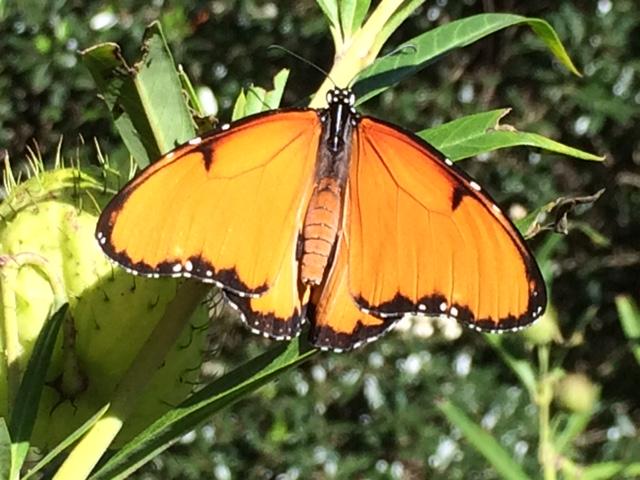
Tiny microbe turns tropical butterfly into male killer. Source: University of Exeter

A scientist from the University of Exeter has helped to identify a male-killing microbe in a tropical butterfly called the African Queen, which leads to the death of all sons when a mother is infected.

In most of Africa this microbe, called Spiroplasma, infects African Queen butterflies but has no effect on their offspring. However, in a narrow zone around Nairobi in Kenya, where two sub species of butterfly live and breed, the scientists noted that the microbe infection caused all their sons to die. In fact the male eggs never hatch and are often consumed by their hungry sisters.

Please follow R&D Magazine on LinkedIn

The authors of the paper, published in the Royal Society journal Proceedings of the Royal Society B, believe that the phenomenon, which takes place where two sub species meet, is the first step in the transition of the two sub-species into two true, non-interbreeding, species.

Professor Richard ffrench-Constant, from the Centre for Ecology and Conservation at the University of Exeter’s Cornwall campus, and a team of British, Kenyan and German scientists, have found that the chromosomes of the females in which male-killing occurs have changed dramatically with a non sex chromosome fusing with a sex chromosome to form a new chromosome called ‘neo W’.

Professor ffrench-Constant, Professor of Molecular Natural History, said: “We tend to think of new species coming about due to environmental changes but here its clearly the microbe that is driving these two sub species apart.

“Whilst we don’t understand the precise molecular mechanisms behind this chromosomal merger, this means that no males are made in the hybrid zone, and that mating success in the zone is effectively zero, thereby creating a barrier with a new species on either side.”

This paper represents the culmination of 13 years of field work in which the sex and colour pattern of butterflies around Nairobi was painstakingly recorded by a team led by Dr Ian Gordon based in Nairobi. The breakthrough came when female butterflies from the all- female zone were sent to Germany to have their chromosomes examined and where Professor Walther Traut from the University of Lübbek discovered that two of the chromosomes had fused.

Dr David Smith, formerly from the Natural History Museum at Eton College, first author on the paper, said: “The neo-W effectively acts as a genetic sink for all males, and butterfly populations around Nairobi are nearly all female. Our results demonstrate how a complex interplay between sex, colour pattern, male-killing and chromosomes has set up a genetic ‘sink’ that keeps two subspecies apart.”

Professor Walther Traut, from the University of Lübbek, said: “This is like a smoking gun for the way in which species become distinct. It is rare that we can find the molecular basis for how species develop.”

Professor ffrench-Constant added: “It appears that the butterfly’s susceptibility to the male-killing microbe is driving the separation of the two butterflies into two true species. These tiny microbes are therefore having a major effect on sex and death in this fascinating butterfly.”

Related Articles Read More >

RED-CRISPR doubles knock-in efficiency
Thermo Fisher adds chemically defined E. coli fermentation medium and feed to Gibco Bacto line
JLL: 2026 could be a realignment year for life science labs
How Prelude and QDX are using quantum chemistry to discover cancer treatments
rd newsletter
EXPAND YOUR KNOWLEDGE AND STAY CONNECTED
Get the latest info on technologies, trends, and strategies in Research & Development.
RD 25 Power Index

R&D World Digital Issues

Fall 2025 issue

Browse the most current issue of R&D World and back issues in an easy to use high quality format. Clip, share and download with the leading R&D magazine today.

R&D 100 Awards
Research & Development World
  • Subscribe to R&D World Magazine
  • Sign up for R&D World’s newsletter
  • Contact Us
  • About Us
  • Drug Discovery & Development
  • Pharmaceutical Processing
  • Global Funding Forecast

Copyright © 2025 WTWH Media LLC. All Rights Reserved. The material on this site may not be reproduced, distributed, transmitted, cached or otherwise used, except with the prior written permission of WTWH Media
Privacy Policy | Advertising | About Us

Search R&D World

  • R&D World Home
  • Topics
    • Aerospace
    • Automotive
    • Biotech
    • Careers
    • Chemistry
    • Environment
    • Energy
    • Life Science
    • Material Science
    • R&D Management
    • Physics
  • Technology
    • 3D Printing
    • A.I./Robotics
    • Software
    • Battery Technology
    • Controlled Environments
      • Cleanrooms
      • Graphene
      • Lasers
      • Regulations/Standards
      • Sensors
    • Imaging
    • Nanotechnology
    • Scientific Computing
      • Big Data
      • HPC/Supercomputing
      • Informatics
      • Security
    • Semiconductors
  • R&D Market Pulse
  • R&D 100
    • 2025 R&D 100 Award Winners
    • 2025 Professional Award Winners
    • 2025 Special Recognition Winners
    • R&D 100 Awards Event
    • R&D 100 Submissions
    • Winner Archive
  • Resources
    • Research Reports
    • Digital Issues
    • Educational Assets
    • R&D Index
    • Subscribe
    • Video
    • Webinars
    • Content submission guidelines for R&D World
  • Global Funding Forecast
  • Top Labs
  • Advertise
  • SUBSCRIBE