[Adobe Stock]
The President signed two artificial intelligence directives this week. The first, on June 2, an executive order titled “Promoting Advanced Artificial Intelligence Innovation and Security,” asks developers to submit their most powerful models for government review up to 30 days before release, and makes that submission voluntary. That order arrived only after a false start. Trump had been set to sign a near-identical version on May 21, then scrapped the ceremony hours beforehand after Elon Musk, Mark Zuckerberg and venture capitalist David Sacks called him to argue that its 90-day review window would slow American labs against China.
The second directive, signed Friday, points the technology at the battlefield while establishing a framework to put “the most advanced, secure, and reliable AI systems into the hands of America’s warfighters and intelligence professionals while ensuring their responsible use.”
The same day, Trump signaled the government’s reach could extend further. He told reporters aboard Air Force One that his team would “look into” having AI companies give the American public an ownership stake. He called the arrangement “a partnership with the American public,” and said he would meet AI executives as soon as this week. Reuters, citing a NOTUS report, said senior officials had already held preliminary talks with AI companies about the government buying shares.
Days earlier, Sen. Bernie Sanders unveiled plans for the American A.I. Sovereign Wealth Fund Act, which would impose a one-time 50% tax, paid in stock rather than cash, on the largest AI firms (OpenAI, Anthropic and xAI). “Since A.I. is built on the collective knowledge of humanity,” Sanders wrote, “the wealth it generates must benefit humanity.” Asked about the overlap, Trump said the economic views of his voters and Sanders’ “aren’t that far apart.”
The prospect of government ownership of AI would be a “seismic shift,” according to Gary Marcus, a cognitive scientist, AI entrepreneur and longtime AI critic. He said that the government ownership would poison trust in American AI abroad. “Nobody is going to trust an American AI company that is partly owned by the US Government,” he wrote on LinkedIn, comparing it to the way the United States distrusts Huawei. “After this meeting, everything is going to change. I don’t think either Washington or Silicon Valley has really thought this through.”
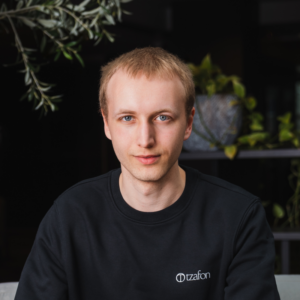
Simon Mattias Koser
Simon Mattias Koser, co-founder and chief product officer of the AI startup Tzafon, made a similar point in an interview the same day, before Trump’s remarks and framed around the national-security turn rather than the ownership idea. Marcus had quipped that the moment favored Mistral, the French lab. Koser, unprompted, named it too.
“There is one European champion, which is Mistral,” Koser said, “and maybe that’s indicative of something, that, as this becomes a matter of national security, a lot of European companies, and even governments, might feel more comfortable using something domestically European rather than something American.”
The American labs have spent the past two years positioning themselves as the opposite kind of supplier: explicitly U.S.-first, and explicit that the rival to beat is China. In a July 2024 Washington Post op-ed, OpenAI’s Sam Altman argued that “a democratic vision for artificial intelligence must prevail over an authoritarian one.” Anthropic’s Dario Amodei has pressed the competitive version of the same case, writing in early 2025 that American and allied democracies “must have better models than those in China” if they want to prevail. Amodei also pushed export controls to keep Beijing behind. That is the backdrop against which Trump signed the week’s directives, and the posture Koser was describing. “The ideal place to be is where you have really strong partnerships and everyone is aligned,” he said, and in his view the major labs already are: “Anthropic, OpenAI, they’re very pro-American.”