Research & Development World

  • R&D World Home
  • Topics
    • Aerospace
    • Automotive
    • Biotech
    • Careers
    • Chemistry
    • Environment
    • Energy
    • Life Science
    • Material Science
    • R&D Management
    • Physics
  • Technology
    • 3D Printing
    • A.I./Robotics
    • Software
    • Battery Technology
    • Controlled Environments
      • Cleanrooms
      • Graphene
      • Lasers
      • Regulations/Standards
      • Sensors
    • Imaging
    • Nanotechnology
    • Scientific Computing
      • Big Data
      • HPC/Supercomputing
      • Informatics
      • Security
    • Semiconductors
  • R&D Market Pulse
  • R&D 100
    • 2025 R&D 100 Award Winners
    • 2025 Professional Award Winners
    • 2025 Special Recognition Winners
    • R&D 100 Awards Event
    • R&D 100 Submissions
    • Winner Archive
  • Resources
    • Research Reports
    • Digital Issues
    • Educational Assets
    • Subscribe
    • Video
    • Webinars
    • Content submission guidelines for R&D World
  • Global Funding Forecast
  • Top Labs
  • Advertise
  • SUBSCRIBE

Self-Healing Materials for Semi-Dry Conditions

By Cell Press | November 11, 2016

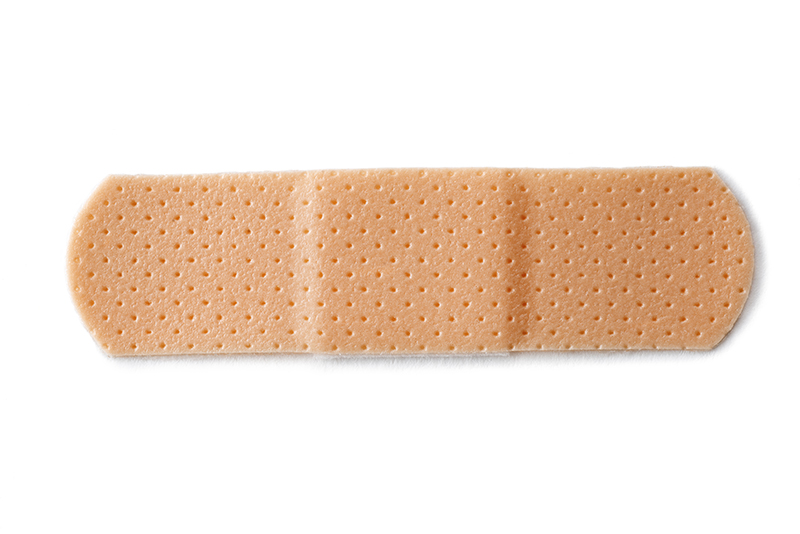
Before we have self-healing cars or buildings, we need strong materials that can fully self-repair in water-free environments. Self-healing materials work very well if they are soft and wet, but research groups have found that the ability to self-repair diminishes as materials dry out. Scientists at Osaka University are beginning to bridge this gap with rigid materials that can repair 99% of a cut on the surface in semi-dry conditions. They present their prototypes, which are the first to combine physical and chemical approaches to self-healing, on November 10 in Chem.

“The combination of physical and chemical self-healing enables materials to exhibit rapid and efficient self-healing even in a dried, hard state,” says senior author Akira Harada, a supramolecular polymer chemist at Osaka University. “Only a small amount of water vapor is needed to facilitate self-healing in the dried film state. In other words, water serves as a non-toxic glue in the self-healing process,” adds co-author Yoshinori Takashima, an associate professor at Osaka University.

Material engineers use several strategies to generate self-healing materials. They can physically embed the material with microcapsules or pathways filled with healing agents or build the material by using molecules, such as polyrotaxane, that change shape in response to damage–also called stress relaxation. Chemical self-healing materials use reversible bonds ranging from reversible chemical reactions to intermolecular interactions such as hydrogen bonding.

Harada’s lab combined physical and chemical self-healing mechanisms in their materials by using polyrotaxane as a backbone structure cross-linked by reversible interactions, in this case between boronic acid and diols. The polyrotaxane structure enables stress relaxation in recovery from a shallow dent, and the reversible nature of the bonds enables chemical self-healing from a deep cut. The combined approach allowed the materials to recover up to 80% of their strength within 10 minutes (without the combination, the materials could repair only up to 30% of their strength after an hour).

“Recent research on supramolecular polymeric materials has demonstrated that smart design leads to smart function on a macroscopic scale,” says first author Masaki Nakahata, an assistant professor in engineering science at Osaka University. “Polymeric materials, both tough and self-healable, can open up a new frontier in materials science.”

The scientists say their materials could be used in a wide variety of applications ranging from external coatings of cars and buildings to medical applications, such as self-healing adhesives and resins. They plan to continue working on the creation of a hard material that can self-heal under ambient conditions without the addition of any external cues.

SOURCE: Cell Press

Related Articles Read More >

Medable’s Digital Data Flow Agent focuses on protocol translation as the agentic race accelerates
AI image firm Midjourney spins up health division, unveils ‘Ultrasonic CT’
Q&A: Owkin’s five-year Sanofi deal bets on ‘purpose-built’ AI agents
Genetically modified hookworms could produce and deliver therapeutics within a host
rd newsletter
EXPAND YOUR KNOWLEDGE AND STAY CONNECTED
Get the latest info on technologies, trends, and strategies in Research & Development.

R&D World Digital Issues

Fall 2025 issue

Browse the most current issue of R&D World and back issues in an easy to use high quality format. Clip, share and download with the leading R&D magazine today.

R&D 100 Awards
Research & Development World
  • Subscribe to R&D World Magazine
  • Sign up for R&D World’s newsletter
  • Contact Us
  • About Us
  • Drug Discovery & Development
  • Pharmaceutical Processing
  • Global Funding Forecast

Copyright © 2026 WTWH Media LLC. All Rights Reserved. The material on this site may not be reproduced, distributed, transmitted, cached or otherwise used, except with the prior written permission of WTWH Media
Privacy Policy | Advertising | About Us

Search R&D World

  • R&D World Home
  • Topics
    • Aerospace
    • Automotive
    • Biotech
    • Careers
    • Chemistry
    • Environment
    • Energy
    • Life Science
    • Material Science
    • R&D Management
    • Physics
  • Technology
    • 3D Printing
    • A.I./Robotics
    • Software
    • Battery Technology
    • Controlled Environments
      • Cleanrooms
      • Graphene
      • Lasers
      • Regulations/Standards
      • Sensors
    • Imaging
    • Nanotechnology
    • Scientific Computing
      • Big Data
      • HPC/Supercomputing
      • Informatics
      • Security
    • Semiconductors
  • R&D Market Pulse
  • R&D 100
    • 2025 R&D 100 Award Winners
    • 2025 Professional Award Winners
    • 2025 Special Recognition Winners
    • R&D 100 Awards Event
    • R&D 100 Submissions
    • Winner Archive
  • Resources
    • Research Reports
    • Digital Issues
    • Educational Assets
    • Subscribe
    • Video
    • Webinars
    • Content submission guidelines for R&D World
  • Global Funding Forecast
  • Top Labs
  • Advertise
  • SUBSCRIBE