Research & Development World

  • R&D World Home
  • Topics
    • Aerospace
    • Automotive
    • Biotech
    • Careers
    • Chemistry
    • Environment
    • Energy
    • Life Science
    • Material Science
    • R&D Management
    • Physics
  • Technology
    • 3D Printing
    • A.I./Robotics
    • Software
    • Battery Technology
    • Controlled Environments
      • Cleanrooms
      • Graphene
      • Lasers
      • Regulations/Standards
      • Sensors
    • Imaging
    • Nanotechnology
    • Scientific Computing
      • Big Data
      • HPC/Supercomputing
      • Informatics
      • Security
    • Semiconductors
  • R&D Market Pulse
  • R&D 100
    • 2025 R&D 100 Award Winners
    • 2025 Professional Award Winners
    • 2025 Special Recognition Winners
    • R&D 100 Awards Event
    • R&D 100 Submissions
    • Winner Archive
  • Resources
    • Research Reports
    • Digital Issues
    • Educational Assets
    • Subscribe
    • Video
    • Webinars
    • PharmSci360
    • Content submission guidelines for R&D World
  • Global Funding Forecast
  • Top Labs
  • Advertise
  • SUBSCRIBE

Quantifying Hidden Environmental Costs of Hydroelectric Dams

By American Chemical Society | November 9, 2016

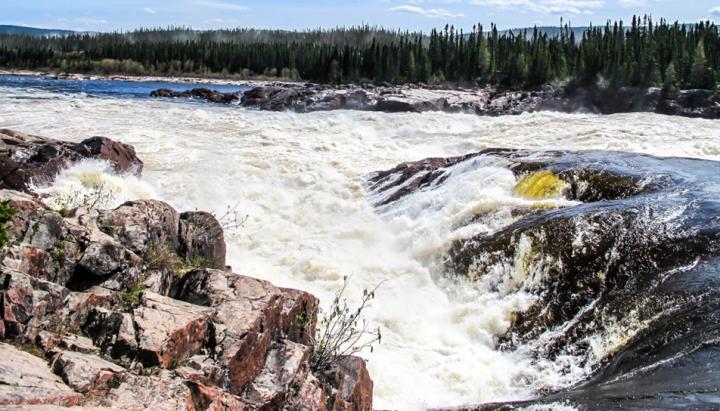
When a new hydroelectric facility goes online at Muskrat Falls, Canada, flooding of local land is expected to release methylmercury that could affect the health of local communities. Source: American Chemical Society

Hydroelectricity is a renewable energy, and the facilities that produce it give off less greenhouse gases than other power plants. But damming bodies of water can lead to the production and release of methylmercury from the soil. This toxic compound can move up the food chain and potentially harm human health. In the ACS journal Environmental Science & Technology, researchers quantify the possible increases in methylmercury exposures for indigenous communities living near planned facilities.

Bacteria can convert mercury, which occurs naturally in the soil, to methylmercury when the land is flooded, such as when dams are built for hydroelectric power generation. Unlike mercury, however, methylmercury moves into the food chain. People exposed to the chemical through their diet face increased cardiovascular risks, and children with high prenatal exposure can develop attention deficit/hyperactivity disorder, neurological abnormalities and other symptoms. Because a new hydroelectric facility is scheduled to fill a reservoir on the Churchill River at Muskrat Falls in Labrador, Canada, any day now, Ryan S. D. Calder and colleagues wanted to evaluate its potential impact on nearby communities.

The researchers combined direct measurements and modeling of future environmental concentrations with data collected from local residents and from other flooded regions. Modeling projections indicate that the flooding at Muskrat Falls likely will increase methylmercury 10-fold in the dammed river and 2.6-fold in surface waters downstream. Methylmercury concentrations in locally caught fish, birds and seals — which nearby Inuit populations use as a source of food — likely will increase up to 10-fold. In these communities, the researchers concluded, more than half the women of childbearing age and young children will be exposed to enough methylmercury to harm health. In addition, the researchers extrapolated the data to Canada’s other planned hydroelectric facilities, which are all within about 60 miles of indigenous communities. The model forecast even higher methylmercury concentrations for 11 of these other hydropower sites.

Related Articles Read More >

Researchers develop sawdust-based foam as polystyrene bans force industry to adapt
Researchers develop compostable PLA that potentially could be used for biomedical applications
Reservoir time: new study rules out IPCC worst case scenario for Antarctic ice loss
How a new permafrost climate model fits a dangerous pattern in climate science
rd newsletter
EXPAND YOUR KNOWLEDGE AND STAY CONNECTED
Get the latest info on technologies, trends, and strategies in Research & Development.

R&D World Digital Issues

Fall 2025 issue

Browse the most current issue of R&D World and back issues in an easy to use high quality format. Clip, share and download with the leading R&D magazine today.

R&D 100 Awards
Research & Development World
  • Subscribe to R&D World Magazine
  • Sign up for R&D World’s newsletter
  • Contact Us
  • About Us
  • Drug Discovery & Development
  • Pharmaceutical Processing
  • Global Funding Forecast

Copyright © 2026 Arrowfly LLC. All Rights Reserved. The material on this site may not be reproduced, distributed, transmitted, cached or otherwise used, except with the prior written permission of Arrowfly
Privacy Policy | Advertising | About Us

Search R&D World

  • R&D World Home
  • Topics
    • Aerospace
    • Automotive
    • Biotech
    • Careers
    • Chemistry
    • Environment
    • Energy
    • Life Science
    • Material Science
    • R&D Management
    • Physics
  • Technology
    • 3D Printing
    • A.I./Robotics
    • Software
    • Battery Technology
    • Controlled Environments
      • Cleanrooms
      • Graphene
      • Lasers
      • Regulations/Standards
      • Sensors
    • Imaging
    • Nanotechnology
    • Scientific Computing
      • Big Data
      • HPC/Supercomputing
      • Informatics
      • Security
    • Semiconductors
  • R&D Market Pulse
  • R&D 100
    • 2025 R&D 100 Award Winners
    • 2025 Professional Award Winners
    • 2025 Special Recognition Winners
    • R&D 100 Awards Event
    • R&D 100 Submissions
    • Winner Archive
  • Resources
    • Research Reports
    • Digital Issues
    • Educational Assets
    • Subscribe
    • Video
    • Webinars
    • PharmSci360
    • Content submission guidelines for R&D World
  • Global Funding Forecast
  • Top Labs
  • Advertise
  • SUBSCRIBE