Research & Development World

  • R&D World Home
  • Topics
    • Aerospace
    • Automotive
    • Biotech
    • Careers
    • Chemistry
    • Environment
    • Energy
    • Life Science
    • Material Science
    • R&D Management
    • Physics
  • Technology
    • 3D Printing
    • A.I./Robotics
    • Software
    • Battery Technology
    • Controlled Environments
      • Cleanrooms
      • Graphene
      • Lasers
      • Regulations/Standards
      • Sensors
    • Imaging
    • Nanotechnology
    • Scientific Computing
      • Big Data
      • HPC/Supercomputing
      • Informatics
      • Security
    • Semiconductors
  • R&D Market Pulse
  • R&D 100
    • 2025 R&D 100 Award Winners
    • 2025 Professional Award Winners
    • 2025 Special Recognition Winners
    • R&D 100 Awards Event
    • R&D 100 Submissions
    • Winner Archive
  • Resources
    • Research Reports
    • Digital Issues
    • Educational Assets
    • Subscribe
    • Video
    • Webinars
    • Content submission guidelines for R&D World
  • Global Funding Forecast
  • Top Labs
  • Advertise
  • SUBSCRIBE

Imaging High Explosive Detonators

By Lawrence Livermore National Laboratory | March 8, 2017

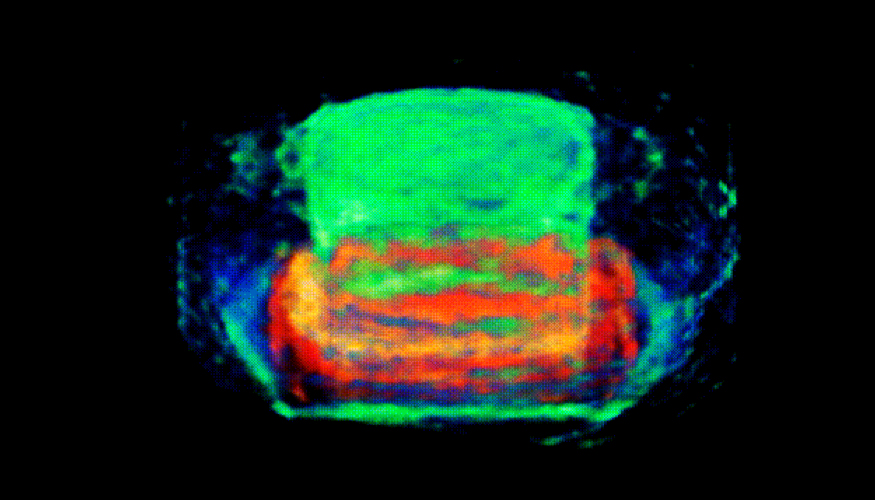
A 3D rendering of an exploding foil initiator. Source: LLNL

Lawrence Livermore National Laboratory (LLNL) scientists and collaborators at Los Alamos National Laboratory(link is external) (LANL) for the first time have taken 3D snapshots of operating high explosive detonators.

Scientists from LLNL, Los Alamos and National Security Technologies, LLC (link is external)(NSTech) combined state-of-the-art imaging capabilities with computed tomographic reconstruction (X-ray cross sectional imaging) in experiments performed at the Argonne National Laboratory’s Advanced Photon Source(link is external) to generate 3D snapshots of exploding foil initiators.

Exploding foil initiators (EFI), also known as slapper detonators, offer safety and timing advantages over other means of initiating high explosives. However, understanding how detonators perform is challenging.

EFI is an improvement of the earlier exploding-bridgewire detonator. Instead of directly coupling the shock wave from the exploding wire, the expanding plasma from an explosion of a metal foil drives another thin plastic or metal foil called a “flyer” or a “slapper” across a gap, and its high-velocity impact on the explosive then delivers the energy and shock needed to initiate a detonation.

“The rich imaging data on EFI and flyer microstructure with time represent a new opportunity to refine the understanding of flyer operation of slapper detonators,” said LLNL’s Trevor Willey, a co-author of the research. “Parameters can be tuned to achieve optimal performance. The data will aid in understanding the initiation mechanism for slapper detonators.”

The research is important for assessing aging margins, safety and performance, and in developing new and improved designs.

During the experiment, a LANL/NSTech-developed four-camera system acquired four images from successive X-ray pulses from each shot. The first frame was prior to bridge burst. The second images the flyer about 0.16 millimeters (mm) above the surface, but edges of the foil and/or flyer are still attached to the substrate. The third frame captures the flyer in flight, while the fourth shows a completely detached flyer in a position that is typically beyond where slappers strike initiating explosives. The researchers then used the recently developed Livermore Tomography Tools to reconstruct 3D images of operating flyers.

The technique is now being used to support several ongoing programmatic efforts within LLNL.
Related Articles Read More >

Perseverance uncovers buried evidence of Mars’ ancient water history using ground-penetrating radar
University of Michigan researchers identify higher-order protein rings that regulate programmed cell death
JWST spots a 6-mile moon hiding in Uranus’ rings
DNA microscope offers new 3D view of organisms from the inside out
rd newsletter
EXPAND YOUR KNOWLEDGE AND STAY CONNECTED
Get the latest info on technologies, trends, and strategies in Research & Development.

R&D World Digital Issues

Fall 2025 issue

Browse the most current issue of R&D World and back issues in an easy to use high quality format. Clip, share and download with the leading R&D magazine today.

R&D 100 Awards
Research & Development World
  • Subscribe to R&D World Magazine
  • Sign up for R&D World’s newsletter
  • Contact Us
  • About Us
  • Drug Discovery & Development
  • Pharmaceutical Processing
  • Global Funding Forecast

Copyright © 2026 WTWH Media LLC. All Rights Reserved. The material on this site may not be reproduced, distributed, transmitted, cached or otherwise used, except with the prior written permission of WTWH Media
Privacy Policy | Advertising | About Us

Search R&D World

  • R&D World Home
  • Topics
    • Aerospace
    • Automotive
    • Biotech
    • Careers
    • Chemistry
    • Environment
    • Energy
    • Life Science
    • Material Science
    • R&D Management
    • Physics
  • Technology
    • 3D Printing
    • A.I./Robotics
    • Software
    • Battery Technology
    • Controlled Environments
      • Cleanrooms
      • Graphene
      • Lasers
      • Regulations/Standards
      • Sensors
    • Imaging
    • Nanotechnology
    • Scientific Computing
      • Big Data
      • HPC/Supercomputing
      • Informatics
      • Security
    • Semiconductors
  • R&D Market Pulse
  • R&D 100
    • 2025 R&D 100 Award Winners
    • 2025 Professional Award Winners
    • 2025 Special Recognition Winners
    • R&D 100 Awards Event
    • R&D 100 Submissions
    • Winner Archive
  • Resources
    • Research Reports
    • Digital Issues
    • Educational Assets
    • Subscribe
    • Video
    • Webinars
    • Content submission guidelines for R&D World
  • Global Funding Forecast
  • Top Labs
  • Advertise
  • SUBSCRIBE