Research & Development World

  • R&D World Home
  • Topics
    • Aerospace
    • Automotive
    • Biotech
    • Careers
    • Chemistry
    • Environment
    • Energy
    • Life Science
    • Material Science
    • R&D Management
    • Physics
  • Technology
    • 3D Printing
    • A.I./Robotics
    • Software
    • Battery Technology
    • Controlled Environments
      • Cleanrooms
      • Graphene
      • Lasers
      • Regulations/Standards
      • Sensors
    • Imaging
    • Nanotechnology
    • Scientific Computing
      • Big Data
      • HPC/Supercomputing
      • Informatics
      • Security
    • Semiconductors
  • R&D Market Pulse
  • R&D 100
    • 2025 R&D 100 Award Winners
    • 2025 Professional Award Winners
    • 2025 Special Recognition Winners
    • R&D 100 Awards Event
    • R&D 100 Submissions
    • Winner Archive
  • Resources
    • Research Reports
    • Digital Issues
    • Educational Assets
    • Subscribe
    • Video
    • Webinars
    • Content submission guidelines for R&D World
  • Global Funding Forecast
  • Top Labs
  • Advertise
  • SUBSCRIBE

Is your R&D data holding you back? Here’s how you can flip the script

By Barney Walker | June 11, 2024

In the high-stakes product development race, R&D teams are facing relentless pressure. Every day, every experiment, is a tightrope walk between painstaking research and the need for speed to outpace the competition.

But what if the very data that underpins your R&D efforts is actually putting you in the slow lane?

R&D is an expedition into the unknown, requiring a mix of scientific techniques and perseverance. Dead ends and setbacks are not just common but expected. These challenges can obstruct the quest to be lean and first-to-market, especially if experiments are not performed as efficiently as possible.

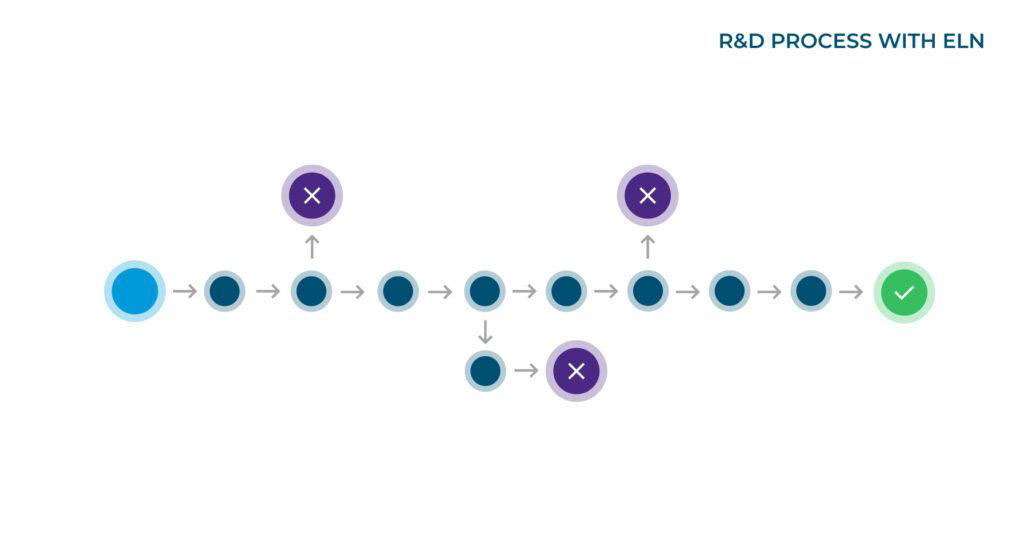
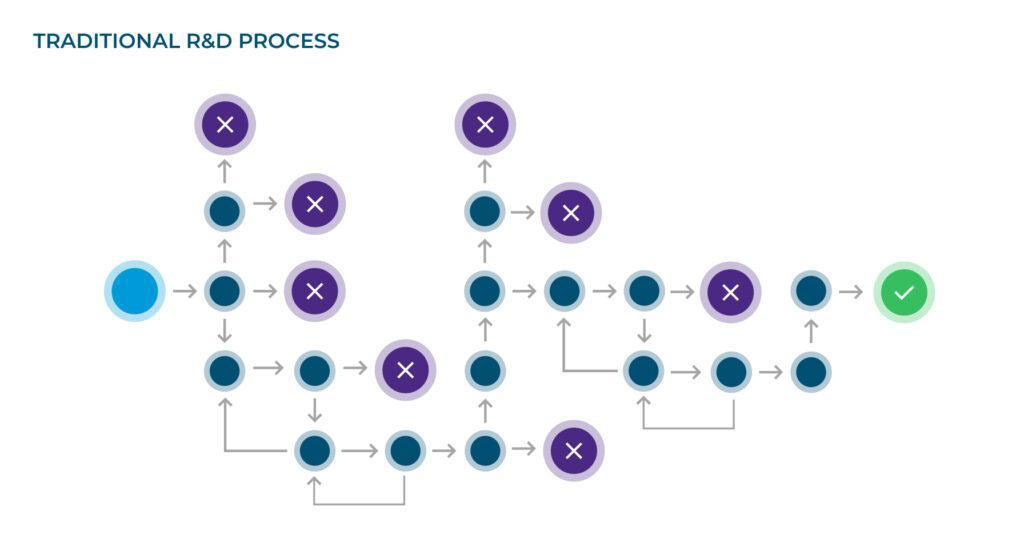
So how do we turn this R&D experiment process….
2024 Data Quality Powers R&D Efficiency.docx

[STARLIMS]

…into something more like this experiment process?

2024 Data Quality Powers R&D Efficiency.docx

[STARLIMS]

Currently, it’s not uncommon for scientists to explore an array of ideas to achieve a result or even spend months just trying to reproduce past results. By minimizing the number of loops and wrong turns — whether caused by failed replications, human error, or just intrinsic uncertainty — the savings in time and resources can be substantial. A commitment to high data quality can improve an R&D lab’s ability both to reproduce results more easily and take a more direct path to the desired outcome.

Data quality: A pillar of innovation

We believe the core of scientific innovation lies in robust data. Data-derived insights help shape decisions and drive research. High-quality data is not just a tool for decision-making—it’s a strategic asset that can accelerate and expand an R&D organization’s capacity to generate intellectual property (IP). Yet, with the rapid increase in data volumes, types, and silos, many R&D labs struggle to establish effective systems for managing, sharing, and mining insights from crucial information.

The role of data quality in research
2024 Data Quality Powers R&D Efficiency

[STARLIMS]

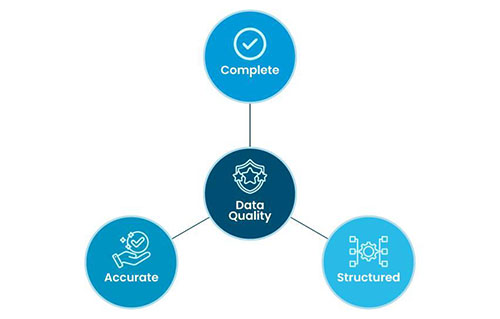
“Data quality” is an overarching term that encompasses the accuracy, completeness, and structure of data. Correct, clean, and easily accessible data supports full experiment traceability – a critical step in achieving compliance and generating IP. By committing to data quality, R&D teams can improve reproducibility, collaborate more effectively, and maximize the value of their data. While data accuracy is self-explanatory, this blog will cover how to achieve data completeness and how structured data helps to propel innovation.

Achieving data completeness for experiments

Data completeness encompasses any detail that could conceivably affect the outcome of an experiment. If we look back through history, the documentation of methods, calculations, and data is pretty much the defining feature of science. If an experiment is not reproducible during the early-stage R&D phase, then it can’t be practically applied and commercialized. The more detailed the records and documentation are, the easier it is to reproduce. Having complete data improves reproducibility rates and minimizes the number of experiments needed to achieve a breakthrough.

Essential data for R&D labs to document

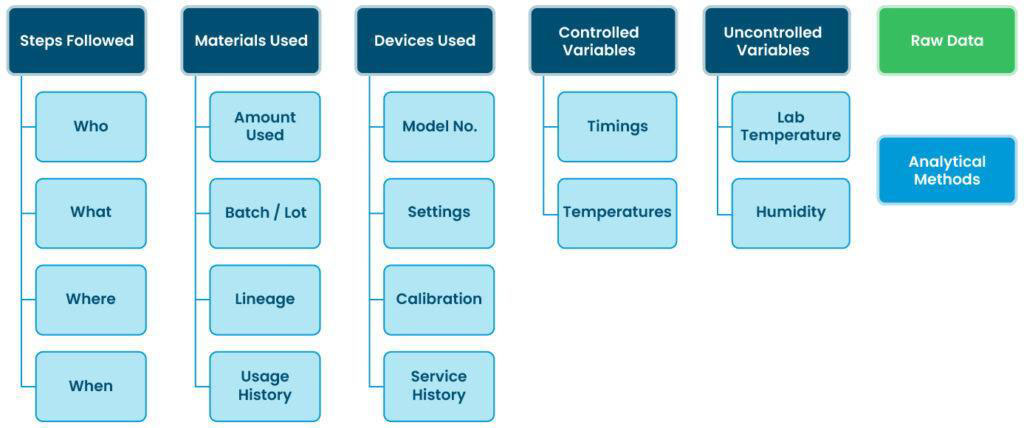
A comprehensive experiment record should contain data such as:

  • Precise procedural steps, their sequence, and details about who performed what, when, and where.
  • Details on materials used, including container, lot number, and history.
  • Exact quantities used.
  • Any controlled variables like temperature and time.
  • Uncontrolled variables, such as lab ambient conditions.
  • Equipment used and its settings, including complete calibration and service histories.
  • Analytical methods from raw data to results.
2024 Data Quality Powers R&D Efficiency.docx

[STARLIMS]

Despite its importance, most R&D documentation still occurs on paper. Manual record-keeping by researchers is labor-intensive, and further complicating matters, researchers frequently write up their documentation weeks after conducting experiments, which can also impact the accuracy of the record if details are misremembered.

Data silos no more: How structured data can transform your R&D

Data that is isolated and disconnected in a series of paper lab notebooks is of little value. When data is centralized and structured in a secure and encrypted digital platform, it becomes accessible, traceable, and auditable. This supports both compliance efforts and IP protection.

Centralizing research in a digital environment also empowers global, interdisciplinary collaboration, which is essential to today’s interconnected landscape. Sharing a common R&D platform allows teams to establish communication channels, foster knowledge exchange, and optimize team workflows to eliminate unnecessary steps, reduce bottlenecks, and achieve maximum productivity.

Structuring your data in a digital environment also enables your data to be fed into statistical or machine learning models. These types of models can then find patterns, predict outcomes, and generate insights that would be impossible to discern manually, helping your organization reduce redundant experiments and get to market faster. This ultimately enables your organization to build upon scientific research, helping drive the development of new products and innovations.

Barney Walker

Barney Walker

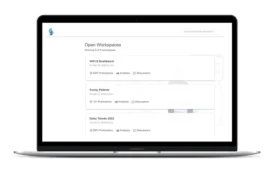
The impact of data quality on R&D efficiency cannot be overstated. Accuracy, completeness, and structure each play a pivotal role in optimizing the experimental processes. To maximize data quality, R&D labs need to be equipped with modern digital tools that automate data capture and analysis. R&D platforms like an Electronic Laboratory Notebook (ELN) offer a promising path forward for scientists by providing centralized control, automation capabilities, and interconnectivity with lab equipment, devices, and other systems. Integrating a tool such as an ELN into their daily workflows allows scientists to capture information effortlessly during experiments. This streamlined approach not only alleviates the documentation burden, but also accelerates discovery and helps deliver innovations to market faster.

About the author

Barney Walker is head of Labstep ELN Product, STARLIMS. Having served his time at the lab bench both during his undergraduate and master’s studies in Natural Sciences at the University of Cambridge and throughout his PhD in Synthetic Biology at Imperial College London, Barney Walker saw firsthand how outdated R&D practices hinder innovation. This experience influenced his mission of creating software, not only to make life easier for those at the lab bench, but also to accelerate the scientific breakthroughs that benefit society. His work on the Labstep ELN spans 5 years, shaping it into a vital R&D tool. As Head of Product, he drives the vision and roadmap, dedicated to innovating and solving scientists’ challenges.

Related Articles Read More >

GreyB’s AI-driven Slate offers single search across 160 million patents, 264 million papers
Is your lab talking to its data? LabVantage exec on the AI, ontologies, and services making it possible
Satellite data sheds light on wetland health in cloud-covered regions
Satellite SAR data helps reduce landfill maintenance costs by over 30%, researchers report
rd newsletter
EXPAND YOUR KNOWLEDGE AND STAY CONNECTED
Get the latest info on technologies, trends, and strategies in Research & Development.

R&D World Digital Issues

Fall 2025 issue

Browse the most current issue of R&D World and back issues in an easy to use high quality format. Clip, share and download with the leading R&D magazine today.

R&D 100 Awards
Research & Development World
  • Subscribe to R&D World Magazine
  • Sign up for R&D World’s newsletter
  • Contact Us
  • About Us
  • Drug Discovery & Development
  • Pharmaceutical Processing
  • Global Funding Forecast

Copyright © 2026 WTWH Media LLC. All Rights Reserved. The material on this site may not be reproduced, distributed, transmitted, cached or otherwise used, except with the prior written permission of WTWH Media
Privacy Policy | Advertising | About Us

Search R&D World

  • R&D World Home
  • Topics
    • Aerospace
    • Automotive
    • Biotech
    • Careers
    • Chemistry
    • Environment
    • Energy
    • Life Science
    • Material Science
    • R&D Management
    • Physics
  • Technology
    • 3D Printing
    • A.I./Robotics
    • Software
    • Battery Technology
    • Controlled Environments
      • Cleanrooms
      • Graphene
      • Lasers
      • Regulations/Standards
      • Sensors
    • Imaging
    • Nanotechnology
    • Scientific Computing
      • Big Data
      • HPC/Supercomputing
      • Informatics
      • Security
    • Semiconductors
  • R&D Market Pulse
  • R&D 100
    • 2025 R&D 100 Award Winners
    • 2025 Professional Award Winners
    • 2025 Special Recognition Winners
    • R&D 100 Awards Event
    • R&D 100 Submissions
    • Winner Archive
  • Resources
    • Research Reports
    • Digital Issues
    • Educational Assets
    • Subscribe
    • Video
    • Webinars
    • Content submission guidelines for R&D World
  • Global Funding Forecast
  • Top Labs
  • Advertise
  • SUBSCRIBE