[Adobe Stock]
Traditional tests used to detect pancreatic cancer involve large amounts of radiation, so many experts recommend against widespread testing. There are currently no screening tests that work well to find pancreatic cancer in people who do not have signs or symptoms. Available screening tests can be invasive, cause pain, and sometimes lead to unnecessary and risky treatment, so the US Preventive Services Task Force recommends against widespread testing. Alternatives like noncontrast CTs involve less radiation, but produce lower-quality images that make abnormalities difficult to identify.
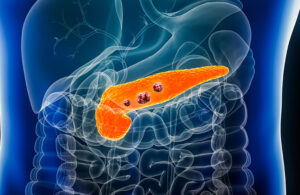
The new tool, developed by researchers at Alibaba, is called pancreatic cancer detection with artificial intelligence, or PANDA and scans noncontrast CTs for signs of pancreatic cancer. A study published in Nature Medicine in 2023 showed that the system correctly detected pancreatic lesions in 93% of CT scans. The FDA granted PANDA breakthrough device status in April, which will accelerate the regulatory review process.
PANDA has analyzed over 180,000 abdominal CTs and found 20 cases of ductal adenocarcinoma, which is the most common and deadliest form of pancreatic cancer.
“I think you can 100 percent say A.I. saved their lives,” Zhu Kelei, the head of the pancreatic department at the hospital in Ningbo, told The New York Times.
The false positive rate
However, PANDA may also have a high false positive rate. It flagged 1,400 patients in Ningbo, but doctors determined that only about 300 of those patients needed further testing. Ajit Goenka, a radiologist at Mayo Clinic researching the early diagnosis of pancreatic cancer, said reducing the number of false positives was vital. It is possible that hundreds of people in Ningbo “faced the terror of a potential pancreatic cancer diagnosis, underwent unnecessary callbacks, and likely endured expensive, invasive follow-up testing — only to find out they were healthy,” he wrote in an email to The New York Times.
The AI often incorrectly identifies pancreatitis, inflammation of the pancreas, as a tumor because both cause similar textural changes in non-contrast images. The tool also cannot determine whether cancerous lesions originate from the pancreas or spread from other organs, another source of false positives.
In the Ningbo trial, the tool had a false positive rate of approximately 6.1 false positives per 1,000 scans (based on the 1,100 false positives out of the 1,400 patients flagged from a pool of 180,000). This is still statistically low for a screening tool, but represents a significant increase in the 1 in 1,000 false positive rate found in the original study published in Nature Medicine.
The researchers had a radiologist annotate 2,000 contrast CTs from known pancreatic patients with the locations of the lesions, which were mapped onto the patients’ noncontrast CTs. These CTs were then fed to the PANDA system to train it to detect potential cancer in the lower-quality images.