Research & Development World

  • R&D World Home
  • Topics
    • Aerospace
    • Automotive
    • Biotech
    • Careers
    • Chemistry
    • Environment
    • Energy
    • Life Science
    • Material Science
    • R&D Management
    • Physics
  • Technology
    • 3D Printing
    • A.I./Robotics
    • Software
    • Battery Technology
    • Controlled Environments
      • Cleanrooms
      • Graphene
      • Lasers
      • Regulations/Standards
      • Sensors
    • Imaging
    • Nanotechnology
    • Scientific Computing
      • Big Data
      • HPC/Supercomputing
      • Informatics
      • Security
    • Semiconductors
  • R&D Market Pulse
  • R&D 100
    • 2026 R&D 100 Award Winners
    • 2026 Professional Award Winners
    • 2026 Special Recognition Winners
    • R&D 100 Awards Event
    • R&D 100 Submissions
    • Winner Archive
  • Resources
    • Research Reports
    • Digital Issues
    • Educational Assets
    • Subscribe
    • Video
    • Webinars
    • PharmSci360
    • Content submission guidelines for R&D World
  • Global Funding Forecast
  • Top Labs
  • Advertise
  • SUBSCRIBE

Amyloid Mass Spectrometry supports Alzheimer’s drug discovery and development

By Heather Hall | July 8, 2022

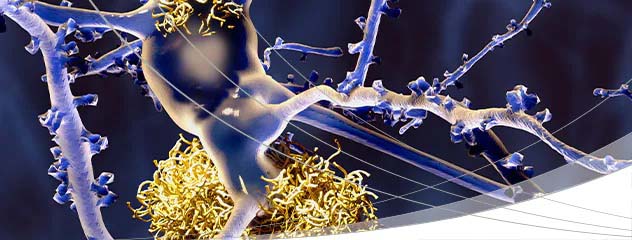
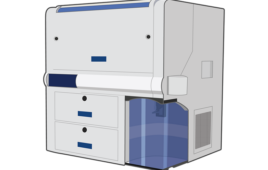
Shimadzu Scientific Instruments announces the successful commercialization of a new Amyloid Mass Spectrometry (MS) Service for the early screening of amyloid-positive individuals. This simple, research-use-only blood-based analysis method enables reliable characterization of amyloid pathology in the brain with an easy-to-acquire blood sample to assist in the evaluation and development of new pharmaceutical treatments for Alzheimer’s disease.

Although the screening analysis is for research use only and cannot diagnose Alzheimer’s disease, it is ideal for opening the door to new advancements in research, identifying suitable candidates for clinical trials and helping pharmaceutical companies in their testing of candidate drugs.

Unlike conventional positron emission tomography (PET) imaging and cerebrospinal fluid (CSF) testing methods, Shimadzu’s blood amyloid-beta analysis method is minimally invasive and suitable for large-scale deployment. This new approach to blood analysis is capable of being used for predicting abnormal amyloid-beta concentration, which can be a marker for amyloid pathology in the brain. New blood-based biomarkers were discovered in 2014 by Shimadzu Corporation and the Japanese National Center for Geriatrics and Gerontology (NCGG).

The blood analysis works using a combination of immunoprecipitation and MALDI-TOF mass spectrometry (IP-MS). This technique was first established by a team of scientists including Shimadzu’s Koichi Tanaka, who was awarded the Nobel Prize in chemistry in 2002 for developing a method for mass spectrometric analysis of biological macromolecules.

Experts from Shimadzu will present information about the Amyloid Mass Spectrometry (MS) Service at booth 206 at the Alzheimer’s Association International Conference from July 31–August 4, 2022, in San Diego.

For more information about Shimadzu’s Amyloid MS Service, click here.

Find more scientific background about Shimadzu’s blood amyloid-beta analysis here: A. Nakamura, N. Kaneko et al., “High performance plasma amyloid-β biomarkers for Alzheimer’s disease” doi: 10.1038/nature 25456.
 

Comments

  1. Victor says

    July 9, 2022 at 8:18 pm

    I recently lost a friend to complications of amyloid accumulation in the brain and heart, maybe he could have been diagnosed early and have a chance of treatment and survival.

Related Articles Read More >

UK Sovereign AI grant helps fund immune profiling of 80,000 UK Biobank blood samples
Flow cytometer fleets are aging. A new spectral sorter runs around $550,000 to $765,000
Leica Biosystems launches laser cassette printer for histology labs
Thermo Fisher launches 250-liter, stackable environmental chambers
rd newsletter
EXPAND YOUR KNOWLEDGE AND STAY CONNECTED
Get the latest info on technologies, trends, and strategies in Research & Development.

R&D World Digital Issues

Fall 2025 issue

Browse the most current issue of R&D World and back issues in an easy to use high quality format. Clip, share and download with the leading R&D magazine today.

R&D 100 Awards
Research & Development World
  • Subscribe to R&D World Magazine
  • Sign up for R&D World’s newsletter
  • Contact Us
  • About Us
  • Drug Discovery & Development
  • Pharmaceutical Processing
  • Global Funding Forecast

Copyright © 2026 Arrowfly LLC. All Rights Reserved. The material on this site may not be reproduced, distributed, transmitted, cached or otherwise used, except with the prior written permission of Arrowfly
Privacy Policy | Advertising | About Us

Search R&D World

  • R&D World Home
  • Topics
    • Aerospace
    • Automotive
    • Biotech
    • Careers
    • Chemistry
    • Environment
    • Energy
    • Life Science
    • Material Science
    • R&D Management
    • Physics
  • Technology
    • 3D Printing
    • A.I./Robotics
    • Software
    • Battery Technology
    • Controlled Environments
      • Cleanrooms
      • Graphene
      • Lasers
      • Regulations/Standards
      • Sensors
    • Imaging
    • Nanotechnology
    • Scientific Computing
      • Big Data
      • HPC/Supercomputing
      • Informatics
      • Security
    • Semiconductors
  • R&D Market Pulse
  • R&D 100
    • 2026 R&D 100 Award Winners
    • 2026 Professional Award Winners
    • 2026 Special Recognition Winners
    • R&D 100 Awards Event
    • R&D 100 Submissions
    • Winner Archive
  • Resources
    • Research Reports
    • Digital Issues
    • Educational Assets
    • Subscribe
    • Video
    • Webinars
    • PharmSci360
    • Content submission guidelines for R&D World
  • Global Funding Forecast
  • Top Labs
  • Advertise
  • SUBSCRIBE