Research & Development World

  • R&D World Home
  • Topics
    • Aerospace
    • Automotive
    • Biotech
    • Careers
    • Chemistry
    • Environment
    • Energy
    • Life Science
    • Material Science
    • R&D Management
    • Physics
  • Technology
    • 3D Printing
    • A.I./Robotics
    • Software
    • Battery Technology
    • Controlled Environments
      • Cleanrooms
      • Graphene
      • Lasers
      • Regulations/Standards
      • Sensors
    • Imaging
    • Nanotechnology
    • Scientific Computing
      • Big Data
      • HPC/Supercomputing
      • Informatics
      • Security
    • Semiconductors
  • R&D Market Pulse
  • R&D 100
    • 2025 R&D 100 Award Winners
    • 2025 Professional Award Winners
    • 2025 Special Recognition Winners
    • R&D 100 Awards Event
    • R&D 100 Submissions
    • Winner Archive
  • Resources
    • Research Reports
    • Digital Issues
    • Educational Assets
    • R&D Index
    • Subscribe
    • Video
    • Webinars
    • Content submission guidelines for R&D World
  • Global Funding Forecast
  • Top Labs
  • Advertise
  • SUBSCRIBE

BACE1 Enzyme Doubly Dangerous

By R&D Editors | August 21, 2012

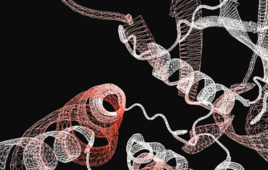
The underlying causes of Alzheimer’s disease are not fully understood, but a good deal of evidence points to the accumulation of β-amyloid, a protein that’s toxic to nerve cells. β-amyloid is formed by the activity of several enzymes, including one called BACE1. Most Alzheimer’s disease patients have elevated levels of BACE1, which in turn leads to more brain-damaging β-amyloid protein. In a paper published August 15 in The Journal of Neuroscience, researchers at Sanford-Burnham Medical Research Institute (Sanford-Burnham) found that BACE1 does more than just help produce β-amyloid—it also regulates another cellular process that contributes to memory loss. This means that just inhibiting BACE1’s enzymatic activity as a means to prevent or treat Alzheimer’s disease isn’t enough—researchers will have to prevent cells from making it at all.

“Memory loss is a big problem—not just in Alzheimer’s disease, but also in the normal aging population,” said Huaxi Xu, Ph.D., professor in Sanford-Burnham’s Del E. Webb Neuroscience, Aging, and Stem Cell Research Center and senior author of the study. “In this study, we wanted to better understand how BACE1 plays a role in memory loss, apart from β-amyloid production.”

To do this, Xu and his team used a mouse model that produces human BACE1. Mice produce a different type of β-amyloid, one that’s far less toxic than the human version. So, in this system, they could look solely at how BACE1 functions independent from β-amyloid formation. If BACE1 only acted to produce β-amyloid, the researchers would expect to see no effect when mice produce human BACE1—since mouse β-amyloid isn’t very toxic, extra BACE1 would be no big deal. Instead, they saw that the enzyme still impaired learning and memory, indicating a secondary function at work.

If it’s not producing β-amyloid, what is BACE1 doing? Many years ago, scientists found that a protein in the brain—protein kinase A (PKA), better known for directing cellular metabolism—also plays an important role in memory formation. In this study, Xu and colleagues found that BACE1 disrupts the cell’s production of other molecules required for PKA function. By that mechanism, BACE1 inactivates PKA and therefore inhibits memory formation in mice, even in the absence of neurotoxic β-amyloid.

“So BACE1 is a double whammy when it comes to memory,” Xu said. “But that also means that a therapy that targets BACE1 could be a double punch against Alzheimer’s disease, and even just normal aging-related memory loss. That’s why we’re now looking for ways to block BACE1 expression in the brain.”

Date: August 20, 2012
Source: Sanford-Burnham Medical Research Institute

Related Articles Read More >

JLL: 2026 could be a realignment year for life science labs
How Prelude and QDX are using quantum chemistry to discover cancer treatments
US political drama is pushing life sciences talent toward Switzerland, Basel leader says
Thermo Fisher targets early-stage CGT bottlenecks with new Philadelphia hub
rd newsletter
EXPAND YOUR KNOWLEDGE AND STAY CONNECTED
Get the latest info on technologies, trends, and strategies in Research & Development.
RD 25 Power Index

R&D World Digital Issues

Fall 2025 issue

Browse the most current issue of R&D World and back issues in an easy to use high quality format. Clip, share and download with the leading R&D magazine today.

Research & Development World
  • Subscribe to R&D World Magazine
  • Sign up for R&D World’s newsletter
  • Contact Us
  • About Us
  • Drug Discovery & Development
  • Pharmaceutical Processing
  • Global Funding Forecast

Copyright © 2025 WTWH Media LLC. All Rights Reserved. The material on this site may not be reproduced, distributed, transmitted, cached or otherwise used, except with the prior written permission of WTWH Media
Privacy Policy | Advertising | About Us

Search R&D World

  • R&D World Home
  • Topics
    • Aerospace
    • Automotive
    • Biotech
    • Careers
    • Chemistry
    • Environment
    • Energy
    • Life Science
    • Material Science
    • R&D Management
    • Physics
  • Technology
    • 3D Printing
    • A.I./Robotics
    • Software
    • Battery Technology
    • Controlled Environments
      • Cleanrooms
      • Graphene
      • Lasers
      • Regulations/Standards
      • Sensors
    • Imaging
    • Nanotechnology
    • Scientific Computing
      • Big Data
      • HPC/Supercomputing
      • Informatics
      • Security
    • Semiconductors
  • R&D Market Pulse
  • R&D 100
    • 2025 R&D 100 Award Winners
    • 2025 Professional Award Winners
    • 2025 Special Recognition Winners
    • R&D 100 Awards Event
    • R&D 100 Submissions
    • Winner Archive
  • Resources
    • Research Reports
    • Digital Issues
    • Educational Assets
    • R&D Index
    • Subscribe
    • Video
    • Webinars
    • Content submission guidelines for R&D World
  • Global Funding Forecast
  • Top Labs
  • Advertise
  • SUBSCRIBE