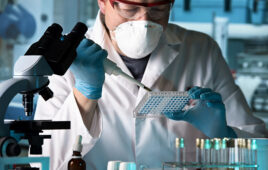
Thermo Fisher Scientific has opened its East Coast Advanced Therapies Collaboration Center, or ATxCC, in Philadelphia, a move that places the life sciences supplier directly inside the operations of early-stage cell and gene therapy developers.
The center sits inside BioLabs for Advanced Therapeutics, a newly expanded 53,000-square-foot incubator in the city’s fast-growing “Cellicon Valley” cluster. The site is Thermo Fisher’s second ATxCC in the U.S., following a 6,000-square-foot facility that opened in Carlsbad, California, in April, part of a growing global network that also includes collaboration centers in Singapore and South Korea.
Both locations are designed to help startups and biopharma clients standardize and scale their manufacturing processes for cell and gene therapies, which are moving rapidly from academic labs into commercial pipelines.
Helping CGT specialists cross the ‘valley of death’
For years, the cell and gene therapy sector has struggled with a well-known “valley of death” in CGT development. Many companies can generate promising preclinical data in academic-style labs but fail to translate those workflows into scalable, GMP-compliant processes suitable for clinical trials.
By embedding an ATxCC directly inside BioLabs, Thermo Fisher is betting that it can reduce that friction by giving startups early access to commercial-grade processing equipment, analytics and process development expertise, without the upfront capital required to build their own facilities.
“”[M]any innovators still face barriers when they try to scale,” said Nicole Brockway, president of biosciences at Thermo Fisher Scientific, in a release. “Our new center in Philadelphia is designed to help customers move from the lab to the clinic more efficiently and bring transformative therapies to patients faster.”
The business logic is straightforward. If Thermo Fisher helps design and de-risk a process at the incubation stage, those same companies are more likely to stick with the company’s reagents, consumables, equipment and contract development and manufacturing (CDMO) services as they move into later-stage trials and commercialization.
A crowded race for Cellicon Valley
The choice of Philadelphia is strategic. Greater Philadelphia is one of the original homes of cell and gene therapy, with early research laying the groundwork for the first FDA-approved gene therapy, Luxturna, and the first FDA-approved CAR-T cell therapy, Kymriah.
A comparative analysis from the CEO Council for Growth ranks the region second among U.S. hubs for cell and gene therapy activity, citing more than 300 CGT-related patents and about 130 clinical trials over the past decade, as well as steady NIH funding and a pool of scientific talent.
The new ATxCC lands as the region’s infrastructure continues to expand. Spark Therapeutics, now part of Roche, recently broke ground on a gene therapy innovation center on Drexel University’s campus, adding to a pipeline of CGT-focused facilities in University City.
Thermo Fisher’s move mirrors a broader trend among suppliers and CDMOs that are pressing closer to the earliest stages of drug development. Rivals such as Cytiva and MilliporeSigma have been building out collaboration centers and partnerships to provide end-to-end process development support for CGT programs, often co-locating with major academic or startup hubs.