Research & Development World

  • R&D World Home
  • Topics
    • Aerospace
    • Automotive
    • Biotech
    • Careers
    • Chemistry
    • Environment
    • Energy
    • Life Science
    • Material Science
    • R&D Management
    • Physics
  • Technology
    • 3D Printing
    • A.I./Robotics
    • Software
    • Battery Technology
    • Controlled Environments
      • Cleanrooms
      • Graphene
      • Lasers
      • Regulations/Standards
      • Sensors
    • Imaging
    • Nanotechnology
    • Scientific Computing
      • Big Data
      • HPC/Supercomputing
      • Informatics
      • Security
    • Semiconductors
  • R&D Market Pulse
  • R&D 100
    • 2025 R&D 100 Award Winners
    • 2025 Professional Award Winners
    • 2025 Special Recognition Winners
    • R&D 100 Awards Event
    • R&D 100 Submissions
    • Winner Archive
  • Resources
    • Research Reports
    • Digital Issues
    • Educational Assets
    • Subscribe
    • Video
    • Webinars
    • Content submission guidelines for R&D World
  • Global Funding Forecast
  • Top Labs
  • Advertise
  • SUBSCRIBE

Big Data Brings Breast Cancer Research Forward by ‘Decades’

By Cancer Research UK | February 3, 2017

Scientists have created a ‘map’ linking the shape of breast cancer cells to genes turned on and off, and matched it to real disease outcomes, which could one day help doctors select treatments, according to a study published in Genome Research.

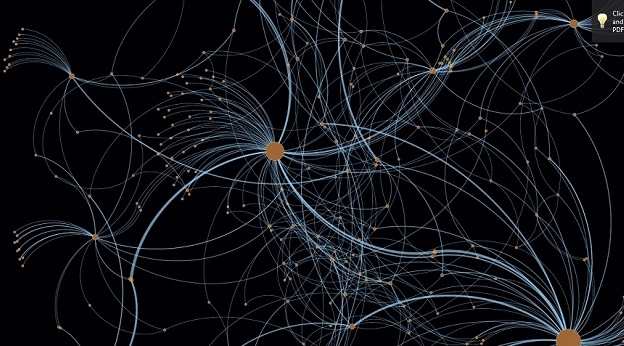
In a revolutionary new approach, Cancer Research UK-funded scientists at The Institute of Cancer Research, London, used large sets of data to map out a network of links between cell shape and genes.

By analysing cell shape in millions of images of more than 300,000 breast cancer cells, and data for more than 28,000 different genes, researchers found that cell shape changes, which can be caused by physical pressures on the tumour, are converted into changes in gene activity.

When they then used their maps to analyse thousands of samples taken from women who took part in the Cancer Research UK funded METABRIC study, the researchers discovered that these changes are linked to clinical outcomes for patients.

They also identified key areas or ‘stations’ within the network that acted as hubs for the flow of information, controlling the levels of many other genes.

Specifically, they found that a protein called NF-kappaB plays a central role in this shape-gene network and could drive the growth and spread of cancer cells. This response was associated with tumour grade in patients and could be used to predict survival.

These findings suggest that because NF-kappaB is rarely faulty in solid tumours, the surrounding mechanical forces are playing a large role in disease progression by switching the gene on. 

Dr Chris Bakal, team leader in dynamic cell systems at the Institute of Cancer Research, said: “Our study reveals an exciting link between the forces that act on cancer cells and the development of the disease.

“We used ‘big data’ approaches to carry out a complex analysis that would once have taken decades, in a matter of months.

“The maps we’ve created of cell shapes and their effects on gene activity provide important pointers to new forms of cancer treatment, and ways of making existing therapies more effective.”

Professor Karen Vousden, Cancer Research UK’s chief scientist, said: “Understanding the links between how a breast cancer looks and acts, alongside its genetic makeup, will help researchers develop a more detailed picture of the disease.

“The insights and approaches used in this research could one day lead to us being able to tell from appearance, how aggressive someone’s cancer is and how likely to spread, helping doctors decide the best course of treatment.”

Related Articles Read More >

We are still likely years away from a hantavirus vaccine
Artemis II experiment uses organ chips to prepare for long-duration missions
New brain-computer interface allows monkeys to navigate 3D virtual reality
Researchers develop immune-capable cervix-on-a-chip to advance STI research
rd newsletter
EXPAND YOUR KNOWLEDGE AND STAY CONNECTED
Get the latest info on technologies, trends, and strategies in Research & Development.

R&D World Digital Issues

Fall 2025 issue

Browse the most current issue of R&D World and back issues in an easy to use high quality format. Clip, share and download with the leading R&D magazine today.

R&D 100 Awards
Research & Development World
  • Subscribe to R&D World Magazine
  • Sign up for R&D World’s newsletter
  • Contact Us
  • About Us
  • Drug Discovery & Development
  • Pharmaceutical Processing
  • Global Funding Forecast

Copyright © 2026 WTWH Media LLC. All Rights Reserved. The material on this site may not be reproduced, distributed, transmitted, cached or otherwise used, except with the prior written permission of WTWH Media
Privacy Policy | Advertising | About Us

Search R&D World

  • R&D World Home
  • Topics
    • Aerospace
    • Automotive
    • Biotech
    • Careers
    • Chemistry
    • Environment
    • Energy
    • Life Science
    • Material Science
    • R&D Management
    • Physics
  • Technology
    • 3D Printing
    • A.I./Robotics
    • Software
    • Battery Technology
    • Controlled Environments
      • Cleanrooms
      • Graphene
      • Lasers
      • Regulations/Standards
      • Sensors
    • Imaging
    • Nanotechnology
    • Scientific Computing
      • Big Data
      • HPC/Supercomputing
      • Informatics
      • Security
    • Semiconductors
  • R&D Market Pulse
  • R&D 100
    • 2025 R&D 100 Award Winners
    • 2025 Professional Award Winners
    • 2025 Special Recognition Winners
    • R&D 100 Awards Event
    • R&D 100 Submissions
    • Winner Archive
  • Resources
    • Research Reports
    • Digital Issues
    • Educational Assets
    • Subscribe
    • Video
    • Webinars
    • Content submission guidelines for R&D World
  • Global Funding Forecast
  • Top Labs
  • Advertise
  • SUBSCRIBE