The Department of Energy’s Office of Nuclear Energy and the National Reactor Innovation Center have announced the first selections for the Nuclear Energy Launch Pad. Deployable Energy, General Matter, NuCube Energy and Radiant Industries were selected from an initial pool of Reactor Pilot Program and Fuel Line Pilot Program applicants, the two precursor programs to the launch pad.
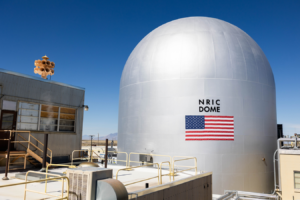
Credit: DOE
About the companies
Deployable Energy, based in Texas, is developing a 1-MWe gas-cooled microreactor. Its design emphasizes transportability for use in remote locations, including applications for defense, maritime and data centers.
General Matter is the only fuel-focused selectee. It has leased land for a private uranium enrichment facility in Kentucky and is exploring the potential use of the long-idle Fuels and Materials Examination Facility at the Hanford Site to improve the domestic fuel supply chain.
NuCube Energy is developing a 15-MW high-temperature, solid-state microreactor. The company is also working with Idaho State University and recently received a voucher to verify its autonomous operation and remote monitoring systems.
Radiant Industries is developing a Kaleidos microreactor, which is TRISO-fueled and helium-cooled. The company will be the inaugural fueled experiment at DOME as it begins a year-long testing program for its Kaleidos microreactor.
NuCube Energy has received additional support through a DOE Gateway for Accelerated Innovation in Nuclear (GAIN) voucher to verify its autonomous operation and remote monitoring systems.
Reducing the timeline to next-generation nuclear power
According to the DOE, inclusion in the program allows these companies to begin discussions with NRIC on the enhanced technical, regulatory and deployment support that the Nuclear Energy Launch Pad can provide. The program provides a pathway for moving promising technologies from the conceptual stage to full deployment.
Built from the repurposed Experimental Breeder Reactor-II dome, a former reactor facility at INL, the 80-foot-diameter, 100-foot-tall test bed provides an environment for testing experimental reactor concepts and gathering performance data. Reactor developers will use that data to support design verification and future licensing.
By offering real-world operating conditions and expert support, DOME could reduce the time and cost required to deploy next-generation nuclear technologies. It is designed to host microreactor experiments generating up to 20 megawatts of thermal energy.
How to apply
Developers seeking to test in DOME must respond to NRIC’s annual Request for Applications (RFA). NRIC and DOE will evaluate and sequence proposed reactor experiments based on criteria including technology readiness, fuel availability, regulatory approval strategy and developer capabilities.
Applications must describe the reactor technology maturity, fuel plans, planned tests, schedule, how the reactor will interface with DOME, regulatory compliance plans and funding.
Responses to the current RFA are due June 19 and applications are due July 8. Applicants are expected to self-fund their DOME test campaign.