 The U.S. Department of Energy has approved a key safety document for the MARVEL microreactor at Idaho National Laboratory. The move clears the project to move ahead with its first controlled nuclear chain reaction.
MARVEL is still fission nuclear in the classic sense: it uses uranium fuel [(uranium-zirconium hydride enriched with 19.75% (HALEU)], a controlled chain reaction, heat production, and then conversion of some of that heat into electricity. In that respect, it is old-school nuclear made much smaller.
Specifically, MARVEL is a sodium-potassium-cooled microreactor designed to produce 85 to 100 kilowatts of thermal energy and approximately 20 kilowatts of electricity. That is enough to power a small building. Its purpose is to serve as a test bed for microreactor technology: generating operational data, testing integration with end-use systems and establishing a safety and licensing process that other developers can follow.
The approved Preliminary Documented Safety Analysis, or PDSA, covers what is known as a dry initial criticality configuration, a near-zero-power experiment in which the reactor’s fuel is brought to a sustained chain reaction without coolant flow or significant heat generation. The goal is to confirm that the reactor’s physics behavior matches its design models before the system moves to full assembly, fuel loading and higher-power operation.
If the broader approach works, small, factory-producible reactors with a standardized safety process, the applications DOE and developers are targeting include remote communities, military installations, mining operations and disaster response sites.
MARVEL, short for Microreactor Applications Research Validation and Evaluation, is a sodium-potassium-cooled microreactor. It is designed to produce 85 to 100 kilowatts of thermal energy and approximately 20 kilowatts of electricity.
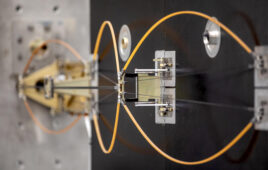
The safety analysis draws in part on experimental data from PCAT, a full-scale replica of MARVEL’s primary coolant loop that INL used to verify that the reactor can remove heat through natural circulation, without mechanical pumps, and that its computational models match physical behavior.
INL says MARVEL is intended to support research, development and end-user demonstrations, and to generate operational data that could be applied to future microreactor designs.
Abdalla Abou-Jaoude, MARVEL microreactor lead at INL, said in a statement that the approved safety documentation could serve as a reference for other developers working through similar regulatory processes. John Jackson, national technical director for DOE’s Office of Nuclear Energy Microreactor Program, called the approval a step toward demonstrating a repeatable path for microreactor safety authorization.
Researchers plan to conduct the dry criticality experiment at INL’s Transient Reactor Test Facility. After that, the project team will work with DOE-Idaho and other stakeholders to finalize the safety basis for full reactor assembly and fuel loading.
INL said the phased approach is meant to identify and address potential issues earlier in development.