The FDA approved Flow, an at-home brain-simulation device from Flow Neuroscience, for the treatment of major depressive disorder (MDD) on Thursday. Flow is among the first at-home non-drug therapies for the treatment of depression outside of therapies, including app-based CBT and light therapy.
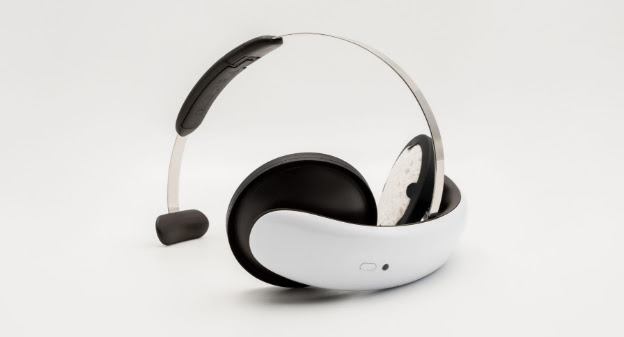
Flow’s brain stimulation device (Source: Flow Neuroscience)
Depression affects more than 20 million Americans, around a third of whom are not responsive to antidepressants. Many others stop treatment due to adverse side effects such as weight gain and emotional numbness. As Flow is not a drug, it could be an option for some patients experiencing these difficulties.
How it works
Flow works through transcranial direct current stimulation (tDCS), which has been studied for over 25 years and is supported by over 9,000 published studies. Flow applies a gentle electrical current to the prefrontal cortex, the part of the brain involved in mood regulation and stress response, which is often underactive in people with depression.
tDCS uses a constant, low direct current to stimulate and activate brain cells. This changes brain function by causing the neuron’s resting membrane potential to depolarize or hyperpolarize. When positive, or anodal, tDCS is delivered, neurons become excited and spontaneous cell firing increases. When negative, or cathodal, tDCS is delivered, neuron excitability and spontaneous cell firing decrease. Research shows evidence that tDCS can treat conditions such as depression, schizophrenia, anxiety and PTSD.
In clinical trials, the device significantly improved depression symptoms, as measured by the Hamilton Depression Rating Scale (HDRS). In the treatment group, patients saw an average decrease of 9.41 points in HDRS score. Overall, rates of treatment response and remission were 2-3 times greater in the active arm. By the end of the 10-week study, 58% of patients receiving the treatment achieved remission.
Treatment delivered at home
“Among our real-world users, 77% see improvements in as little as three weeks. Such treatment, previously confined to clinics, can now be delivered at home, pointing to a scalable way of expanding access to effective depression care,” said Flow’s Chief Medical Officer, Dr. Kultar Garcha.
Flow received a Breakthrough Device Designation from the FDA in 2022, which expedited its development and review process. Flow Neuroscience expects the device to be available in the U.S. as early as the second quarter of 2026.
The company is also planning to evaluate its platform as a treatment for additional neuropsychiatric indications, including traumatic brain injury, addiction and sleep disorders.