Research & Development World

  • R&D World Home
  • Topics
    • Aerospace
    • Automotive
    • Biotech
    • Careers
    • Chemistry
    • Environment
    • Energy
    • Life Science
    • Material Science
    • R&D Management
    • Physics
  • Technology
    • 3D Printing
    • A.I./Robotics
    • Software
    • Battery Technology
    • Controlled Environments
      • Cleanrooms
      • Graphene
      • Lasers
      • Regulations/Standards
      • Sensors
    • Imaging
    • Nanotechnology
    • Scientific Computing
      • Big Data
      • HPC/Supercomputing
      • Informatics
      • Security
    • Semiconductors
  • R&D Market Pulse
  • R&D 100
    • 2025 R&D 100 Award Winners
    • 2025 Professional Award Winners
    • 2025 Special Recognition Winners
    • R&D 100 Awards Event
    • R&D 100 Submissions
    • Winner Archive
  • Resources
    • Research Reports
    • Digital Issues
    • Educational Assets
    • Subscribe
    • Video
    • Webinars
    • Content submission guidelines for R&D World
  • Global Funding Forecast
  • Top Labs
  • Advertise
  • SUBSCRIBE

Heat Loss From the Earth Triggers Ice Sheet Slide Towards The Sea

By Aarhus University | January 22, 2018

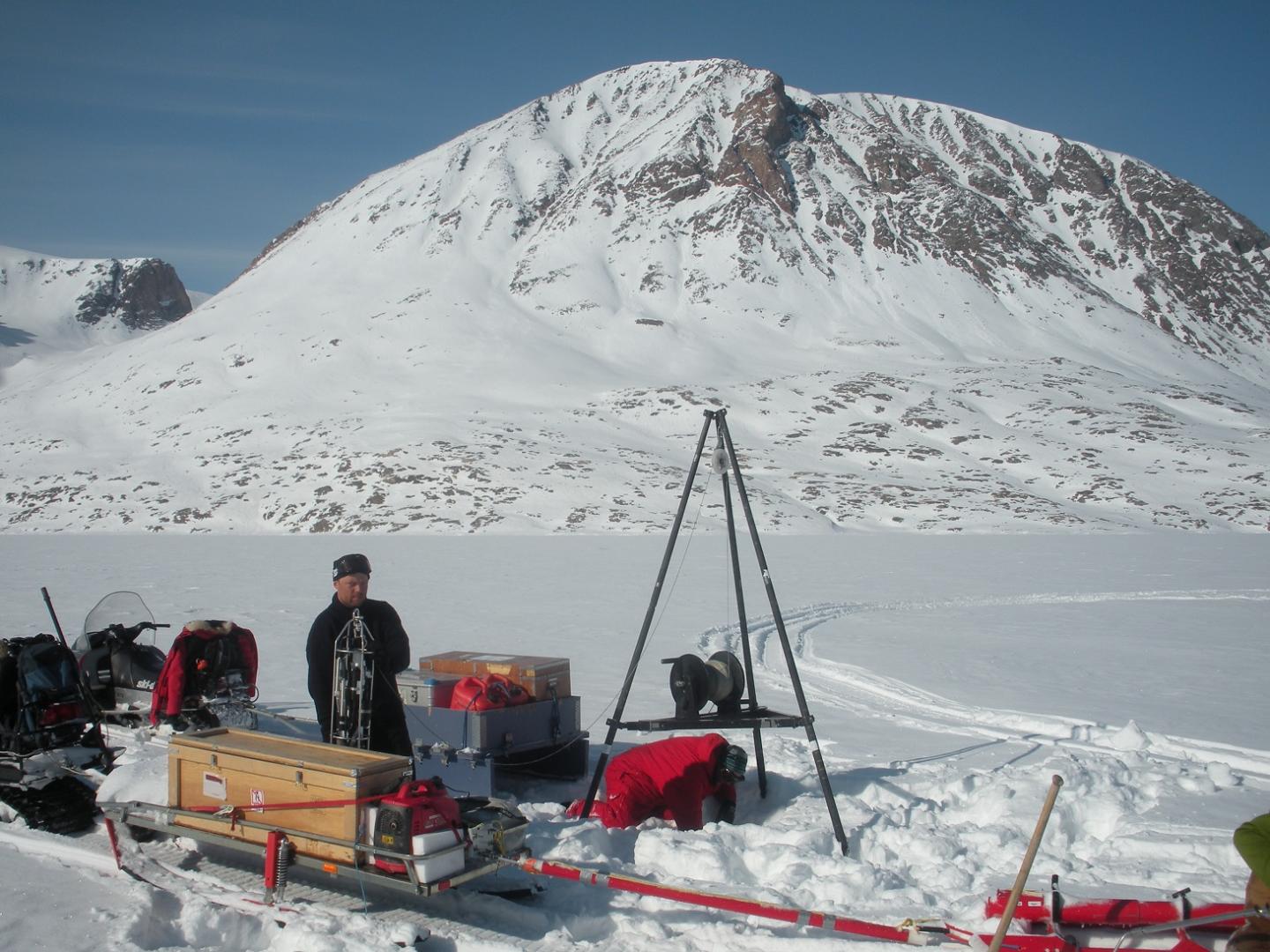
Although it may be biting cold over the water, heat from the Earth’s interior is transported to the bottom water of Young Sound, North-East Greenland. Photo: Wieter Boone

Greenland’s ice sheet is becoming smaller and smaller. The melting takes place with increased strength and at a speed that no models have previously predicted.

Today, in the esteemed journal Scientific Reports, researchers from the Arctic Research Centre, Aarhus University, and the Greenland Institute of Natural Resources present results that, for the first time, show that the deep bottom water of the north-eastern Greenland fjords is being warmed up by heat gradually lost from the Earth’s interior. And the researchers point out that this heat loss triggers the sliding of glaciers from the ice sheet towards the sea.

Icelandic conditions

“North-East Greenland has several hot springs where the water becomes up to 60 degrees warm and, like Iceland, the area has abundant underground geothermal activity,” explains Professor Soren Rysgaard, who headed the investigations.

For more than ten years, the researchers have measured the temperature and salinity in the fjord Young Sound, located at Daneborg, north of Scoresbysund, which has many hot springs, and south of the glacier Nioghalvfjerdsfjorden, which melts rapidly and is connected to the North-East Greenland Ice Stream (NEGIS).

By focusing on an isolated basin in the fjord with a depth range between 200 and 340 m, the researchers have measured how the deep water is heated over a ten-year period. Based on the extensive data, researchers have estimated that the loss of heat from the Earth’s interior to the fjord is about 100 MW m-2. This corresponds to a 2 megawatt wind turbine sending electricity to a large heater at the bottom of the fjord all year round.

Heat from the Earth’s interior – an important influence

It is not easy to measure the geothermal heat flux – heat emanating from the Earth’s interior – below a glacier, but within the area there are several large glaciers connected directly to the ice sheet. If the Earth releases heat to a fjord, heat also seeps up to the bottom part of the glaciers. This means that the glaciers melt from below and thus slide more easily over the terrain on which they sit when moving to the sea.

“It is a combination of higher temperatures in the air and the sea, precipitation from above, local dynamics of the ice sheet and heat loss from the Earth’s interior that determines the mass loss from the Greenland ice sheet,” explains Soren Rysgaard.

“There is no doubt that the heat from the Earth’s interior affects the movement of the ice, and we expect that a similar heat seepage takes place below a major part of the ice cap in the north-eastern corner of Greenland,” says Soren Rysgaard.

The researchers expect that the new discoveries will improve the models of ice sheet dynamics, allowing better predictions of the stability of the Greenland ice sheet, its melting and the resulting global water rise.


Related Articles Read More >

How a new permafrost climate model fits a dangerous pattern in climate science
Trump administration to dismantle ocean observatories that provide data freely to researchers
Atmospheric carbon dioxide hits record 431 ppm as Mauna Loa Observatory faces funding cuts
Microplastics may contribute to global warming new research indicates
rd newsletter
EXPAND YOUR KNOWLEDGE AND STAY CONNECTED
Get the latest info on technologies, trends, and strategies in Research & Development.

R&D World Digital Issues

Fall 2025 issue

Browse the most current issue of R&D World and back issues in an easy to use high quality format. Clip, share and download with the leading R&D magazine today.

R&D 100 Awards
Research & Development World
  • Subscribe to R&D World Magazine
  • Sign up for R&D World’s newsletter
  • Contact Us
  • About Us
  • Drug Discovery & Development
  • Pharmaceutical Processing
  • Global Funding Forecast

Copyright © 2026 WTWH Media LLC. All Rights Reserved. The material on this site may not be reproduced, distributed, transmitted, cached or otherwise used, except with the prior written permission of WTWH Media
Privacy Policy | Advertising | About Us

Search R&D World

  • R&D World Home
  • Topics
    • Aerospace
    • Automotive
    • Biotech
    • Careers
    • Chemistry
    • Environment
    • Energy
    • Life Science
    • Material Science
    • R&D Management
    • Physics
  • Technology
    • 3D Printing
    • A.I./Robotics
    • Software
    • Battery Technology
    • Controlled Environments
      • Cleanrooms
      • Graphene
      • Lasers
      • Regulations/Standards
      • Sensors
    • Imaging
    • Nanotechnology
    • Scientific Computing
      • Big Data
      • HPC/Supercomputing
      • Informatics
      • Security
    • Semiconductors
  • R&D Market Pulse
  • R&D 100
    • 2025 R&D 100 Award Winners
    • 2025 Professional Award Winners
    • 2025 Special Recognition Winners
    • R&D 100 Awards Event
    • R&D 100 Submissions
    • Winner Archive
  • Resources
    • Research Reports
    • Digital Issues
    • Educational Assets
    • Subscribe
    • Video
    • Webinars
    • Content submission guidelines for R&D World
  • Global Funding Forecast
  • Top Labs
  • Advertise
  • SUBSCRIBE