Atomis, a Japanese startup advised by 2025 Nobel laureate Susumu Kitagawa, is bringing Metal Organic Frameworks (MOFs) to applications such as CO2 capture, refrigerant recycling and next-generation deodorization and coatings. One tool they are using to accomplish this is an AI-powered simulation platform from Matlantis.
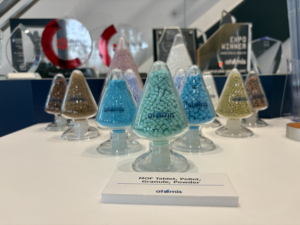
Credit: Atomis
MOFs have struggled to move beyond the lab due to the slow and costly process of testing the millions of possible structures. Organizations targeting the market range form the German conglomerate BASF, which in 2023 boasted that it had produced MOFs on a commercial scale for carbon capture and Baker Hughes to firms like Kemira and Cusp.AI. Atomis is using Matlantis to shift its workflow from sequential testing to rapid iteration.
Overcoming barriers to commercialization
MOFs can be designed for a variety of uses, leading researchers to chase new reagents rather than considering profitability, which is one reason the technology has not been commercialized, Daisuke Asari, Atomis CEO, said in a case study.
“We consider everything from the initial stages, including the price range, while talking with our customers,” he said. “We don’t just pursue performance; we aim for products that strike a good balance between durability, performance and cost to be put into practical use.”
Another barrier is scale, he said. While a small amount of material is sufficient for experiments, industrial applications require much more. Additionally, manufacturing methods must be efficient and sustainable.
Atomis aims for mass-market applications of MOFs, such as CO2 separation at the ton scale, to drive down production costs and prove the feasibility of mass manufacturing. Unlike its competitors, including Immaterial Ltd., which focuses on monolithic MOFs, and BASF, which established ton-scale production of specific sorbents, Atomis uses a general-purpose AI platform to rapidly screen MOFs across multiple industries rather than focusing on a specific niche.
Speeding up supercomputer calculations
Matlantis, a cloud-based atomistic simulation platform, can run simulations that take days on shared supercomputers within hours. It is powered by a universal machine learning interatomic potential, called preferred potential (PFP).
PFP uses Graph Neural Networks (GNNs) where atoms are nodes and interactions are edges so the model can learn features automatically instead of relying on manual human design. The model propagates vector and higher-order tensor features, which improves its ability to represent complex geometric orientations compared to simpler models.
The platform is trained on millions of density functional theory (DFT) calculations performed on supercomputers. The training dataset includes non-equilibrium and unstable structures, allowing the AI to accurately simulate unknown materials and complex reactions.
“If you want to handle a few hundred atoms, that can take days or weeks on the supercomputer, but with the help of machine learning methodology, we can essentially accelerate the simulation speed and can do this calculation in hours or days,” said Taku Watanabe, vice president and head of U.S. operations at Matlantis.
Atomis has a contract with Kyoto University that allows the company to use the school’s supercomputer. However, as the computer is shared, the company may have to wait for several days or longer for calculations, YuhChyuan Chang, a researcher at Atomis, said in a Matlantis case study.
“In that respect, Matlantis was a huge advantage because it allowed us to run calculations immediately when needed, enabling us to integrate simulations without interrupting the experimental process,” he said.
The research team at Atomis integrated Matlantis into their workflow, using it in the initial stages, such as screening candidate structures and understanding behaviors, before using DFT, which is known to be highly accurate but not easily scalable, for final evaluations and verification.
Atomis has created a database of candidate materials, including cost data, which they use to perform simulations and DFT calculations. They use Matlantis and other methods to run simulations on candidates, comparing the results to narrow down the possible materials. Then, the researchers move into the lab with the best candidates.
The researchers compared results from Matlantis with those from the university supercomputer, concluding that they were “not significantly different,” Chang said.
Python improves user experience
Atlantis can perform calculations using Python, which the researchers found useful “for the continuous execution of calculations based on multiple conditions,” Chang said. “With Matlantis, you only need to write a script once to run calculations continuously, allowing for efficient data accumulation.”
He added that using Python on the platform made it easier for scientists who primarily conduct experiments and have little experience with simulations.
Matlantis also helped the team communicate with their customers through molecular simulation videos that visualize molecule behavior.
“I feel that Matlantis makes it easier to create persuasive materials because it allows us to visualize the behavior of materials,” said Asari. “Because we can visualize behaviors such as ‘gas molecules actually entering adsorption sites where we thought they wouldn’t normally enter,’ I think it contributes to customer satisfaction.”