Only one-third of major depressive disorder patients find relief with their first prescribed antidepressant. The current clinical standard involves 4 to 12 week observation periods per drug, leading to months or years of patient suffering and systemic healthcare costs.
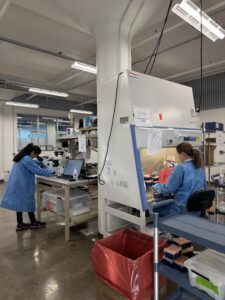
NeuroKaire’s lab facility. Credit: NeuroKaire
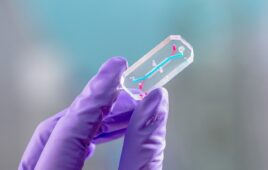
NeuroKaire’s new CLIA-certified BrightKaire test could help healthcare providers determine which antidepressant could be most effective for each patient. The test uses a Nobel Prize-winning technology to reprogram peripheral blood cells into stem cells, and then into patient-specific frontal cortical neurons.
“It feels like a guessing game… doctors are quite familiar with that feeling. To have the biggest impact on patient lives and help as many people as possible [is our goal],” said Talia Cohen Solal, CEO and cofounder of NeuroKaire.
Current Central Nervous System (CNS) R&D relies on liver metabolism, which doesn’t account for the functional mechanics of the brain. NeuroKaire’s test measures how each drug improves neuronal plasticity, communication and signaling between neurons.
A functional “brain biopsy”
The test marks a transition away from observing behavioral symptoms to analyzing biological responses in live patient neurons. The test allows for a method similar to the biopsies used in oncology, which has previously been impossible for a living brain.
“It turned out that now there’s a technology that actually allows you to do essentially what is a biopsy of the brain… we can now look at a representation of each individual’s brain and ask questions of it,” said Daphna Laifenfeld, CSO and cofounder.
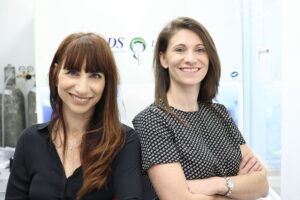
Talia Cohen Solal and Daphna Laifenfeld, cofounders of Neurokaire
The technology uses Yamanka factors to turn a peripheral blood sample into pluripotent stem cells. These cells are then differentiated into neurons that mirror those in the patient’s frontal cortex, a key area for depression response.
An AI computer vision platform analyzes the neuronal changes, removing human bias and saving thousands of hours of manual labor, NeuroKaire says.
“We’ve created the fastest, most non-biased and effective platform that we know of. Within six weeks, we create neurons,” said Cohen Solal.
In order to be effective, antidepressants must induce neuroplasticity to improve neuronal communication and patient symptoms. This is why NeuroKaire measures plasticity as a biomarker of effectiveness.
The biological engine: Nobel-winning iPSC technology
The test is based on technology, called induced Pluripotent Stem Cells (iPSC), that won the Nobel Prize in Physiology or Medicine in 2012. John B. Gurdon and Shinya Yamanaka discovered that mature, specialized cells could be reprogrammed to become immature cells capable of developing into all tissues of the body.
In 1962, Gurdon discovered that the specialization of cells is reversible by replacing the immature cell nucleus in an egg cell of a frog with the nucleus from a mature intestinal cell. The modified egg cell still developed into a normal tadpole, showing that the DNA of the mature cell still had all the information needed to develop all cells in the frog.
In 2006, Shinya Yamanaka discovered that intact mature cells in mice could be reprogrammed to become immature stem cells. By introducing only a few genes, he reprogrammed mature cells to become pluripotent stem cells that could develop into all types of cells in the body.
From clinical diagnostics to high-throughput pharma screening
After eight to 12 weeks, physicians receive a report ranking 17 commonly prescribed antidepressants based on the patient’s unique cellular response. The test is CLIA-certified and governed by CMS.
The success of the MDD test could serve as a foundation for upcoming tools in ADHD, PTSD, OCD, Alzheimer’s and other mental illnesses.
By finding the best drug sooner, practitioners can reduce the administrative and clinical burden of managing non-responsive patients. The test is currently available in 49 states, and is pending approval in New York.
Pharma companies can also use the platform to screen potential trial participants’ neurons before a clinical trial begins. By identifying which patients are most likely to respond to a drug at a cellular level, companies can recruit a patient population more likely to show clinical efficacy, significantly reducing the risk of trial failure.
NeuroKaire’s AI-driven computer vision platform can analyze thousands of microscopy features and RNA transcripts across hundreds of patient-derived neuronal lines. This allows companies to screen entire libraries of compounds to see which ones induce the most positive structural changes in neurons.
“Mental health is reaching unprecedented levels… The moment is finally here. Between us and the psychedelics, the world’s gonna change,” Cohen Solal said.