Research & Development World

  • R&D World Home
  • Topics
    • Aerospace
    • Automotive
    • Biotech
    • Careers
    • Chemistry
    • Environment
    • Energy
    • Life Science
    • Material Science
    • R&D Management
    • Physics
  • Technology
    • 3D Printing
    • A.I./Robotics
    • Software
    • Battery Technology
    • Controlled Environments
      • Cleanrooms
      • Graphene
      • Lasers
      • Regulations/Standards
      • Sensors
    • Imaging
    • Nanotechnology
    • Scientific Computing
      • Big Data
      • HPC/Supercomputing
      • Informatics
      • Security
    • Semiconductors
  • R&D Market Pulse
  • R&D 100
    • 2025 R&D 100 Award Winners
    • 2025 Professional Award Winners
    • 2025 Special Recognition Winners
    • R&D 100 Awards Event
    • R&D 100 Submissions
    • Winner Archive
  • Resources
    • Research Reports
    • Digital Issues
    • Educational Assets
    • R&D Index
    • Subscribe
    • Video
    • Webinars
    • Content submission guidelines for R&D World
  • Global Funding Forecast
  • Top Labs
  • Advertise
  • SUBSCRIBE

Insight on Preventing Destruction of a Tumor Suppressor

By R&D Editors | December 17, 2009

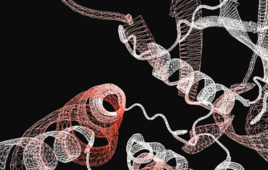
Researchers from the Indiana University School of Medicine and colleagues at the University of Texas Southwestern and Case Western University have determined how the protein Mdm2, which is elevated in late-stage cancers, disables genes that suppress the growth of tumors. The finding may lead to the development of new drugs for late stage breast cancer and other difficult to treat malignancies.

The investigators have identified a critical pathway that stimulates the production of Mdm2 causing an increase in the level of protein that bind to p53, the most common tumor suppressor, as well as other tumor suppressors, and extinguishes tumor suppression activity. The study appears in the January 2010 issue of the Journal of Clinical Investigation.

Principal investigator Lindsey Mayo, PhD, assistant professor of pediatrics at the Herman B Wells Center for Pediatric Research at the IU School of Medicine and an Indiana University Melvin and Bren Simon Cancer Center member, says that keeping Mdm2 inactive and preventing the destruction of the tumor suppressor that Mdm2 targets, is critical to preventing cancer from spreading within the body.

To explain the role of Mdm2 and how the newly identified pathways function, Dr. Mayo uses the analogy of a florescent ceiling fixture in which Mdm2 is the fluorescent bulb. “Initially, it was only known that the light was on, not how it was turned on. We discovered the wall switch and wires that connect to the light fixture to turn on the fluorescent light.”

“This work provides new evidence about an important mechanism that tumor cells use to promote metastasis. While it has long been known that the loss of tumor suppressor activity triggers cancer, knowledge of how these cancer inhibitors are turned on and off has eluded researchers. Understanding the signaling pathways that elevate Mdm2 is critical to preventing cancer from spreading within the body and key to attacking many late stage cancers,” said Dr. Mayo, a molecular biochemist  who studies the mechanisms that control tumor suppressors.

While it is too early to speculate on which chemical compounds may yield successful drugs, Dr. Mayo says this new insight into Mdm2 and its pathways provides a useful roadmap to stimulate development of new compounds which could bind to Mdm2 to inhibit the protein and stop its attacks on tumor suppressors.

In addition to Dr. Mayo, co-authors of the study, which was funded by the National Cancer Institute, are medical student Jacob A. Eitel, graduate student Christopher N. Batuello, Khadijeh Bijangi-Vishehsaraei, Ph.D. and Karen E. Pollok, Ph.D. of the IU School of Medicine, Shinako Araki, Ph.D., Xian-Jin Xie Ph.D., and David A. Boothman, Ph.D. of the University of Texas Southwestern Medical Center; and David Danielpour, Ph.D. of Case Western Reserve University.

Release Date: December 7, 2009
Source: Indiana University School of Medicine  

Related Articles Read More >

JLL: 2026 could be a realignment year for life science labs
How Prelude and QDX are using quantum chemistry to discover cancer treatments
US political drama is pushing life sciences talent toward Switzerland, Basel leader says
Thermo Fisher targets early-stage CGT bottlenecks with new Philadelphia hub
rd newsletter
EXPAND YOUR KNOWLEDGE AND STAY CONNECTED
Get the latest info on technologies, trends, and strategies in Research & Development.
RD 25 Power Index

R&D World Digital Issues

Fall 2025 issue

Browse the most current issue of R&D World and back issues in an easy to use high quality format. Clip, share and download with the leading R&D magazine today.

Research & Development World
  • Subscribe to R&D World Magazine
  • Sign up for R&D World’s newsletter
  • Contact Us
  • About Us
  • Drug Discovery & Development
  • Pharmaceutical Processing
  • Global Funding Forecast

Copyright © 2025 WTWH Media LLC. All Rights Reserved. The material on this site may not be reproduced, distributed, transmitted, cached or otherwise used, except with the prior written permission of WTWH Media
Privacy Policy | Advertising | About Us

Search R&D World

  • R&D World Home
  • Topics
    • Aerospace
    • Automotive
    • Biotech
    • Careers
    • Chemistry
    • Environment
    • Energy
    • Life Science
    • Material Science
    • R&D Management
    • Physics
  • Technology
    • 3D Printing
    • A.I./Robotics
    • Software
    • Battery Technology
    • Controlled Environments
      • Cleanrooms
      • Graphene
      • Lasers
      • Regulations/Standards
      • Sensors
    • Imaging
    • Nanotechnology
    • Scientific Computing
      • Big Data
      • HPC/Supercomputing
      • Informatics
      • Security
    • Semiconductors
  • R&D Market Pulse
  • R&D 100
    • 2025 R&D 100 Award Winners
    • 2025 Professional Award Winners
    • 2025 Special Recognition Winners
    • R&D 100 Awards Event
    • R&D 100 Submissions
    • Winner Archive
  • Resources
    • Research Reports
    • Digital Issues
    • Educational Assets
    • R&D Index
    • Subscribe
    • Video
    • Webinars
    • Content submission guidelines for R&D World
  • Global Funding Forecast
  • Top Labs
  • Advertise
  • SUBSCRIBE