 Insilico Medicine on Tuesday announced the formation of what it calls the industry’s first Longevity Board. The firm is naming Eli Lilly Group Vice President of Molecular Discovery Andrew Adams as chairman as the company pushes deeper into AI-driven aging research. The board will oversee work spanning aging biomarkers, dual-purpose targets implicated in aging and disease, and clinical development aimed at validating therapies against the hallmarks of aging, according to the company.
The move gives formal structure to a longevity strategy Insilico has been building for years. In addition to Adams, the initial board includes 2013 Nobel laureate Michael Levitt, Insilico co-CEOs Alex Zhavoronkov and Feng Ren, Medici Therapeutics CEO Denitsa Milanova, and Value Partners’ C.Y. Leung.
The board may be new, but the focus isn’t. Longevity has been central to Zhavoronkov’s pitch since Insilico’s earliest days: the company’s first public outing came at NVIDIA’s 2015 GTC conference, At the time, Zhavoronkov noted: “We developed a bioinformatics platform and strategy to tackle humanity’s greatest challenge – aging and age-related diseases and we’re honored to be recognized by NVIDIA as a promising GPU-powered startup.”
By 2016 Insilico had entered a research collaboration with LongeVC, the longevity-focused fund that became a seed backer of the now-public company. LongeVC managing partner Garri Zmudze, writing on LinkedIn Tuesday, called the board “a meaningful step toward making longevity science part of mainstream medicine.” (LongeVC’s advisory board also includes Levitt and Zhavoronkov.)
Earlier this year, Alex Zhavoronkov described to R&D World a “longevity vault” of aging-implicated drug targets. “I think that maybe in the next couple years, I’m going to push the trigger on a few of our 100% focused on longevity targets,” he said.
Insilico spent a decade building a commercial pipeline that let it fund longevity work without asking regulators or pharma to buy in. Rather than sell longevity head-on, Insilico spent years building what it now describes as an ‘AI + Drug Discovery’ dual-engine business, pairing software and drug-discovery partnerships with a broader therapeutic pipeline. In its 2025 results, the company said that model generated $56.24 million in revenue, served 13 of the top 20 global pharmaceutical companies and supported a pipeline of more than 40 programs. That commercial base gave Zhavoronkov room to treat longevity as a long game rather than a standalone bet.”
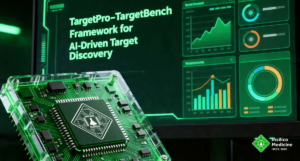
The timing of the Longevity Board announcement also coincides with a broader platform push. On April 20, Insilico said its TargetPro–TargetBench framework, the target-discovery and benchmarking system inside its PandaOmics platform, had been described in a Scientific Reports paper published April 12 showing 71.6% precision-at-top-K in retrieving known clinical targets, which the company said was a 1.7-fold to 5.5-fold improvement over leading large-language-model approaches. The latest versions, TargetPro 2.0 and TargetBench 2.0, expand coverage from 38 diseases to 100 indications across 10 therapeutic areas, including cardiovascular, ophthalmological, reproductive, and mental-health disorders. “Most failures in drug discovery begin with weak target selection,” Zhavoronkov said in the announcement. That matters here because the Longevity Board is explicitly tasked with overseeing dual-purpose targets implicated in aging, longevity, and disease, a mandate that appears to depend on exactly this kind of target-selection infrastructure.