Research & Development World

  • R&D World Home
  • Topics
    • Aerospace
    • Automotive
    • Biotech
    • Careers
    • Chemistry
    • Environment
    • Energy
    • Life Science
    • Material Science
    • R&D Management
    • Physics
  • Technology
    • 3D Printing
    • A.I./Robotics
    • Software
    • Battery Technology
    • Controlled Environments
      • Cleanrooms
      • Graphene
      • Lasers
      • Regulations/Standards
      • Sensors
    • Imaging
    • Nanotechnology
    • Scientific Computing
      • Big Data
      • HPC/Supercomputing
      • Informatics
      • Security
    • Semiconductors
  • R&D Market Pulse
  • R&D 100
    • 2025 R&D 100 Award Winners
    • 2025 Professional Award Winners
    • 2025 Special Recognition Winners
    • R&D 100 Awards Event
    • R&D 100 Submissions
    • Winner Archive
  • Resources
    • Research Reports
    • Digital Issues
    • Educational Assets
    • Subscribe
    • Video
    • Webinars
    • Content submission guidelines for R&D World
  • Global Funding Forecast
  • Top Labs
  • Advertise
  • SUBSCRIBE

LOFAR Radio Telescope Reveals Secrets of Solar Storms

By University of Helsinki | February 19, 2019

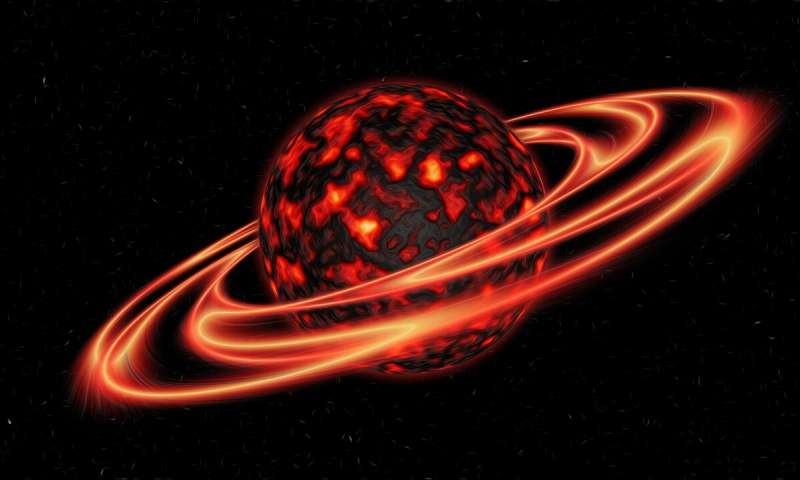
Credit: CC0 Public Domain

An international team of scientists led by a researcher from Trinity College Dublin and University of Helsinki announced a major discovery on the very nature of solar storms in the journal Nature Astronomy.

The team showed that solar storms can accelerate particles simultaneously in several locations by combining data from the Low Frequency Array, LOFAR, with images from NASA, NOAA and ESA spacecraft.

The sun is the closest star to Earth, and like many stars, it is far from quiet. Sunspots many times the size of Earth can appear on its surface and store enormous reservoirs of energy. And it is within these regions that huge explosions called solar storms occur. Solar storms are spectacular eruptions of billions of tonnes of hot gas traveling at millions of kilometres an hour. The Nature Astronomy paper reports on a particularly large solar storm that occured on September 10, 2017, soon after the LOFAR station in Ireland came online.

How to predict space weather

“Our results are very exciting, as they give us an amazingly detailed insight into how solar storms propagate away from the sun and where they accelerate fast particles with speeds close to the speed of light,” says Dr. Diana Morosan, the lead author on the publication, and affiliated with Trinity College Dublin and the University of Helsinki.

These results may in the future help researchers to produce more accurate forecasts of solar radio bursts and determine how solar storms impact the Earth—they can produce beautiful displays of the aurora, but they can also cause problems with communication and navigation systems and power grids. Society is now even more dependent on technology, and solar storms have the potential to cause significant effects on their performance.

In 1859, the largest solar storm ever observed – the so-called Carrington Event – occurred. Within hours, it generated displays of aurora as far south as Italy and Cuba and caused interruptions in early telegraph systems in Europe and the U.S.

During a 2003 event, transformers in South Africa were damaged, and Swedish air traffic control systems were closed down in 2015 for more than an hour due to effects associated with a solar storm. More than 50 satellites reported problems. More recently, emergency response communications were interrupted during hurricane season in September 2017 in the Caribbean.

“We used data from the Low Frequency Array, LOFAR, together with images from NASA, NOAA and ESA spacecraft to show where solar storms accelerate fast particles,” says Morosan.
Related Articles Read More >

The science behind the Prada-designed spacesuit for Artemis 
NASA is confident Blue Origin will be ready for Artemis III despite explosion
Blue Origin explosion leaves Artemis experiments in limbo
SpaceX’s Starship V3 rocket completed its launch rehearsal
rd newsletter
EXPAND YOUR KNOWLEDGE AND STAY CONNECTED
Get the latest info on technologies, trends, and strategies in Research & Development.

R&D World Digital Issues

Fall 2025 issue

Browse the most current issue of R&D World and back issues in an easy to use high quality format. Clip, share and download with the leading R&D magazine today.

R&D 100 Awards
Research & Development World
  • Subscribe to R&D World Magazine
  • Sign up for R&D World’s newsletter
  • Contact Us
  • About Us
  • Drug Discovery & Development
  • Pharmaceutical Processing
  • Global Funding Forecast

Copyright © 2026 WTWH Media LLC. All Rights Reserved. The material on this site may not be reproduced, distributed, transmitted, cached or otherwise used, except with the prior written permission of WTWH Media
Privacy Policy | Advertising | About Us

Search R&D World

  • R&D World Home
  • Topics
    • Aerospace
    • Automotive
    • Biotech
    • Careers
    • Chemistry
    • Environment
    • Energy
    • Life Science
    • Material Science
    • R&D Management
    • Physics
  • Technology
    • 3D Printing
    • A.I./Robotics
    • Software
    • Battery Technology
    • Controlled Environments
      • Cleanrooms
      • Graphene
      • Lasers
      • Regulations/Standards
      • Sensors
    • Imaging
    • Nanotechnology
    • Scientific Computing
      • Big Data
      • HPC/Supercomputing
      • Informatics
      • Security
    • Semiconductors
  • R&D Market Pulse
  • R&D 100
    • 2025 R&D 100 Award Winners
    • 2025 Professional Award Winners
    • 2025 Special Recognition Winners
    • R&D 100 Awards Event
    • R&D 100 Submissions
    • Winner Archive
  • Resources
    • Research Reports
    • Digital Issues
    • Educational Assets
    • Subscribe
    • Video
    • Webinars
    • Content submission guidelines for R&D World
  • Global Funding Forecast
  • Top Labs
  • Advertise
  • SUBSCRIBE