Research & Development World

  • R&D World Home
  • Topics
    • Aerospace
    • Automotive
    • Biotech
    • Careers
    • Chemistry
    • Environment
    • Energy
    • Life Science
    • Material Science
    • R&D Management
    • Physics
  • Technology
    • 3D Printing
    • A.I./Robotics
    • Software
    • Battery Technology
    • Controlled Environments
      • Cleanrooms
      • Graphene
      • Lasers
      • Regulations/Standards
      • Sensors
    • Imaging
    • Nanotechnology
    • Scientific Computing
      • Big Data
      • HPC/Supercomputing
      • Informatics
      • Security
    • Semiconductors
  • R&D Market Pulse
  • R&D 100
    • 2025 R&D 100 Award Winners
    • 2025 Professional Award Winners
    • 2025 Special Recognition Winners
    • R&D 100 Awards Event
    • R&D 100 Submissions
    • Winner Archive
  • Resources
    • Research Reports
    • Digital Issues
    • Educational Assets
    • Subscribe
    • Video
    • Webinars
    • Content submission guidelines for R&D World
  • Global Funding Forecast
  • Top Labs
  • Advertise
  • SUBSCRIBE

Mica Provides Clues to How Water Transports Minerals

By Argonne National Laboratory | July 17, 2017

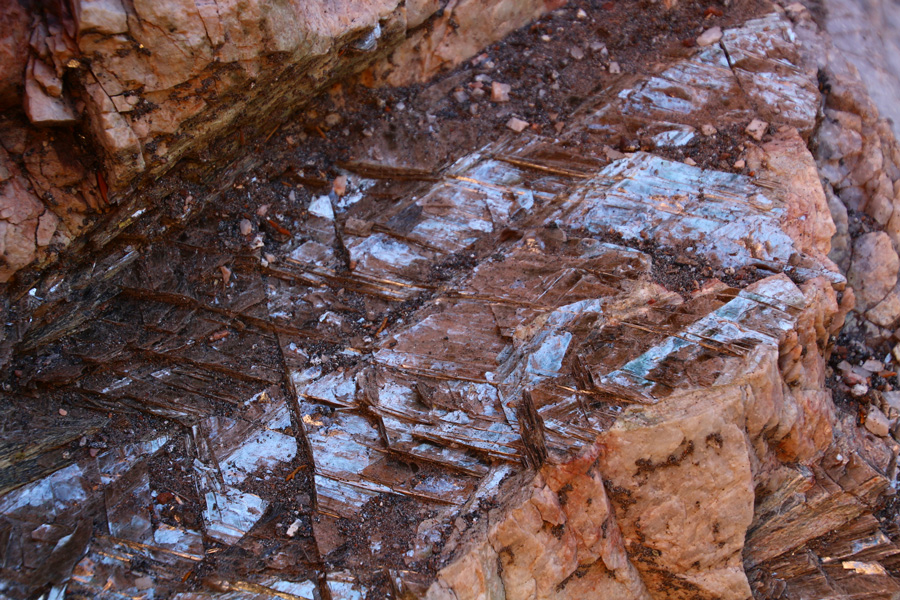
Researchers at Argonne looked at the dynamics of the transport of certain elements – especially rubidium – at the interface between water and mica, a flat transparent mineral pictured above. (Image by Beth Harvey/Shutterstock.)

In order to understand various environmental processes and learn to better address the effects of pollution, scientists have been interested in tracking the movement of elements through the environment, particularly at interfaces between water and minerals.

In a new study from the U.S. Department of Energy’s (DOE) Argonne National Laboratory, in collaboration with the University of Illinois and Chicago and the University of Delaware, chemists have been able to look at the interface between water and muscovite mica, a flat mineral commonly found in granite, soils and many sediments. In particular, the researchers looked at the capture and release of rubidium – a metal closely related to but more easily singled out than common elements like potassium and sodium.

In the experiment, the researchers flowed a rubidium-containing solution over the mica, which caused rubidium atoms to replace the potassium that occurs naturally near the surface of the mica.  Then the rubidium solution was replaced for one containing sodium, which in turn replaced the rubidium atoms.

According to Argonne chemist Sang Soo Lee, who led the study, the dynamics of the ion transport were largely controlled by electrostatic properties at the interface between the mica and the water. Essentially, the rubidium atoms “clung” to the mica’s surface similarly to how lint clings to clothing. The strength of the clinging behavior was determined mainly by how many water molecules were in between the mica’s surface and the rubidium – the fewer water molecules, the tighter the cling.

Lee and his Argonne colleague, chemist Paul Fenter, used Argonne’s Advanced Photon Source, a DOE Office of Science User Facility, to observe the activity of the rubidium using a technique called resonant anomalous X-ray reflectivity. This technique allows scientists to probe the position of a single element at an interface.

“Essentially, it’s like looking for a goldfinch in a tree, and using a technique that only shows you where yellow things are,” Fenter said.

By using the technique, the researchers were able to condense the timeframe it takes to measure the signal from the data. “Normally these data take hours to measure, but now we can have a time resolution of one or two seconds,” Fenter said.

Having a picture of the real-time dynamics of these kinds of interfaces give scientists a new view of how ions sense surfaces energetically. “If you think of our experiments like watching planes at an airport, then previously we were able to only know how many Boeings or Cessnas there were,” Lee said. “Now, we have a way to watch the planes actually take off and land.”

The research was funded by DOE’s Office of Science (Office of Basic Energy Sciences). 
Related Articles Read More >

Atmospheric carbon dioxide hits record 431 ppm as Mauna Loa Observatory faces funding cuts
Microplastics may contribute to global warming new research indicates
Researchers use CRISPR to engineer plastic eating microbe
Hawaiian researchers turn plastic waste into roads
rd newsletter
EXPAND YOUR KNOWLEDGE AND STAY CONNECTED
Get the latest info on technologies, trends, and strategies in Research & Development.

R&D World Digital Issues

Fall 2025 issue

Browse the most current issue of R&D World and back issues in an easy to use high quality format. Clip, share and download with the leading R&D magazine today.

R&D 100 Awards
Research & Development World
  • Subscribe to R&D World Magazine
  • Sign up for R&D World’s newsletter
  • Contact Us
  • About Us
  • Drug Discovery & Development
  • Pharmaceutical Processing
  • Global Funding Forecast

Copyright © 2026 WTWH Media LLC. All Rights Reserved. The material on this site may not be reproduced, distributed, transmitted, cached or otherwise used, except with the prior written permission of WTWH Media
Privacy Policy | Advertising | About Us

Search R&D World

  • R&D World Home
  • Topics
    • Aerospace
    • Automotive
    • Biotech
    • Careers
    • Chemistry
    • Environment
    • Energy
    • Life Science
    • Material Science
    • R&D Management
    • Physics
  • Technology
    • 3D Printing
    • A.I./Robotics
    • Software
    • Battery Technology
    • Controlled Environments
      • Cleanrooms
      • Graphene
      • Lasers
      • Regulations/Standards
      • Sensors
    • Imaging
    • Nanotechnology
    • Scientific Computing
      • Big Data
      • HPC/Supercomputing
      • Informatics
      • Security
    • Semiconductors
  • R&D Market Pulse
  • R&D 100
    • 2025 R&D 100 Award Winners
    • 2025 Professional Award Winners
    • 2025 Special Recognition Winners
    • R&D 100 Awards Event
    • R&D 100 Submissions
    • Winner Archive
  • Resources
    • Research Reports
    • Digital Issues
    • Educational Assets
    • Subscribe
    • Video
    • Webinars
    • Content submission guidelines for R&D World
  • Global Funding Forecast
  • Top Labs
  • Advertise
  • SUBSCRIBE