Research & Development World

  • R&D World Home
  • Topics
    • Aerospace
    • Automotive
    • Biotech
    • Careers
    • Chemistry
    • Environment
    • Energy
    • Life Science
    • Material Science
    • R&D Management
    • Physics
  • Technology
    • 3D Printing
    • A.I./Robotics
    • Software
    • Battery Technology
    • Controlled Environments
      • Cleanrooms
      • Graphene
      • Lasers
      • Regulations/Standards
      • Sensors
    • Imaging
    • Nanotechnology
    • Scientific Computing
      • Big Data
      • HPC/Supercomputing
      • Informatics
      • Security
    • Semiconductors
  • R&D Market Pulse
  • R&D 100
    • 2025 R&D 100 Award Winners
    • 2025 Professional Award Winners
    • 2025 Special Recognition Winners
    • R&D 100 Awards Event
    • R&D 100 Submissions
    • Winner Archive
  • Resources
    • Research Reports
    • Digital Issues
    • Educational Assets
    • Subscribe
    • Video
    • Webinars
    • PharmSci360
    • Content submission guidelines for R&D World
  • Global Funding Forecast
  • Top Labs
  • Advertise
  • SUBSCRIBE

New Cardiac Catheter Combines Light, Ultrasound to Measure Plaques

By R&D Editors | October 4, 2017

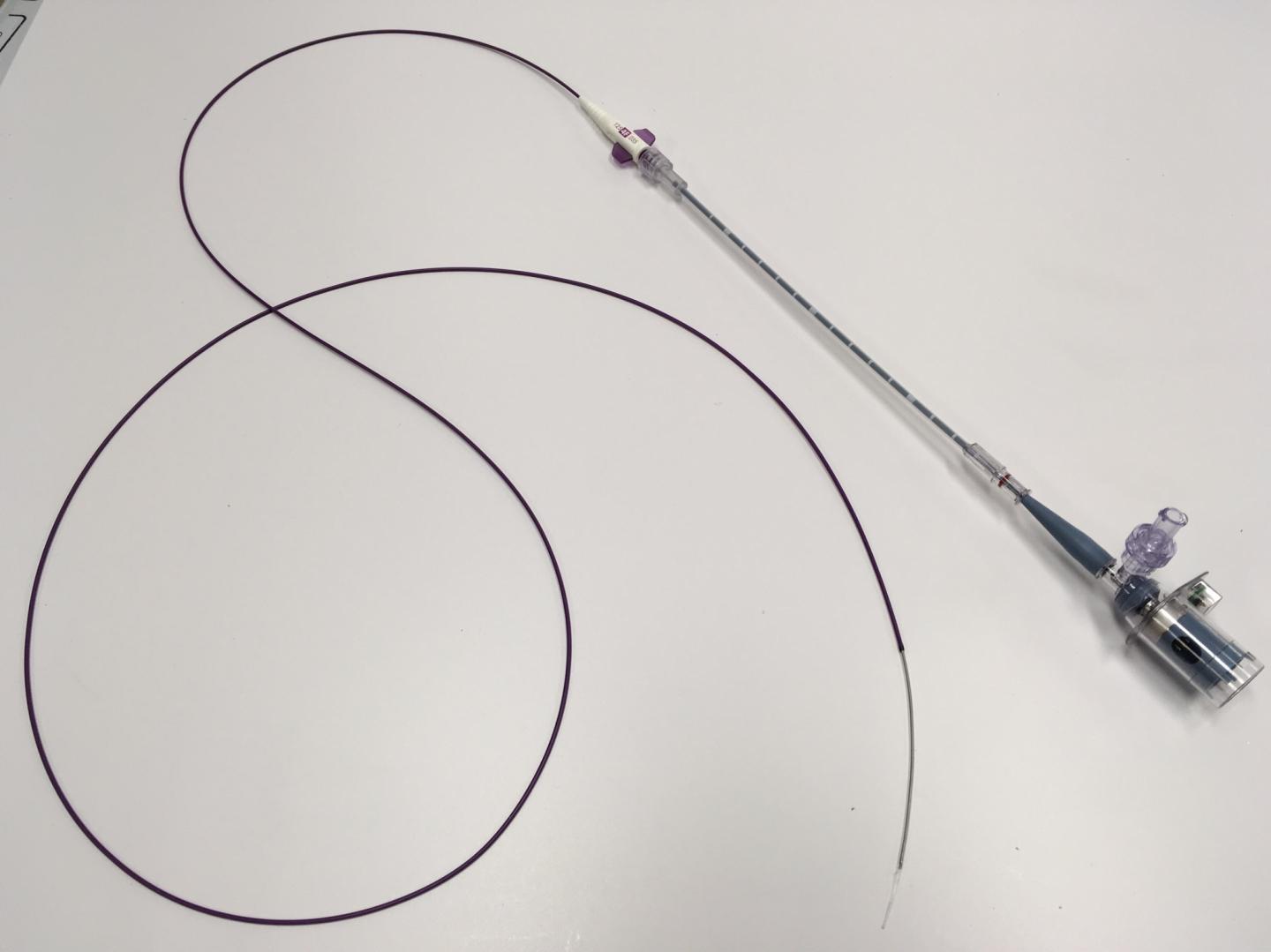
Biomedical engineers at UC Davis have combined intravascular ultrasound with fluorescence lifetime imaging in a single catheter probe that can image the tiny arteries of a living heart. The new catheter can simultaneously retrieve structural and biochemical information about arterial plaque that could more reliably predict heart attacks. Source: Marcu Lab/UC Davis

To win the battle against heart disease, cardiologists need better ways to identify the composition of plaque most likely to rupture and cause a heart attack. Angiography allows them to examine blood vessels for constricted regions by injecting them with a contrast agent before X-raying them. But because plaque does not always result in constricted vessels, angiography can miss dangerous buildups of plaque. Intravascular ultrasound can penetrate the buildup to identify depth, but lacks the ability to identify some of the finer details about risk of plaque rupture.

Professor Laura Marcu’s lab in the Department of Biomedical Engineering at UC Davis has now combined intravascular ultrasound with fluorescence lifetime imaging (FLIm) in a single catheter probe that can image the tiny arteries of a living heart. The new catheter can simultaneously retrieve structural and biochemical information about arterial plaque that could more reliably predict heart attacks.

The new device is described in a recent paper published in Scientific Reports.

An optical fiber in the catheter sends short laser pulses into surrounding tissue, which fluoresces with tiny flashes of light in return. Different kinds of tissue (collagen, proteins, lipids) emit different amounts of fluorescence.

At the same time, an ultrasound probe in the catheter records structural information about the blood vessel.

Seeking FDA Approval for Human Trials

The combination FLIm-IVUS imaging catheter provides a comprehensive insight into how atherosclerotic plaque forms, aiding diagnosis and providing a way to measure how plaques shrink in response to therapy.

The new catheter has been tested in living swine hearts and samples of human coronary arteries.

The catheter used in the study is flexible enough to access coronary arteries in a living human following standard procedures. It does not require any injected fluorescent tracers or any special modification of the catheterization procedures.

The new technique could not only can improve understanding of mechanisms behind plaque rupture – an event with fatal consequences- but also the diagnosis and treatment of patients with heart disease.

Marcu’s group is currently working to obtain FDA approval to test this new intravascular technology on human patients.

Related Articles Read More >

July 2026 issue of Medical Design & Outsourcing: Robotic stroke telesurgery’s time is now
Perseverance uncovers buried evidence of Mars’ ancient water history using ground-penetrating radar
University of Michigan researchers identify higher-order protein rings that regulate programmed cell death
JWST spots a 6-mile moon hiding in Uranus’ rings
rd newsletter
EXPAND YOUR KNOWLEDGE AND STAY CONNECTED
Get the latest info on technologies, trends, and strategies in Research & Development.

R&D World Digital Issues

Fall 2025 issue

Browse the most current issue of R&D World and back issues in an easy to use high quality format. Clip, share and download with the leading R&D magazine today.

R&D 100 Awards
Research & Development World
  • Subscribe to R&D World Magazine
  • Sign up for R&D World’s newsletter
  • Contact Us
  • About Us
  • Drug Discovery & Development
  • Pharmaceutical Processing
  • Global Funding Forecast

Copyright © 2026 Arrowfly LLC. All Rights Reserved. The material on this site may not be reproduced, distributed, transmitted, cached or otherwise used, except with the prior written permission of Arrowfly
Privacy Policy | Advertising | About Us

Search R&D World

  • R&D World Home
  • Topics
    • Aerospace
    • Automotive
    • Biotech
    • Careers
    • Chemistry
    • Environment
    • Energy
    • Life Science
    • Material Science
    • R&D Management
    • Physics
  • Technology
    • 3D Printing
    • A.I./Robotics
    • Software
    • Battery Technology
    • Controlled Environments
      • Cleanrooms
      • Graphene
      • Lasers
      • Regulations/Standards
      • Sensors
    • Imaging
    • Nanotechnology
    • Scientific Computing
      • Big Data
      • HPC/Supercomputing
      • Informatics
      • Security
    • Semiconductors
  • R&D Market Pulse
  • R&D 100
    • 2025 R&D 100 Award Winners
    • 2025 Professional Award Winners
    • 2025 Special Recognition Winners
    • R&D 100 Awards Event
    • R&D 100 Submissions
    • Winner Archive
  • Resources
    • Research Reports
    • Digital Issues
    • Educational Assets
    • Subscribe
    • Video
    • Webinars
    • PharmSci360
    • Content submission guidelines for R&D World
  • Global Funding Forecast
  • Top Labs
  • Advertise
  • SUBSCRIBE