Research & Development World

  • R&D World Home
  • Topics
    • Aerospace
    • Automotive
    • Biotech
    • Careers
    • Chemistry
    • Environment
    • Energy
    • Life Science
    • Material Science
    • R&D Management
    • Physics
  • Technology
    • 3D Printing
    • A.I./Robotics
    • Software
    • Battery Technology
    • Controlled Environments
      • Cleanrooms
      • Graphene
      • Lasers
      • Regulations/Standards
      • Sensors
    • Imaging
    • Nanotechnology
    • Scientific Computing
      • Big Data
      • HPC/Supercomputing
      • Informatics
      • Security
    • Semiconductors
  • R&D Market Pulse
  • R&D 100
    • 2025 R&D 100 Award Winners
    • 2025 Professional Award Winners
    • 2025 Special Recognition Winners
    • R&D 100 Awards Event
    • R&D 100 Submissions
    • Winner Archive
  • Resources
    • Research Reports
    • Digital Issues
    • Educational Assets
    • Subscribe
    • Video
    • Webinars
    • Content submission guidelines for R&D World
  • Global Funding Forecast
  • Top Labs
  • Advertise
  • SUBSCRIBE

New Experiments, Research Headed to International Space Station

By NASA | June 5, 2017

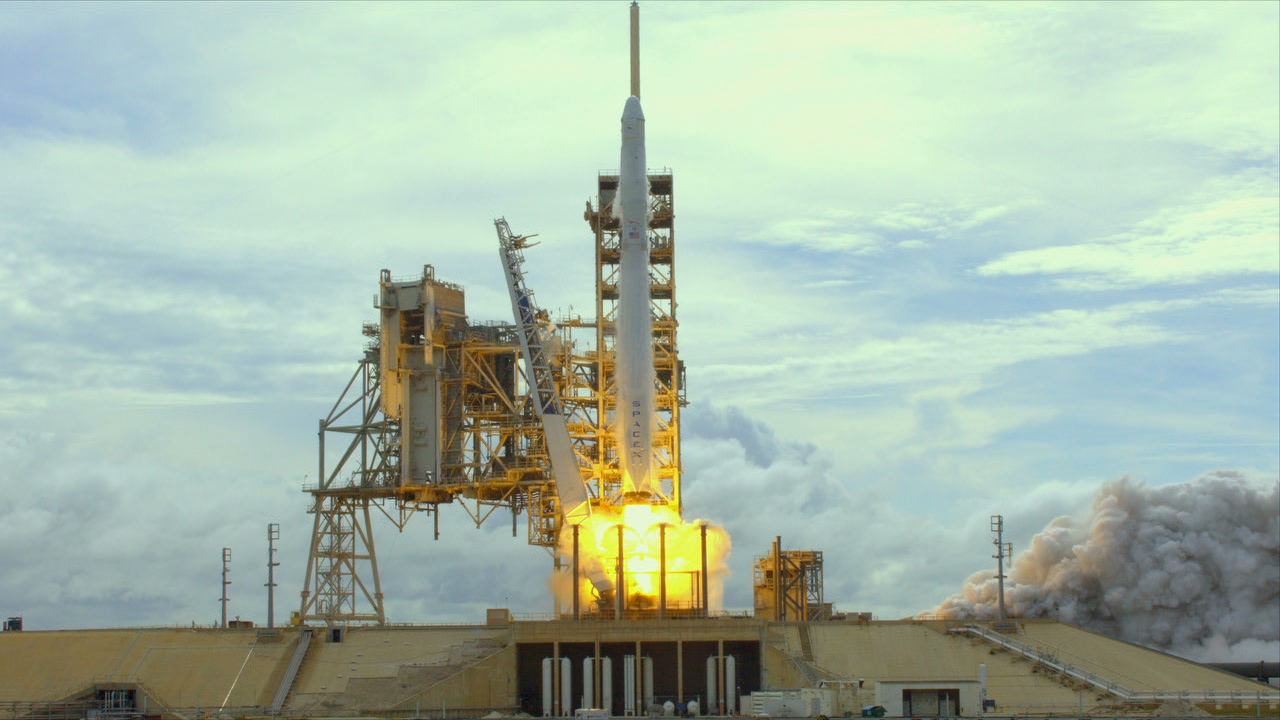
The SpaceX Dragon cargo craft lifted off from Launch Complex 39A at NASA’s Kennedy Space Center in Florida at 5:07 p.m. June 3. About 6,000 pounds of research equipment, cargo and supplies are packed into the cargo craft that is now in Earth orbit and headed to the International Space Station. Photo: NASA TV

Major experiments that will look into the human body and out into the galaxy are on their way to the International Space Station aboard a SpaceX Dragon spacecraft following its 5:07 p.m. EDT launch aboard a Falcon 9 rocket.

The Dragon lifted off from Launch Complex 39A at NASA’s Kennedy Space Center in Florida. About 6,000 pounds of research equipment, cargo and supplies are packed into the cargo craft that is now in Earth orbit and headed to the station.

NASA Television and the agency’s website provided live coverage of the rendezvous and capture beginning at 8:30 a.m. Monday, June 5. NASA astronauts Jack Fischer and Peggy Whitson will use the space station’s robotic arm to capture SpaceX’s Dragon when it arrives at the station.

Research materials flying inside the Dragon’s pressurized area include an experiment studying fruit flies to better understand the effects on the heart of prolonged exposure to microgravity. Because they’re small, age rapidly, and have a well-known genetic make-up, they are good models for heart function studies. This experiment could significantly advance understanding of how spaceflight affects the cardiovascular system and could aid in the development of countermeasures to help astronauts.

The Systemic Therapy of NELL-1 for osteoporosis investigation tests a new drug that can rebuild bone and block further bone loss, improving crew health. When people and animals spend extended periods of time in space, they experience bone density loss, or osteoporosis. In-flight countermeasures, such as exercise, prevent it from getting worse, but there isn’t a therapy on Earth or in space that can restore bone. The results from this ISS National Laboratory-sponsored investigation build on previous research also supported by the National Institutes for Health and could lead to new drugs for treating bone density loss in millions of people on Earth.

Three payloads inside Dragon’s unpressurized area will demonstrate new solar panel technologies, study the physics of neutron stars, and host an array of Earth-viewing instruments.

This mission is SpaceX’s eleventh cargo flight to the station under NASA’s Commercial Resupply Services contract. Dragon’s cargo will support dozens of the more than 250 science and research investigations during the station’s Expeditions 52 and 53.

The Dragon spacecraft is scheduled to depart the space station in early July, returning with more than 3,400 pounds of science, hardware and crew supplies.

For more than 16 years, humans have lived and worked continuously aboard the International Space Station, advancing scientific knowledge and demonstrating new technologies, making research breakthroughs not possible on Earth that will enable long-duration human and robotic exploration into deep space. A global endeavor, more than 200 people from 18 countries have visited the unique microgravity laboratory that has hosted more than 1,900 research investigations from researchers in more than 95 countries.
Related Articles Read More >

The science behind the Prada-designed spacesuit for Artemis 
NASA is confident Blue Origin will be ready for Artemis III despite explosion
Blue Origin explosion leaves Artemis experiments in limbo
SpaceX’s Starship V3 rocket completed its launch rehearsal
rd newsletter
EXPAND YOUR KNOWLEDGE AND STAY CONNECTED
Get the latest info on technologies, trends, and strategies in Research & Development.

R&D World Digital Issues

Fall 2025 issue

Browse the most current issue of R&D World and back issues in an easy to use high quality format. Clip, share and download with the leading R&D magazine today.

R&D 100 Awards
Research & Development World
  • Subscribe to R&D World Magazine
  • Sign up for R&D World’s newsletter
  • Contact Us
  • About Us
  • Drug Discovery & Development
  • Pharmaceutical Processing
  • Global Funding Forecast

Copyright © 2026 WTWH Media LLC. All Rights Reserved. The material on this site may not be reproduced, distributed, transmitted, cached or otherwise used, except with the prior written permission of WTWH Media
Privacy Policy | Advertising | About Us

Search R&D World

  • R&D World Home
  • Topics
    • Aerospace
    • Automotive
    • Biotech
    • Careers
    • Chemistry
    • Environment
    • Energy
    • Life Science
    • Material Science
    • R&D Management
    • Physics
  • Technology
    • 3D Printing
    • A.I./Robotics
    • Software
    • Battery Technology
    • Controlled Environments
      • Cleanrooms
      • Graphene
      • Lasers
      • Regulations/Standards
      • Sensors
    • Imaging
    • Nanotechnology
    • Scientific Computing
      • Big Data
      • HPC/Supercomputing
      • Informatics
      • Security
    • Semiconductors
  • R&D Market Pulse
  • R&D 100
    • 2025 R&D 100 Award Winners
    • 2025 Professional Award Winners
    • 2025 Special Recognition Winners
    • R&D 100 Awards Event
    • R&D 100 Submissions
    • Winner Archive
  • Resources
    • Research Reports
    • Digital Issues
    • Educational Assets
    • Subscribe
    • Video
    • Webinars
    • Content submission guidelines for R&D World
  • Global Funding Forecast
  • Top Labs
  • Advertise
  • SUBSCRIBE