Research & Development World

  • R&D World Home
  • Topics
    • Aerospace
    • Automotive
    • Biotech
    • Careers
    • Chemistry
    • Environment
    • Energy
    • Life Science
    • Material Science
    • R&D Management
    • Physics
  • Technology
    • 3D Printing
    • A.I./Robotics
    • Software
    • Battery Technology
    • Controlled Environments
      • Cleanrooms
      • Graphene
      • Lasers
      • Regulations/Standards
      • Sensors
    • Imaging
    • Nanotechnology
    • Scientific Computing
      • Big Data
      • HPC/Supercomputing
      • Informatics
      • Security
    • Semiconductors
  • R&D Market Pulse
  • R&D 100
    • 2025 R&D 100 Award Winners
    • 2025 Professional Award Winners
    • 2025 Special Recognition Winners
    • R&D 100 Awards Event
    • R&D 100 Submissions
    • Winner Archive
  • Resources
    • Research Reports
    • Digital Issues
    • Educational Assets
    • R&D Index
    • Subscribe
    • Video
    • Webinars
    • Content submission guidelines for R&D World
  • Global Funding Forecast
  • Top Labs
  • Advertise
  • SUBSCRIBE

New Soft Coral Species Discovered in Panama

By Smithsonian Tropical Research Institute | September 17, 2018

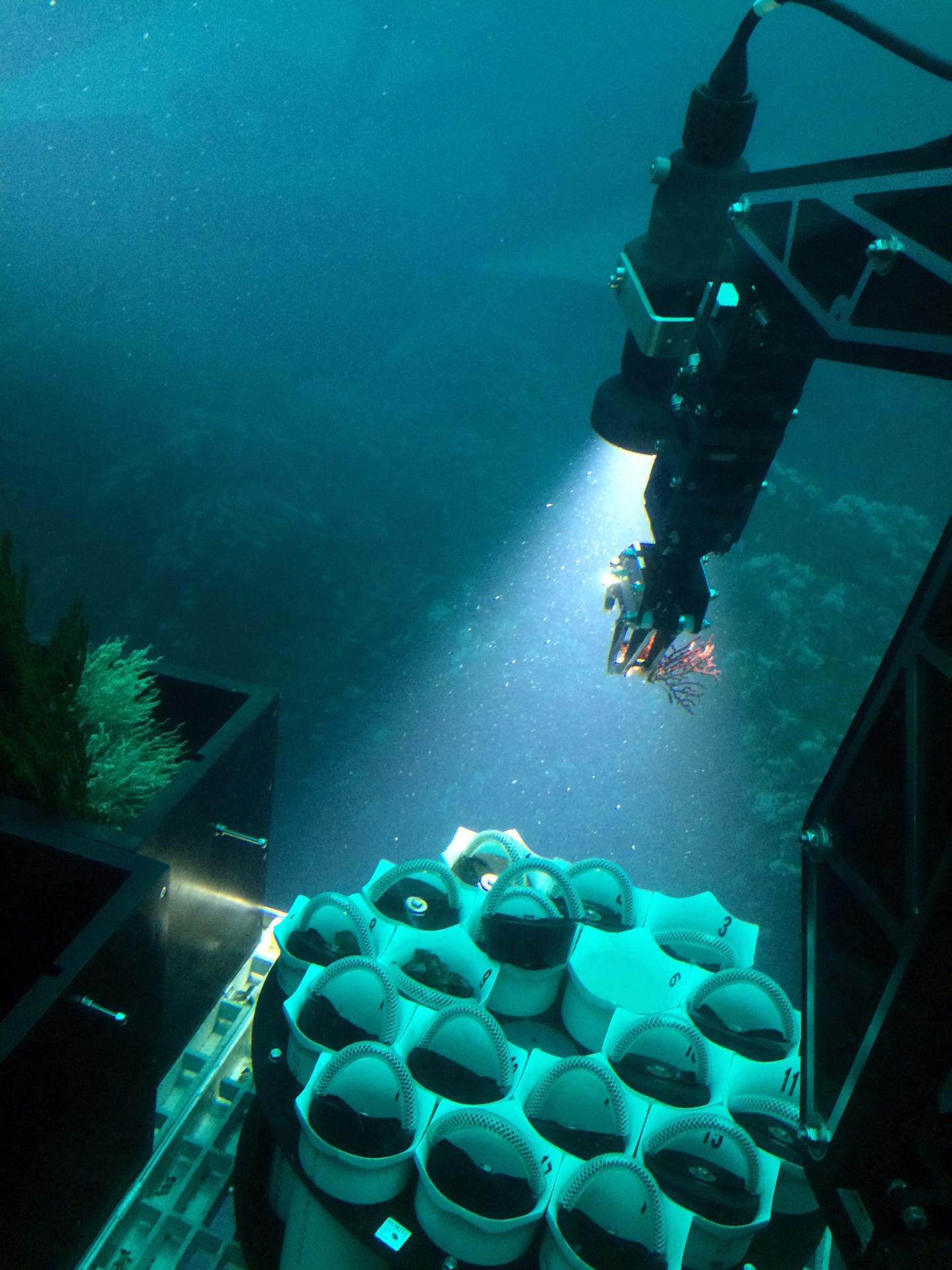
DeepSea submersible collects coral sample. Credit: Hèctor Guzmán, STRI

A study in the journal Bulletin of Marine Science describes a new, blood-red species of octocoral found in Panama. The species in the genus Thesea was discovered in the threatened low-light reef environment on Hannibal Bank, 60 kilometers off mainland Pacific Panama, by researchers at the Smithsonian Tropical Research Institute in Panama (STRI) and the Centro de Investigación en Ciencias del Mar y Limnología (CIMAR) at the University of Costa Rica.

Scientists established the new species, Thesea dalioi, by comparing its physical traits, such as branch thickness and the bright red colony color, with the only other species in the genus in the eastern Pacific, T. variabilis.


T. dalioi is named for Ray Dalio, a supporter of marine exploration. Its name is intended to recognize Dalio’s valuable contributions to marine research and public outreach. Hannibal Bank, part of the Coiba National Park and a UNESCO World Heritage Site, is a coastal seamount and a biodiversity hot spot that has only been explored recently. “After just two expeditions using submersibles down to 300 meters, we have identified 17 species of octocorals for the Hannibal Bank, including the discovery and description of three new species,” said Hector M. Guzman, marine ecologist at STRI and one of the authors of the study.

Light-dependent coral and algae, as well as other life-forms found in low-light environments, live on mesophotic reefs: meso means middle and photic means light. These reefs, such as the one where T. dalioi was found, are considered fragile habitats with a high diversity of corals, algae and sponges. They are also generally neglected in most environmental and conservation policies because they are difficult to reach. Hannibal Bank is one of the spots requiring more attention for its protection. “The present study should provide the basis for further research on the genus and contributes to the diversity and distribution knowledge of octocorals from the mesophotic zone in the eastern Pacific Ocean,” said Odalisca Breedy, marine biologist at CIMAR and one of the authors of the study.

“Medical researchers have identified therapeutic benefits derived from both soft and hard corals such as anti-inflammatory and anti-cancer properties, bone repair and neurological benefits,” said Guzman. “But our ability to contribute to the understanding of soft corals and their habitats, depends not only on steady funding for the use of submersibles, but also on our continued ability to obtain permission to work in Coiba National Park.”
Related Articles Read More >

RED-CRISPR doubles knock-in efficiency
Thermo Fisher adds chemically defined E. coli fermentation medium and feed to Gibco Bacto line
JLL: 2026 could be a realignment year for life science labs
How Prelude and QDX are using quantum chemistry to discover cancer treatments
rd newsletter
EXPAND YOUR KNOWLEDGE AND STAY CONNECTED
Get the latest info on technologies, trends, and strategies in Research & Development.
RD 25 Power Index

R&D World Digital Issues

Fall 2025 issue

Browse the most current issue of R&D World and back issues in an easy to use high quality format. Clip, share and download with the leading R&D magazine today.

R&D 100 Awards
Research & Development World
  • Subscribe to R&D World Magazine
  • Sign up for R&D World’s newsletter
  • Contact Us
  • About Us
  • Drug Discovery & Development
  • Pharmaceutical Processing
  • Global Funding Forecast

Copyright © 2025 WTWH Media LLC. All Rights Reserved. The material on this site may not be reproduced, distributed, transmitted, cached or otherwise used, except with the prior written permission of WTWH Media
Privacy Policy | Advertising | About Us

Search R&D World

  • R&D World Home
  • Topics
    • Aerospace
    • Automotive
    • Biotech
    • Careers
    • Chemistry
    • Environment
    • Energy
    • Life Science
    • Material Science
    • R&D Management
    • Physics
  • Technology
    • 3D Printing
    • A.I./Robotics
    • Software
    • Battery Technology
    • Controlled Environments
      • Cleanrooms
      • Graphene
      • Lasers
      • Regulations/Standards
      • Sensors
    • Imaging
    • Nanotechnology
    • Scientific Computing
      • Big Data
      • HPC/Supercomputing
      • Informatics
      • Security
    • Semiconductors
  • R&D Market Pulse
  • R&D 100
    • 2025 R&D 100 Award Winners
    • 2025 Professional Award Winners
    • 2025 Special Recognition Winners
    • R&D 100 Awards Event
    • R&D 100 Submissions
    • Winner Archive
  • Resources
    • Research Reports
    • Digital Issues
    • Educational Assets
    • R&D Index
    • Subscribe
    • Video
    • Webinars
    • Content submission guidelines for R&D World
  • Global Funding Forecast
  • Top Labs
  • Advertise
  • SUBSCRIBE