The adult human heart has limited ability to repair itself after damage from events such as a heart attack. Instead, the damaged muscle is replaced by non-beating scar tissue, which can weaken the heart and lead to heart failure. A new study could change that. A study from Mount Sinai found that a naturally occurring gene, Cyclin A2 (CCNA2), which turns off after birth, can make new functioning heart cells and help repair the heart from injury when turned back on. The study was published in npj Regenerative Medicine.

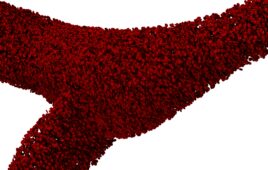
A still image from live microscopy. Images from left to right – the cell in the initial frame is from a 55-year-old donor heart. The next image shows the cell rounding up after receiving Cyclin A2 and the cell division takes place shortly after. The third image represents the same heart muscle about to split apart into two daughter cells. The last image is the end result of that division where the cell in image one has now fully divided into two cells. Credit: Mount Sinai Health System
Reactivating the cell cycle
When blood flow to the heart is blocked, the organ suffers permanent damage because the muscle cells are terminally differentiated and cannot proliferate. Cell differentiation is the process by which a stem cell transforms into a more specialized cell, such as a heart muscle cell. When cells terminally differentiate, they permanently exit the cell cycle and no longer divide. As a result, damage that is caused to the heart by events such as heart failure is often permanent. However, this new study demonstrates a way that these cells can be activated to divide again.
The study builds on previous research conducted by Hina Chaudhry, director of Cardiovascular Regenerative Medicine at the Icahn School of Medicine at Mount Sinai, where she and her team regenerated the heart of a pig after an induced heart attack by reactivating CCNA2. The scientists saw an increase of approximately 18% in ejection fraction, the percentage of blood that is ejected from the left ventricle with each heartbeat, in the treated pigs and a decrease of approximately 4% in ejection fraction in the control pigs.
Repairing damaged human hearts
Chaudhry’s new study proves that a human-compatible viral vector can safely trigger cell division in human heart cells. The team hypothesized that turning CCNA2 back on in adults would help the heart grow new heart muscle cells.
To test this, they built a replication-deficient human-compatible virus to act as a harmless delivery vehicle. This vector used its natural ability to enter heart muscle cells and deliver the CCNA2 gene.
This was tested directly in living adult human heart cells in culture from healthy donor hearts. The heart cells divided successfully while maintaining their normal structure and function.
The hearts were from donors who were 21, 41 and 55 years old. The therapy triggered cell division in the 41 and 55-year-old hearts, but not in the 21-year-old heart. This result aligns with previous research, which has shown that younger hearts have regenerative potential without turning CCNA2 back on.
The daughter cells produced in the hearts retained their structural proteins and normal calcium activity. Analysis showed that CCNA2 reactivates certain growth genes that trigger the division of the cells.
“Heart disease is the leading cause of death worldwide, yet adult human heart muscle cells stop dividing after birth,” Chaudhry said. “Our work was the first to show that we can regenerate the porcine heart after injury, and now we’ve advanced the field by demonstrating that even middle-aged adult human heart cells—long believed incapable of division—can be coaxed back into making new, functional cells. This shifts the paradigm from managing symptoms to actually repairing the human heart.”
The next step will be to obtain FDA approval to begin clinical trials of CCNA2 therapy in patients with heart disease.
The study was supported by the National Institutes of Health and the New York Stem Cell Foundation Board.