Research & Development World

  • R&D World Home
  • Topics
    • Aerospace
    • Automotive
    • Biotech
    • Careers
    • Chemistry
    • Environment
    • Energy
    • Life Science
    • Material Science
    • R&D Management
    • Physics
  • Technology
    • 3D Printing
    • A.I./Robotics
    • Software
    • Battery Technology
    • Controlled Environments
      • Cleanrooms
      • Graphene
      • Lasers
      • Regulations/Standards
      • Sensors
    • Imaging
    • Nanotechnology
    • Scientific Computing
      • Big Data
      • HPC/Supercomputing
      • Informatics
      • Security
    • Semiconductors
  • R&D Market Pulse
  • R&D 100
    • 2025 R&D 100 Award Winners
    • 2025 Professional Award Winners
    • 2025 Special Recognition Winners
    • R&D 100 Awards Event
    • R&D 100 Submissions
    • Winner Archive
  • Resources
    • Research Reports
    • Digital Issues
    • Educational Assets
    • Subscribe
    • Video
    • Webinars
    • Content submission guidelines for R&D World
  • Global Funding Forecast
  • Top Labs
  • Advertise
  • SUBSCRIBE

New Theory on Earth’s Crust Formation

By Kenny Walter | May 5, 2017

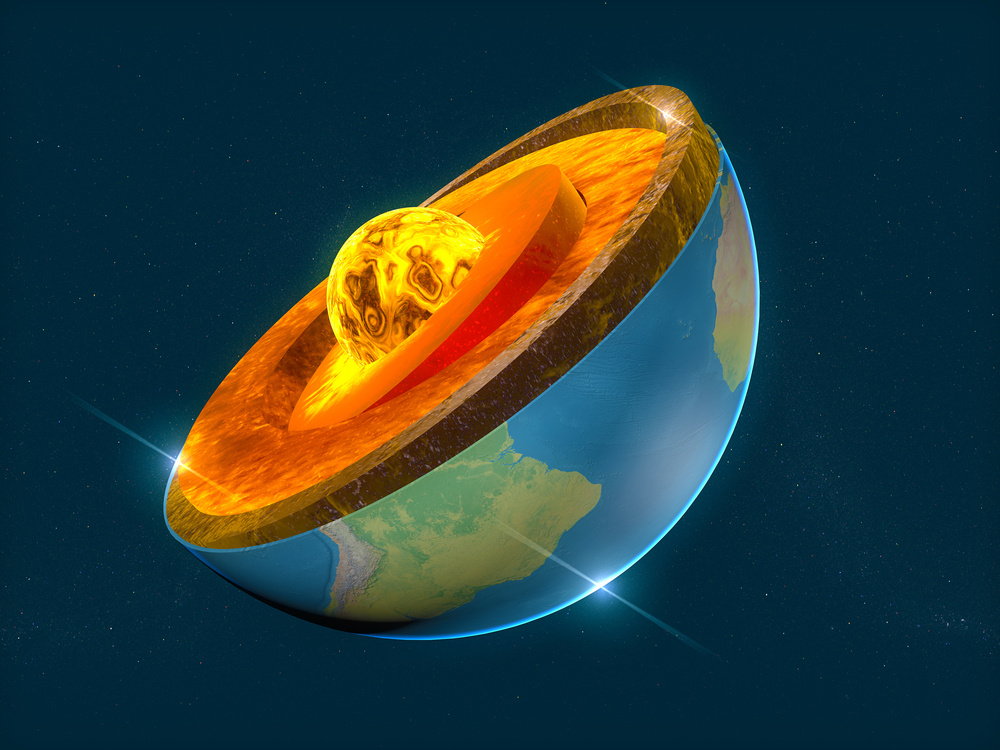
Researchers have presented a new theory as to how the Earth’s crust was formed.

A pair of McGill University earth scientists have presented a theory that some of the chemical components of silica-rich minerals that make up the crust settled onto the Earth’s early surface from the steamy atmosphere that was prevalent at the time. 

More than 90 percent of the Earth’s continental crust is comprised of silica-rich minerals, including feldspar and quartz and researchers have long believed that it was formed by volcanic activity.

The conventional theory is that a Mars-sized planetoid crashed into the pronto-Earth approximately 4.5 billion years ago, melting the Earth and turning it into an ocean of magma. The impact created enough debris to form the moon and the Earth’s surface gradually cooled until it was basically solid.

Don Baker, an earth scientist at McGill, said his new theory follows that basic principal but takes it a step further by saying after the collision the atmosphere of Earth consisted of a high-temperature stream that dissolved rocks on the Earth’s immediate surface.

“These dissolved minerals rose to the upper atmosphere and cooled off, and then these silicate materials that were dissolved at the surface would start to separate out and fall back to Earth in what we call a silicate rain,” Baker said in a statement.

Baker and co-author Kassandra Sofonio, a McGill undergraduate research assistant, tested this theory with developed a series of experiments aimed at mimicking the steam conditions of early Earth.

They used a combination of bulk silicate earth materials and water and melted the mixture in air at 1,550 degrees Celsius and grounded it into a powder. They then enclosed a small amount of the powder, along with water in gold palladium capsules and placed the capsules in a pressure vessel that was heated to about 727 degrees Celsius and 100 times Earth’s surface pressure.

This simulates the conditions in the Earth’s atmosphere about one million years after the moon-forming impact.

After each experiment, the samples were rapidly quenched and the material that dissolved in the high temperature steam was analyzed.

According to Baker, the researchers were surprised by the similarity of the dissolved silicate material produced by the experiments to what is found in the Earth’s crust.

The study was published in Earth and Planetary Science Letters.

Related Articles Read More >

Atmospheric carbon dioxide hits record 431 ppm as Mauna Loa Observatory faces funding cuts
Microplastics may contribute to global warming new research indicates
Researchers use CRISPR to engineer plastic eating microbe
Hawaiian researchers turn plastic waste into roads
rd newsletter
EXPAND YOUR KNOWLEDGE AND STAY CONNECTED
Get the latest info on technologies, trends, and strategies in Research & Development.

R&D World Digital Issues

Fall 2025 issue

Browse the most current issue of R&D World and back issues in an easy to use high quality format. Clip, share and download with the leading R&D magazine today.

R&D 100 Awards
Research & Development World
  • Subscribe to R&D World Magazine
  • Sign up for R&D World’s newsletter
  • Contact Us
  • About Us
  • Drug Discovery & Development
  • Pharmaceutical Processing
  • Global Funding Forecast

Copyright © 2026 WTWH Media LLC. All Rights Reserved. The material on this site may not be reproduced, distributed, transmitted, cached or otherwise used, except with the prior written permission of WTWH Media
Privacy Policy | Advertising | About Us

Search R&D World

  • R&D World Home
  • Topics
    • Aerospace
    • Automotive
    • Biotech
    • Careers
    • Chemistry
    • Environment
    • Energy
    • Life Science
    • Material Science
    • R&D Management
    • Physics
  • Technology
    • 3D Printing
    • A.I./Robotics
    • Software
    • Battery Technology
    • Controlled Environments
      • Cleanrooms
      • Graphene
      • Lasers
      • Regulations/Standards
      • Sensors
    • Imaging
    • Nanotechnology
    • Scientific Computing
      • Big Data
      • HPC/Supercomputing
      • Informatics
      • Security
    • Semiconductors
  • R&D Market Pulse
  • R&D 100
    • 2025 R&D 100 Award Winners
    • 2025 Professional Award Winners
    • 2025 Special Recognition Winners
    • R&D 100 Awards Event
    • R&D 100 Submissions
    • Winner Archive
  • Resources
    • Research Reports
    • Digital Issues
    • Educational Assets
    • Subscribe
    • Video
    • Webinars
    • Content submission guidelines for R&D World
  • Global Funding Forecast
  • Top Labs
  • Advertise
  • SUBSCRIBE