Research & Development World

  • R&D World Home
  • Topics
    • Aerospace
    • Automotive
    • Biotech
    • Careers
    • Chemistry
    • Environment
    • Energy
    • Life Science
    • Material Science
    • R&D Management
    • Physics
  • Technology
    • 3D Printing
    • A.I./Robotics
    • Software
    • Battery Technology
    • Controlled Environments
      • Cleanrooms
      • Graphene
      • Lasers
      • Regulations/Standards
      • Sensors
    • Imaging
    • Nanotechnology
    • Scientific Computing
      • Big Data
      • HPC/Supercomputing
      • Informatics
      • Security
    • Semiconductors
  • R&D Market Pulse
  • R&D 100
    • 2025 R&D 100 Award Winners
    • 2025 Professional Award Winners
    • 2025 Special Recognition Winners
    • R&D 100 Awards Event
    • R&D 100 Submissions
    • Winner Archive
  • Resources
    • Research Reports
    • Digital Issues
    • Educational Assets
    • Subscribe
    • Video
    • Webinars
    • PharmSci360
    • Content submission guidelines for R&D World
  • Global Funding Forecast
  • Top Labs
  • Advertise
  • SUBSCRIBE

Queen bumblebees survive for days underwater, suppressing metabolism by 85%

By Julia Rock-Torcivia | March 11, 2026

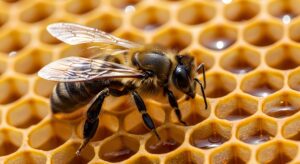
A bumble bee queen’s ability to survive week-long submersion while maintaining just 15% of normal metabolic activity reveals a natural solution to challenges in low-power systems, underwater respiration and metabolic suppression. During an experiment, ecologist Sabrina Rondeau noticed that a refrigerator had dripped condensation into containers holding four hibernating queen bees and found them still alive. 
Adobe

Novel respirometry techniques

A team at the University of Ottawa studied how the bees survived, discovering that they can actually breathe underwater. Their findings are published in the Proceedings of the Royal Society B. 

The research required developing novel respirometry techniques to measure gas exchange in submerged organisms. The team used flow-through CO₂ monitoring combined with dissolved oxygen sensors, validating their approach against multiple controls to account for CO₂ hydration in water, a technical challenge when measuring metabolic rates underwater.

Diapause describes the state of suspended animation that allows queen bees to survive winter. During this state, the bees’ metabolism slows. The researchers hypothesized that the bees were slowing down their metabolism more than during normal diapause, thereby reducing their oxygen need, while switching to anaerobic metabolism, which does not require oxygen. 

Dual-mode metabolism

The team studied 51 queen bees kept in diapause in a refrigerator, submerging each in water for 8 days, measuring the amount of carbon dioxide released from the container. Compared with bees in diapause out of water, the bees in water exhaled approximately 85% less carbon dioxide by day 8, indicating that their metabolic rate had dropped to approximately 15% of pre-submersion levels. After 8 days, dissolved oxygen in submersion tubes dropped to less than 40% of controls. The metabolic suppression spans a 5,000-fold range from hovering flight to underwater diapause.  

The researchers also found a six-fold increase in the levels of lactate in the bees’ bodies, indicating that they also switched partially to anaerobic metabolism. Recovery metabolism peaked at 11-fold above normal resting levels, indicating an oxygen debt from anaerobic metabolism. 

The researchers hypothesize that the bees have a thin layer of air surrounding their bodies, a method used by other insects to exchange oxygen and carbon dioxide with the surrounding liquid. 

The study provides a foundation for exploring the limits, mechanisms and ecological significance of underwater survival in terrestrial insects. Future research could manipulate the water conditions, focusing on the layer of air around the bees’ bodies, analyzing their recovery and clarifying the adaptations that allow the queens to survive underwater. 
Related Articles Read More >

How a plant virus could keep astronauts medicated on a trip to Mars
Countable Labs’ CTO Christina Fan on reimagining PCR, one molecule at a time
Noetik’s TARIO-2: A ‘world model’ that reads a tumor from a single slide
Six months in, Lilly says its supercomputer is starting to change the work with ‘near-infinite’ AI tokens
rd newsletter
EXPAND YOUR KNOWLEDGE AND STAY CONNECTED
Get the latest info on technologies, trends, and strategies in Research & Development.

R&D World Digital Issues

Fall 2025 issue

Browse the most current issue of R&D World and back issues in an easy to use high quality format. Clip, share and download with the leading R&D magazine today.

R&D 100 Awards
Research & Development World
  • Subscribe to R&D World Magazine
  • Sign up for R&D World’s newsletter
  • Contact Us
  • About Us
  • Drug Discovery & Development
  • Pharmaceutical Processing
  • Global Funding Forecast

Copyright © 2026 WTWH Media LLC. All Rights Reserved. The material on this site may not be reproduced, distributed, transmitted, cached or otherwise used, except with the prior written permission of WTWH Media
Privacy Policy | Advertising | About Us

Search R&D World

  • R&D World Home
  • Topics
    • Aerospace
    • Automotive
    • Biotech
    • Careers
    • Chemistry
    • Environment
    • Energy
    • Life Science
    • Material Science
    • R&D Management
    • Physics
  • Technology
    • 3D Printing
    • A.I./Robotics
    • Software
    • Battery Technology
    • Controlled Environments
      • Cleanrooms
      • Graphene
      • Lasers
      • Regulations/Standards
      • Sensors
    • Imaging
    • Nanotechnology
    • Scientific Computing
      • Big Data
      • HPC/Supercomputing
      • Informatics
      • Security
    • Semiconductors
  • R&D Market Pulse
  • R&D 100
    • 2025 R&D 100 Award Winners
    • 2025 Professional Award Winners
    • 2025 Special Recognition Winners
    • R&D 100 Awards Event
    • R&D 100 Submissions
    • Winner Archive
  • Resources
    • Research Reports
    • Digital Issues
    • Educational Assets
    • Subscribe
    • Video
    • Webinars
    • PharmSci360
    • Content submission guidelines for R&D World
  • Global Funding Forecast
  • Top Labs
  • Advertise
  • SUBSCRIBE