Research & Development World

  • R&D World Home
  • Topics
    • Aerospace
    • Automotive
    • Biotech
    • Careers
    • Chemistry
    • Environment
    • Energy
    • Life Science
    • Material Science
    • R&D Management
    • Physics
  • Technology
    • 3D Printing
    • A.I./Robotics
    • Software
    • Battery Technology
    • Controlled Environments
      • Cleanrooms
      • Graphene
      • Lasers
      • Regulations/Standards
      • Sensors
    • Imaging
    • Nanotechnology
    • Scientific Computing
      • Big Data
      • HPC/Supercomputing
      • Informatics
      • Security
    • Semiconductors
  • R&D Market Pulse
  • R&D 100
    • 2025 R&D 100 Award Winners
    • 2025 Professional Award Winners
    • 2025 Special Recognition Winners
    • R&D 100 Awards Event
    • R&D 100 Submissions
    • Winner Archive
  • Resources
    • Research Reports
    • Digital Issues
    • Educational Assets
    • Subscribe
    • Video
    • Webinars
    • PharmSci360
    • Content submission guidelines for R&D World
  • Global Funding Forecast
  • Top Labs
  • Advertise
  • SUBSCRIBE

Research Team Develops Record Laser on Chip

By University of Twente | July 3, 2017

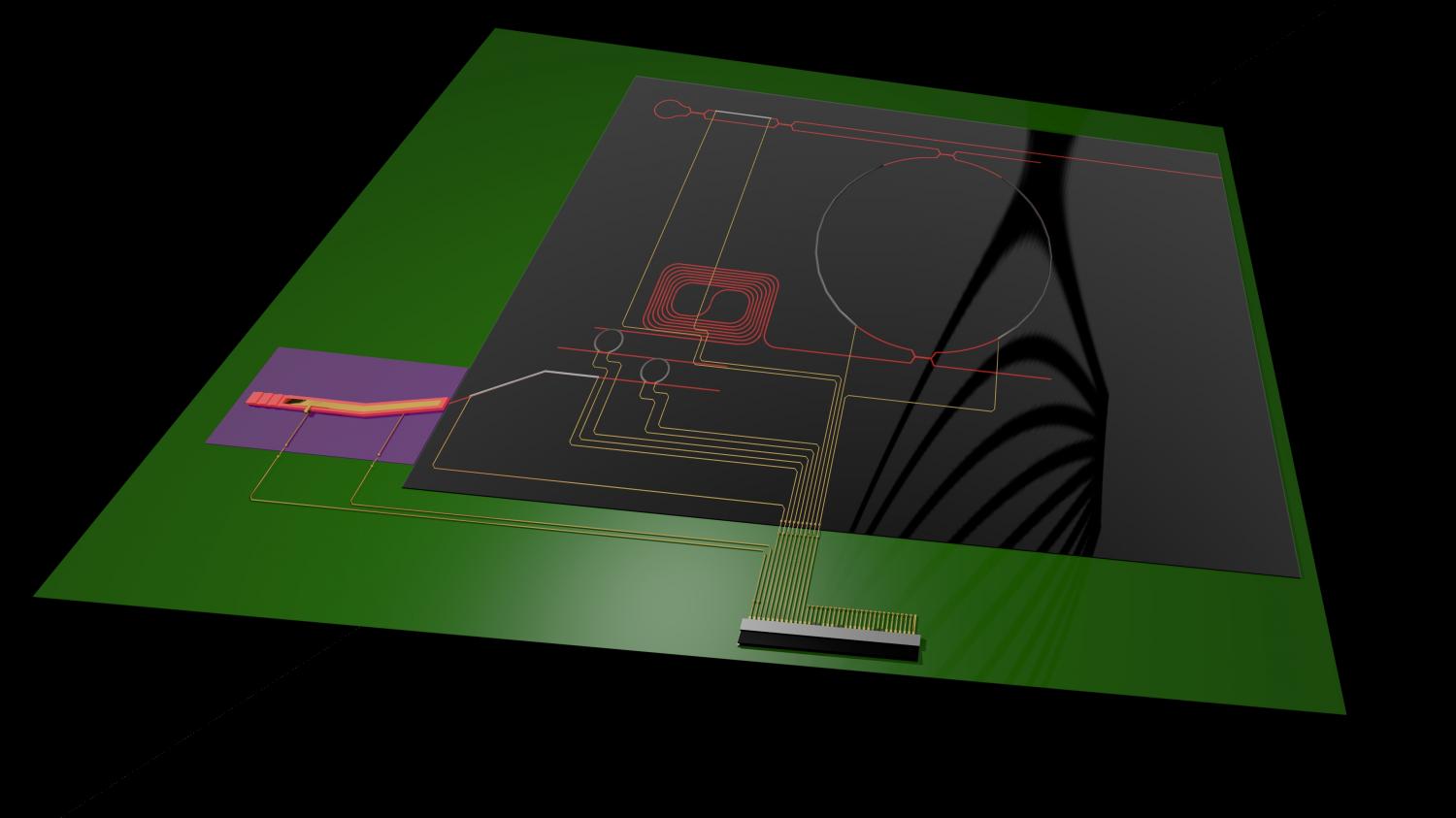
(Credit: University of Twente)

Working in collaboration with the Lionix company, researchers from the University of Twente’s MESA+ research institute have developed the world’s most narrowband diode laser on a chip. This laser represents a breakthrough in the fast-growing field of photonics, and will bring applications like 5G internet and accurate GPS closer. Research leader Professor Klaus Boller presented the research results during a prestigious scientific conference in Munich.

We are slowly reaching the bounds of what is possible with electronics. That is why scientists and the private sector are committed to photonics – a key technology that makes numerous other innovations possible. This involves the deployment of photons (light particles) for transporting and processing data.

For photonic chips to function as efficiently as possible, one has to be able to properly control the light signals. This means that all the light particles being transmitted must have, as closely as possible, the same frequency – that is, the same colour. The University of Twente researchers have managed to develop a minuscule laser on a chip with a maximum bandwidth (the maximum uncertainty of frequency) of just 290 Hertz. By some distance, this is the most accurate laser on a chip that has ever been created. Boller: “Our signal is more than ten times more coherent – or clean – than any other laser on a chip.”

The newly-developed laser is tunable, which means that users can choose the colour of the laser themselves, within a broad range. The device is a hybrid laser, which means that it essentially consists of two different photonic chips, optically connected to each other.

The record laser will bring countless applications within reach, such as controlling movable antennae on phone masts for 5G mobile internet, faster data flows through glass fiber networks, or more accurate GPS systems and sensors for monitoring the structural integrity of buildings and bridges.


Related Articles Read More >

Speaker Giving a Talk at Business Meeting. Audience in the conference hall. Business and Entrepreneurship. Panoramic composition suitable for banners.
BioPharma Supply Chain & Logistics Nexus returns to San Diego in November
How Cypris evolved from selling patent reports to agentic R&D intelligence
New video series: Travel for engineers
Advanced Manufacturing and Process Innovation Special Report: When you can’t hire, you automate
rd newsletter
EXPAND YOUR KNOWLEDGE AND STAY CONNECTED
Get the latest info on technologies, trends, and strategies in Research & Development.

R&D World Digital Issues

Fall 2025 issue

Browse the most current issue of R&D World and back issues in an easy to use high quality format. Clip, share and download with the leading R&D magazine today.

R&D 100 Awards
Research & Development World
  • Subscribe to R&D World Magazine
  • Sign up for R&D World’s newsletter
  • Contact Us
  • About Us
  • Drug Discovery & Development
  • Pharmaceutical Processing
  • Global Funding Forecast

Copyright © 2026 WTWH Media LLC. All Rights Reserved. The material on this site may not be reproduced, distributed, transmitted, cached or otherwise used, except with the prior written permission of WTWH Media
Privacy Policy | Advertising | About Us

Search R&D World

  • R&D World Home
  • Topics
    • Aerospace
    • Automotive
    • Biotech
    • Careers
    • Chemistry
    • Environment
    • Energy
    • Life Science
    • Material Science
    • R&D Management
    • Physics
  • Technology
    • 3D Printing
    • A.I./Robotics
    • Software
    • Battery Technology
    • Controlled Environments
      • Cleanrooms
      • Graphene
      • Lasers
      • Regulations/Standards
      • Sensors
    • Imaging
    • Nanotechnology
    • Scientific Computing
      • Big Data
      • HPC/Supercomputing
      • Informatics
      • Security
    • Semiconductors
  • R&D Market Pulse
  • R&D 100
    • 2025 R&D 100 Award Winners
    • 2025 Professional Award Winners
    • 2025 Special Recognition Winners
    • R&D 100 Awards Event
    • R&D 100 Submissions
    • Winner Archive
  • Resources
    • Research Reports
    • Digital Issues
    • Educational Assets
    • Subscribe
    • Video
    • Webinars
    • PharmSci360
    • Content submission guidelines for R&D World
  • Global Funding Forecast
  • Top Labs
  • Advertise
  • SUBSCRIBE