Research & Development World

  • R&D World Home
  • Topics
    • Aerospace
    • Automotive
    • Biotech
    • Careers
    • Chemistry
    • Environment
    • Energy
    • Life Science
    • Material Science
    • R&D Management
    • Physics
  • Technology
    • 3D Printing
    • A.I./Robotics
    • Software
    • Battery Technology
    • Controlled Environments
      • Cleanrooms
      • Graphene
      • Lasers
      • Regulations/Standards
      • Sensors
    • Imaging
    • Nanotechnology
    • Scientific Computing
      • Big Data
      • HPC/Supercomputing
      • Informatics
      • Security
    • Semiconductors
  • R&D Market Pulse
  • R&D 100
    • 2025 R&D 100 Award Winners
    • 2025 Professional Award Winners
    • 2025 Special Recognition Winners
    • R&D 100 Awards Event
    • R&D 100 Submissions
    • Winner Archive
  • Resources
    • Research Reports
    • Digital Issues
    • Educational Assets
    • Subscribe
    • Video
    • Webinars
    • Content submission guidelines for R&D World
  • Global Funding Forecast
  • Top Labs
  • Advertise
  • SUBSCRIBE

Scientists Discover Biological Ultraviolet Protection ‘Timer’

By American Friends Of Tel Aviv University | October 25, 2018

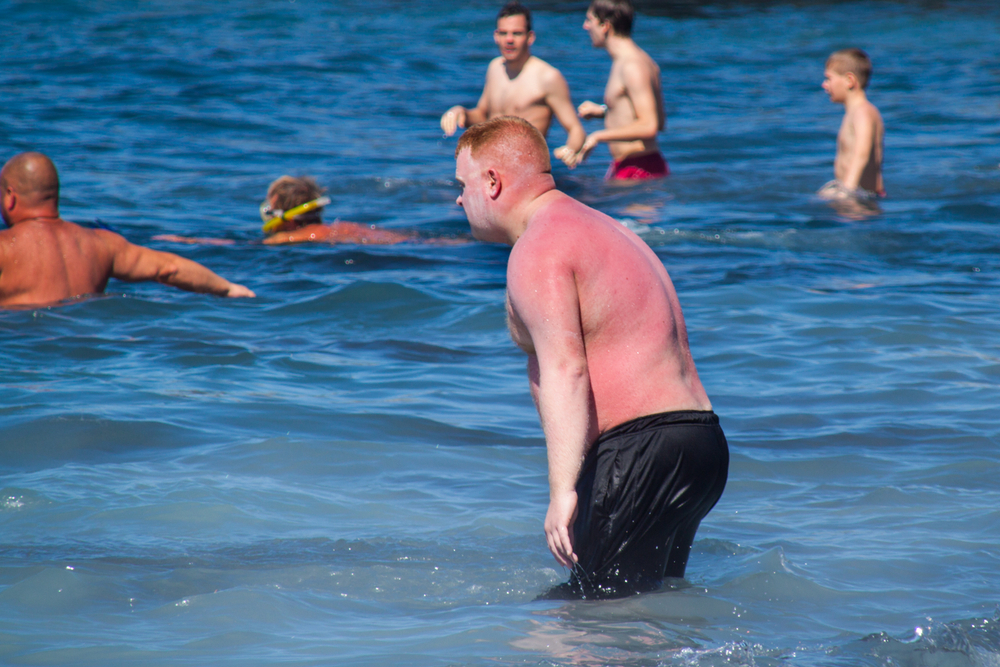
Scientists at Tel Aviv University have discovered a critical 48-hour cycle that is responsible for synchronizing the biological mechanisms that protect our skin from sun damage.

The new study reveals a biological clock dubbed the “UV-protection timer” that both synchronizes the skin’s response to ultraviolet rays and mediates a tradeoff between two skin defense systems: stress response and pigmentation.

“Our discovery was prompted by the surprising finding that low-frequency UV exposure results in higher skin pigmentation,” says Prof. Carmit Levy of the Department of Human Genetics and Biochemistry at TAU’s Sackler Faculty of Medicine, who led the research for the study with TAU doctoral student Hagar Malcov-Brog. “This provides an in-depth mechanistic understanding of how the skin’s response to ultraviolet rays is regulated. Our results support the premise that the evolution of furless human skin led to a UV-protection ‘timer.’ This timer provided maximum skin protection with minimum damage.”

The research was the product of a collaboration with Prof. Shai Shen-Orr of the Technion-Israel Institute of Technology and Prof. Mehdi Khaled of Université Paris-Saclay. Technion doctoral student Ayelet Alpert also conducted research for the study, published as the cover story in Molecular Cell on October 25.

Skip a day in the sun

“We have identified a mechanism that spreads like a wave through the skin over 48 hours after an initial exposure to ultraviolet rays. This process synchronizes the natural defense mechanisms in the skin,” says Prof. Levy. “We concluded that exposure to the sun at a frequency of once every two days leads to optimal protection from sun damage.”

Two principal defense mechanisms naturally protect the skin from UV damage. The first recruits the immune system, inflammation and DNA repair to heal any burning or damage caused by UV radiation that can ultimately cause skin cancer. The second mechanism, pigmentation or tanning, creates a physical buffer to safeguard the skin against future exposure.

The researchers exposed both human and mouse skin samples to disparate UV doses at different times to measure reparative protein and pigmentation responses in the skin. The measurements revealed that certain genes appeared in the skin in a neat and synchronized sequence 48 hours following initial exposure to UV radiation.

To deepen their understanding of the process, the Technion researchers then built a mathematical model of the finding, which shows that MITF, the protein controlling the two skin protection mechanisms, spreads in the skin in a wave-like form, synchronizing the two protective mechanisms. “The frequency of the wave is 48 hours,” says Prof. Shen-Orr. “Imagine you tossed a stone into a pond and saw the ripples spread. Then, before they settled down, you threw in another stone, interrupting the process.”

“Similarly, a process of building and breaking takes place in our skin when it is exposed to the sun,” Prof. Levy continues. “Most experts recommend going to the gym every other day, not daily. The same is true of protecting our skin from sun damage. If you interrupt the protection process by sitting in the sun two days in a row, you damage a mechanism that requires 48 process to complete its cycle.”

The researchers are currently exploring the reason, perhaps related to Vitamin D levels, behind the biological mechanism.

Related Articles Read More >

Medable’s Digital Data Flow Agent focuses on protocol translation as the agentic race accelerates
AI image firm Midjourney spins up health division, unveils ‘Ultrasonic CT’
Q&A: Owkin’s five-year Sanofi deal bets on ‘purpose-built’ AI agents
Genetically modified hookworms could produce and deliver therapeutics within a host
rd newsletter
EXPAND YOUR KNOWLEDGE AND STAY CONNECTED
Get the latest info on technologies, trends, and strategies in Research & Development.

R&D World Digital Issues

Fall 2025 issue

Browse the most current issue of R&D World and back issues in an easy to use high quality format. Clip, share and download with the leading R&D magazine today.

R&D 100 Awards
Research & Development World
  • Subscribe to R&D World Magazine
  • Sign up for R&D World’s newsletter
  • Contact Us
  • About Us
  • Drug Discovery & Development
  • Pharmaceutical Processing
  • Global Funding Forecast

Copyright © 2026 WTWH Media LLC. All Rights Reserved. The material on this site may not be reproduced, distributed, transmitted, cached or otherwise used, except with the prior written permission of WTWH Media
Privacy Policy | Advertising | About Us

Search R&D World

  • R&D World Home
  • Topics
    • Aerospace
    • Automotive
    • Biotech
    • Careers
    • Chemistry
    • Environment
    • Energy
    • Life Science
    • Material Science
    • R&D Management
    • Physics
  • Technology
    • 3D Printing
    • A.I./Robotics
    • Software
    • Battery Technology
    • Controlled Environments
      • Cleanrooms
      • Graphene
      • Lasers
      • Regulations/Standards
      • Sensors
    • Imaging
    • Nanotechnology
    • Scientific Computing
      • Big Data
      • HPC/Supercomputing
      • Informatics
      • Security
    • Semiconductors
  • R&D Market Pulse
  • R&D 100
    • 2025 R&D 100 Award Winners
    • 2025 Professional Award Winners
    • 2025 Special Recognition Winners
    • R&D 100 Awards Event
    • R&D 100 Submissions
    • Winner Archive
  • Resources
    • Research Reports
    • Digital Issues
    • Educational Assets
    • Subscribe
    • Video
    • Webinars
    • Content submission guidelines for R&D World
  • Global Funding Forecast
  • Top Labs
  • Advertise
  • SUBSCRIBE