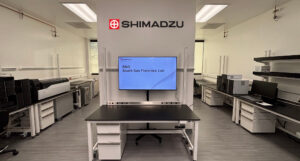
 Shimadzu Scientific Instruments Inc. (SSI) has opened a new research and development facility in South San Francisco, California, the company announced March 30.
The lab will focus on developing analytical instruments, software, applications, and lab automation for pharmaceutical and life science customers in North America. It will focus chiefly on three core areas: analytical methods for drug delivery systems including lipid nanoparticles (LNP) and adeno-associated viruses (AAV), new offerings for bioprocessing and preparative purification, and cell culture solutions.
The facility will be equipped with SSI’s triple quadrupole LCMS-8060RX, the Nexera ultra high-performance liquid chromatograph (UHPLC), the Nexera UC supercritical fluid chromatograph, and the CF3-8030 centrifugal field-flow fractionation system.
A bet on LNP and AAV characterization
Of Shimadzu’s three stated focus areas, the LNP and AAV analytical methods work is among the most strategically significant. The demand for advanced LNP characterization has surged in the years following the mRNA COVID-19 vaccines, and the analytical challenges are far from solved. A Nature Biotechnology paper published in late 2025 made the case that traditional characterization methods such as dynamic light scattering (DLS) cannot accurately quantify the physicochemical properties of LNPs, and that emerging solution-based biophysical methods, including field-flow fractionation coupled with multiangle light scattering, are essential for determining LNP structure-function relationships.
That finding maps directly onto Shimadzu’s CF3-8030, which the company launched in January 2026 and describes as specifically designed for the separation and analysis of nanoparticle drug delivery systems and complex pharmaceutical formulations. The system uses centrifugal forces up to 15,900 × g to resolve closely sized particle populations, a capability that conventional particle measurement techniques struggle to match.
A peer-reviewed study in the Journal of Pharmaceutical Sciences used Shimadzu’s CF3 technology to develop a novel profiling method for liposomes and LNPs based on particle size and density, evaluating COVID-19 vaccine LNPs from both Pfizer and Moderna.
Why South San Francisco, and why now
SSI said it chose the San Francisco Bay Area because the region is a leading hub for pharmaceutical and life science R&D. The Bay Area life sciences real estate market is in what Cushman & Wakefield is calling a “reset moment” with vacancy remains elevated at around 29% in Q4 2025, and rents have eased. At the same time, limited new supply is coming online and venture capital activity is lukewarm, but the long-term outlook is positive. CBRE’s Q4 data was more encouraging: for the first time in two years, the Bay Area had more life sciences space leased than came onto the market, pushing vacancy down from 32.8% to 30.2%.
South San Francisco specifically remains the epicenter of Bay Area biotech. The city is home to over 250 biotech companies and roughly 12 million square feet of biotech space, with an additional 3.5 million square feet under construction. Shimadzu is not the first instrument or pharmaceutical company to plant a flag there in recent years. In 2024, Astellas Pharma opened a $90 million West Coast Innovation Center in South San Francisco, consolidating 154,000 square feet of R&D and commercial operations under one roof.
SSI added that it plans to collaborate with life science technology companies and AI-driven startups in the region to support a broader approach to its R&D activities.
Shimadzu Corporation, which is headquartered in Kyoto, Japan and publicly traded on the Tokyo Stock Exchange (7701.T), reported consolidated revenue of approximately ¥539 billion (about $3.5 billion USD) for the fiscal year ended March 2025. The company’s Analytical & Measuring Instruments (AMI) segment, which includes SSI’s operations, posted net sales of ¥247.9 billion, up 2.3% year-over-year, though operating profit in the segment declined 17% as the company increased R&D spending by ¥7.4 billion.