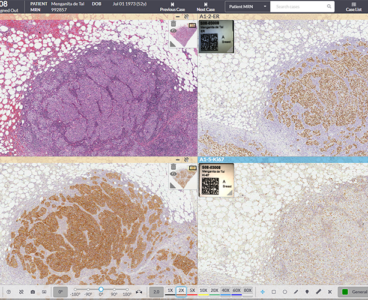
Digital pathology matured quickly during the pandemic, when remote work needs and temporary FDA enforcement discretion lowered the perceived barriers to whole-slide imaging. Capital followed. Roche’s May agreement to acquire PathAI for up to $1.05 billion, pending closing, is only the most recent sign of how much money is chasing the field. The most valuable…
Scaling precision medicine starts in the lab: How next-generation microarrays turn genomic data into action
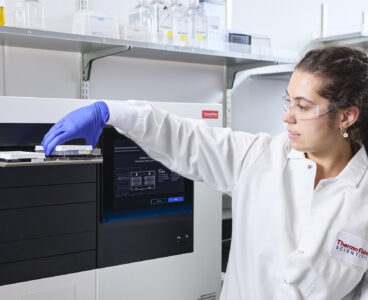
Precision medicine has reached a turning point largely due to rapid technological advances. The constraint against future scale is no longer whether researchers can generate genomic data, but whether programs can turn that data into repeatable, clinically relevant insight at the pace and scale that modern healthcare systems and drug discovery pipelines demand. In many…
Bioptimus launches massive patient data atlas to train its biology AI
Bioptimus, a global AI company building models for biology, announced the launch of its Spatial Tissue Embedding Learning Atlas (STELA), a multinational spatial data generation initiative in partnership with 10x Genomics and Broad Clinical Labs. The company aims to solve issues in drug discovery and development, improving efficiency and decreasing costs. Building foundation models for…
New base editing tool achieves high efficiency and precision, unlocking hard-to-edit disease mutations
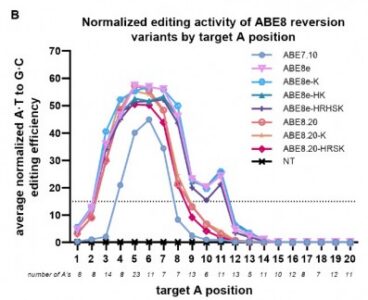
Researchers from the University of California San Diego developed a way to minimize bystander edits, unwanted edits that occur when a base editor edits the bases surrounding the desired nucleobase. The work is published in Nature Biotechnology. Base editing has progressed from the laboratory to patient care, treating debilitating or terminal illnesses, in less than…
Long-read sequencing unlocks “invisible” genome regions for rare disease diagnosis
Short-read genome sequencing, while cost- and time-effective, often misses pertinent genetic information for rare disease diagnosis. This method sequences DNA fragments between 50 and 300 base pairs at a time and struggles with sequencing complex genomic regions and identifying large structural variations. It also requires an amplification process that can introduce errors or sequence bias. …
Promise Bio CEO dishes on why Pfizer, AstraZeneca are backing its quest to crack autoimmune trial-and-error

The Tel Aviv startup Promise Bio claims its “color-TV” epiproteomics could slash trial-and-error prescribing for autoimmune disease, an area that already drains more than $100 billion in U.S. health-care spending each year. The company aims to bring a precision medicine approach, which has elevated oncology treatments, to immune-mediated diseases. CEO and co-founder Dr. Ronel Veksler,…
From self-driving cars to an autonomous AI/ML analytical platform for drug discovery

What do frictionless parking experiences and life-saving drugs have in common? For data scientist June Guo, the answer lies in setting AI algorithms loose on vast troves of data. Before setting his sights on human biology, Guo worked at Metropolis Technologies, a company focused on transforming the parking experience through the use of advanced computer…