Mary E. Brunkow, Fred Ramsdell and Shimon Sakaguchi were awarded the Nobel Prize in Physiology or Medicine on Monday for immune system research that has contributed to medical advances in cancer and autoimmune treatments.
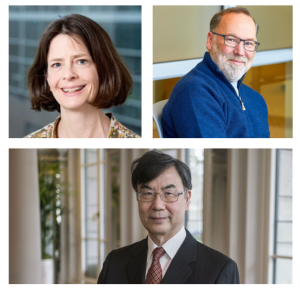
Top: Mary Brunkow and Fred Ramsdell
Bottom: Shimon Sakaguchi
The researchers identified a class of cells called regulatory T cells and the genes that control them. Their work revealed how the immune system knows not to attack the body’s healthy cells and how malfunctioning cells are stopped from destroying healthy cells, a mechanism called peripheral immune tolerance.
The trio of researchers will share the 11 million Swedish krona (US$1 million) award in honor of their research on peripheral immune tolerance.
Making the discovery: a decades-long story
Sakaguchi began researching the thymus, a small organ behind the breastbone that prevents malfunctioning immune cells from getting into the bloodstream, as a student in the 1970s. After over a decade of work, he discovered that the thymus did not stop every harmful cell from entering the bloodstream. He found that the immune system has a backup system of immune cells that stop attacks on healthy cells. The cells in the backup system were of a new class, which Sakaguchi called regulatory T cells.
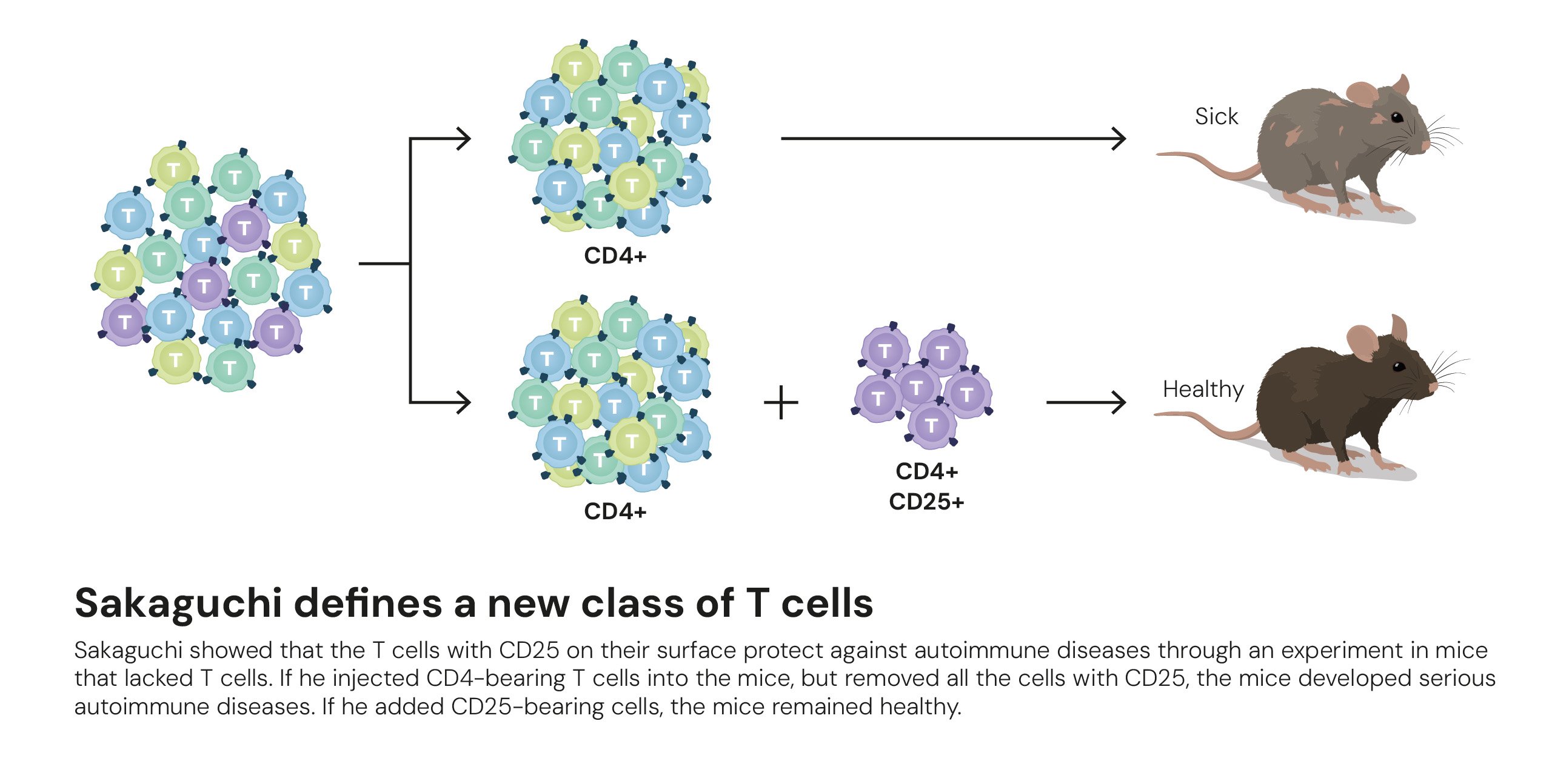
Sakaguchi discovered a new class of cells, regulatory T cells. © The Nobel Committee for Physiology or Medicine. Ill. Mattias Karlén
Brunkow and Ramsdell expanded this research, studying a strain of mice with autoimmune disease. The mice’s immune systems attacked their own cells, and the animals only lived for a few weeks. They found that mice were missing the gene that instructs the immune system’s T cells not to attack healthy cells.
They were able to identify this gene, FOXP3. Without the gene, the body does not make regulatory T cells, so there is no backup system to stop the immune system from attacking the body. In 2001, they found that a rare autoimmune disease in humans, IPEX, was the same as the disease they studied in mice and was caused by a missing FOXP3 gene.

Brunkow and Ramsdell identified the gene that codes for regulatory T cells. © The Nobel Committee for Physiology or Medicine. Ill. Mattias Karlén
This research could be an important advance for oncology. Cancers block immune system attacks by attracting regulatory T cells, preventing other immune cells from attacking the cancerous cells. Now that the FOXP3 gene has been identified, it could be possible for scientists to develop drugs that could enable the immune system to attack cancer cells.
For autoimmune diseases, where regulatory T cells are missing or defective, researchers can use the FOXP3 gene as a starting point to develop drugs that could teach the immune system to stop its attacks.
About the laureates
Sakaguchi is an immunology expert at the University of Osaka. He has worked as a researcher at institutions including Johns Hopkins University and Stanford University. He said winning the award was “a surprise and an honor” at a news conference on Monday.
Brunkow researches genomics and autoimmune diseases at the Institute for Systems Biology in Seattle. She received her PhD in molecular biology from Princeton University.
Ramsdell is Chief Scientific Officer at Sonoma Biotherapeutics. He received his PhD in Immunology from UCLA. He then took a postdoctoral fellowship at the National Institutes of Health.
Later this week, the prizes for Physics and Chemistry will be awarded by the Royal Swedish Academy of Sciences in Stockholm.