Research & Development World

  • R&D World Home
  • Topics
    • Aerospace
    • Automotive
    • Biotech
    • Careers
    • Chemistry
    • Environment
    • Energy
    • Life Science
    • Material Science
    • R&D Management
    • Physics
  • Technology
    • 3D Printing
    • A.I./Robotics
    • Software
    • Battery Technology
    • Controlled Environments
      • Cleanrooms
      • Graphene
      • Lasers
      • Regulations/Standards
      • Sensors
    • Imaging
    • Nanotechnology
    • Scientific Computing
      • Big Data
      • HPC/Supercomputing
      • Informatics
      • Security
    • Semiconductors
  • R&D Market Pulse
  • R&D 100
    • 2025 R&D 100 Award Winners
    • 2025 Professional Award Winners
    • 2025 Special Recognition Winners
    • R&D 100 Awards Event
    • R&D 100 Submissions
    • Winner Archive
  • Resources
    • Research Reports
    • Digital Issues
    • Educational Assets
    • R&D Index
    • Subscribe
    • Video
    • Webinars
    • Content submission guidelines for R&D World
  • Global Funding Forecast
  • Top Labs
  • Advertise
  • SUBSCRIBE

Tiny Polyps Save Corals from Predators and Disease

By European Commission Joint Research Centre | December 22, 2017

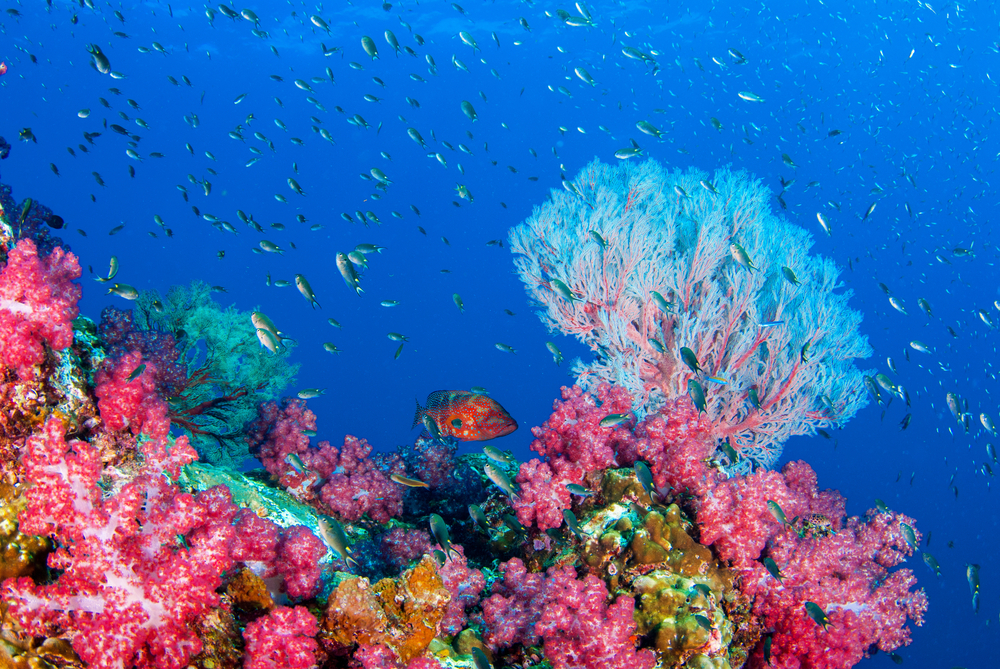
In a new study published today in Proceedings of the Royal Society, the scientists show how tiny hydrozoans, polyps smaller than one millimeter and commonly found in dense colonies on the surface of hard corals, may play a role in keeping corals safe and healthy.

Tibor Navracsics, Commissioner for Education, Culture, Youth and Sports, responsible for the Joint Research Centre said: “EU scientists are actively contributing to solve global problems. This is a good example of the scientific excellence that can help us to protect our environment and support the policy making.”

Tiny polyps protect corals from being eaten by fish and snails

The researchers from the JRC, Marhe Center of Milan-Bicocca University and the King Abdullah University of Science and Technology researched almost 2500 coral colonies in Maldivian and Saudi Arabian reefs, searching for signs of predation, temperature induced stress, and disease. For each colony, they also looked for the presence or absence of symbiotic hydrozoans and concluded that corals living in association with hydrozoans are much less prone to be attacked by coral-eating fish and gastropods, such as snails, than hydrozoan-free corals.

Predators are likely deterred by the venomous organelle ejected by hydrozoans’ nematocysts, similar to those found in medusas’ tentacles. Obviously, an individual hydrozoan polyp of less than one millimeter cannot cope with fish with a body mass billions of times its own. Yet when hydrozoans reach very high densities on coral surface, sometimes more than 50 individuals per square centimeter, it creates a sort of a continuous, stinging carpet that can discourage fish from foraging.

This effect is even more pronounced for coral eating gastropods, which are exposed to hydrozoans’ nematocysts longer and more intensely as they crawl. This finding is important for coral conservation because coral eating gastropods are regarded as a major threat to reef persistence as a consequence of warming water temperatures.

The authors also found that the presence of symbiotic hydrozoans goes hand in hand with better health of corals. This could be either a secondary effect as wounds caused by predators are more easily infected by pathogens, and/or the result of “friendly” hydrozoans feeding on pathogenic protozoans trying to invade coral hosts.

Unfortunately, even hydrozoans cannot protect corals against mortality directly associated to increasing temperature (i.e. coral bleaching), as demonstrated by the massive coral die out recorded last year in the Great Barrier Reef. Yet, by contributing to the overall health of corals, they are likely playing an important role in making reefs more resilient, possibly shifting the critical threshold between reversible and irreversible disturbances. If this is the case, this would mean that an almost invisible and largely overlooked microscopic organism could be buying time for half a billion people relying on coral reef ecosystems for their livelihoods.
Related Articles Read More >

New method achieves 89% defluorination of PFOA in lab tests
LLNL’s multi-ignition wildfire models could help predict and prevent, catastrophic fire events
Scientists release sodium hydroxide into the ocean to combat acidification
R&D 100 Winner Spotlight: DuPont’s high-salinity wastewater membrane
rd newsletter
EXPAND YOUR KNOWLEDGE AND STAY CONNECTED
Get the latest info on technologies, trends, and strategies in Research & Development.
RD 25 Power Index

R&D World Digital Issues

Fall 2025 issue

Browse the most current issue of R&D World and back issues in an easy to use high quality format. Clip, share and download with the leading R&D magazine today.

R&D 100 Awards
Research & Development World
  • Subscribe to R&D World Magazine
  • Sign up for R&D World’s newsletter
  • Contact Us
  • About Us
  • Drug Discovery & Development
  • Pharmaceutical Processing
  • Global Funding Forecast

Copyright © 2026 WTWH Media LLC. All Rights Reserved. The material on this site may not be reproduced, distributed, transmitted, cached or otherwise used, except with the prior written permission of WTWH Media
Privacy Policy | Advertising | About Us

Search R&D World

  • R&D World Home
  • Topics
    • Aerospace
    • Automotive
    • Biotech
    • Careers
    • Chemistry
    • Environment
    • Energy
    • Life Science
    • Material Science
    • R&D Management
    • Physics
  • Technology
    • 3D Printing
    • A.I./Robotics
    • Software
    • Battery Technology
    • Controlled Environments
      • Cleanrooms
      • Graphene
      • Lasers
      • Regulations/Standards
      • Sensors
    • Imaging
    • Nanotechnology
    • Scientific Computing
      • Big Data
      • HPC/Supercomputing
      • Informatics
      • Security
    • Semiconductors
  • R&D Market Pulse
  • R&D 100
    • 2025 R&D 100 Award Winners
    • 2025 Professional Award Winners
    • 2025 Special Recognition Winners
    • R&D 100 Awards Event
    • R&D 100 Submissions
    • Winner Archive
  • Resources
    • Research Reports
    • Digital Issues
    • Educational Assets
    • R&D Index
    • Subscribe
    • Video
    • Webinars
    • Content submission guidelines for R&D World
  • Global Funding Forecast
  • Top Labs
  • Advertise
  • SUBSCRIBE