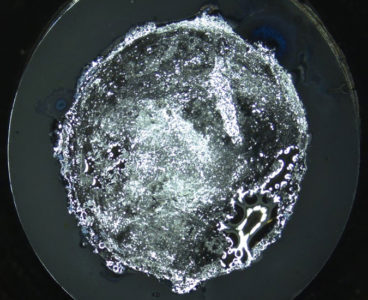
Written by David L. Chandler, MIT News Office As researchers push the boundaries of battery design, seeking to pack ever greater amounts of power and energy into a given amount of space or weight, one of the more promising technologies being studied is lithium-ion batteries that use a solid electrolyte material between the two electrodes,…
Contactless high performance power transmission

A team led by Technical University of Munich (TUM) physicists Christoph Utschick and Prof. Rudolf Gross has succeeded in making a coil with superconducting wires capable of transmitting power on the order of more than five kilowatts contactless and with only small losses. The wide range of conceivable applications include autonomous industrial robots, medical equipment,…
An anode-free zinc battery that could someday store renewable energy
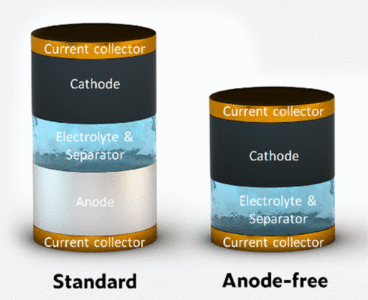
Renewable energy sources, such as wind and solar power, could help decrease the world’s reliance on fossil fuels. But first, power companies need a safe, cost-effective way to store the energy for later use. Massive lithium-ion batteries can do the job, but they suffer from safety issues and limited lithium availability. Aqueous zinc-based batteries have…
SPARKZ licenses ORNL technology to speed up rechargeable battery production

Energy storage startup SPARKZ has exclusively licensed a battery cycling technology from the Department of Energy’s Oak Ridge National Laboratory designed to enable the rapid production of lithium-ion batteries commonly used in portable electronic devices and electric vehicles. ORNL’s technology, called fast formation cycling, reduces production time significantly and also enhances battery performance, which can…
Chemists settle battery debate, propel research forward

A team of researchers led by chemists at the U.S. Department of Energy’s (DOE) Brookhaven National Laboratory has identified new details of the reaction mechanism that takes place in batteries with lithium metal anodes. The findings, published today in Nature Nanotechnology, are a major step towards developing smaller, lighter and less expensive batteries for electric…
R&D 100 winner of the day: Solid Lithium Battery (SLiB) using hard and soft solid electrolytes
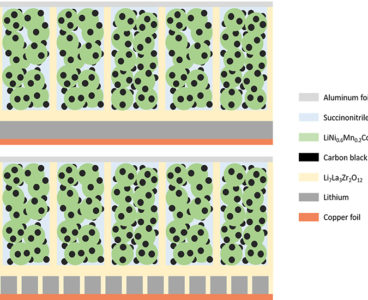
Rising demand for lithium batteries with higher energy density and improved safety requires a paradigm shift in material selection and battery configuration. The most likely successor to the lithium ion battery will be a solid-state battery that uses non-flammable solid electrolytes paired with a lithium metal anode. The construction and composition of Solid Lithium Battery…
R&D winner of the day: a new Cobalt-Free Li-ion Battery Cathode Material

The Cobalt-Free Cathode Material, developed at Oak Ridge National Laboratory for use in lithium-ion batteries, is made with nickel, iron and aluminum in the place of cobalt, which is significantly more expensive. The novel cathode has performance equivalent to the mainstream cobalt-containing cathodes used in today’s lithium-ion batteries. Manufacturing of the new cobalt-free cathode will…
What are supercapacitors?

Supercapacitors, also known as ultracapacitors, have performance characteristics somewhere between a battery and a conventional capacitor. A battery has a high energy density, meaning it can store a significant amount of energy with a relatively small volume or mass. Batteries are, however, limited in terms of the speed at which they can charge or discharge,…
R&D winner of the day: Deep Sub-Micron Process MOSFET
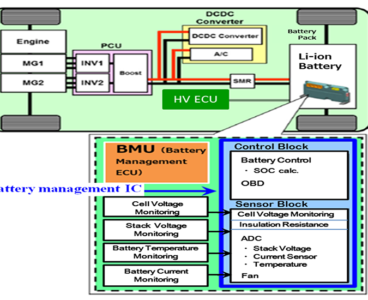
Joint research by Toyota Central R&D Labs and DENSO Corp. has developed a new Deep Sub-Micron Process MOSFET for a new Li-ion battery management IC. Although the new IC size is only one-third of the size of a conventional IC, it can monitor battery cells with 1.2x higher capacity than the conventional IC. Development of…
New class of cobalt-free cathodes could enhance energy density of next-gen lithium-ion batteries
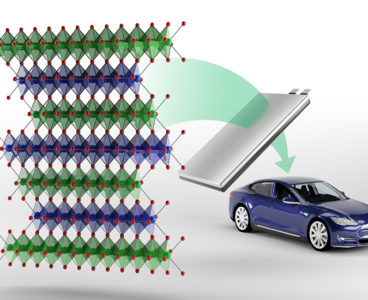
By Jennifer J Burke, ORNL Oak Ridge National Laboratory researchers have developed a new family of cathodes with the potential to replace the costly cobalt-based cathodes typically found in today’s lithium-ion batteries that power electric vehicles and consumer electronics. The new class called NFA, which stands for nickel-, iron- and aluminum-based cathode, is a derivative…
R&D 100 winner of the day: Solar on the Move: All-Perovskite tandem technology
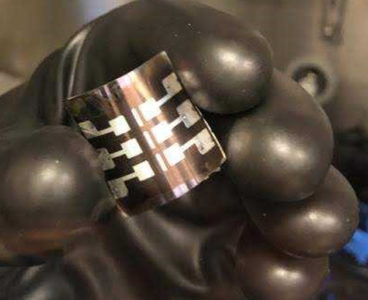
National Renewable Energy Laboratory’s all-perovskite tandem technology could open up an entirely new solar-energy application: vehicles powered directly by photovoltaics (PV). No previous PV technology achieves the combined flexibility, low cost and high specific power needed for PV-powered vehicles. All-perovskite tandems have a specific power 10x higher than flexible PV technologies of similar cost, and…
Group14 Technologies secures $17M Series B to scale production of lithium-silicon battery technology
Group14 Technologies, a global provider of silicon-carbon composite materials for lithium-ion markets, today announced it has secured $17 million in Series B funding led by SK Materials, a manufacturer of special gases and industrial gases, with participation from returning investor OVP Venture Partners. Group14 will use this operating capital to scale production to meet the…
Preparing for the next generation of batteries
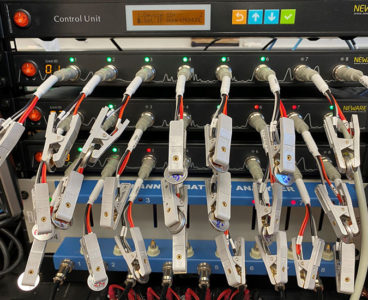
In the ongoing quest to build a better battery, researchers used the Canadian Light Source (CLS) at the University of Saskatchewan to identify the potential of using polymer composites as electrode matrices to increase the capacity of rechargeable lithium-ion (Li-ion) batteries. “The composition of the adhesive and conductive framework for batteries hasn’t changed in years,”…
Novel battery project at New York Power Authority demonstrates energy storage’s role in advancing state’s clean energy goals
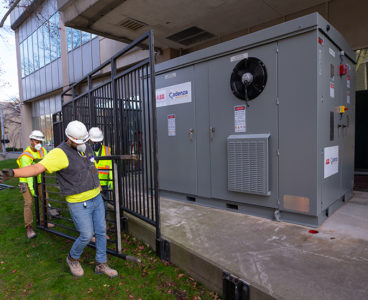
New York State today announced the unveiling of a new energy storage project that uses an innovation in lithium-ion (Li-ion) battery technology. The success of this project will demonstrate the safety and use of commercial energy storage systems that could enable more integration of renewable energy resources into the grid. Located at the New York…
R&D 100 winner of the day: Flow-Through Microelectrode Cell for Precision Electroanalytical Chemistry
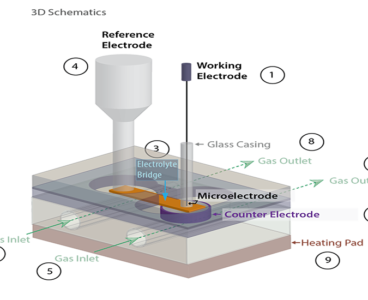
Lawrence Berkeley National Laboratory’s Flow-Through Microelectrode Cell for Precision Electroanalytical Chemistry provides the simplest, fastest, most affordable, precise and comprehensive tool for analyzing electrochemical systems that employ solid electrolytes. Because of its cost and performance advantages, this testing innovation can accelerate development of electrochemical technologies that meet critical global needs, particularly electrical energy storage and…
SwRI hacks electric vehicle charging to demonstrate cybersecurity vulnerabilities
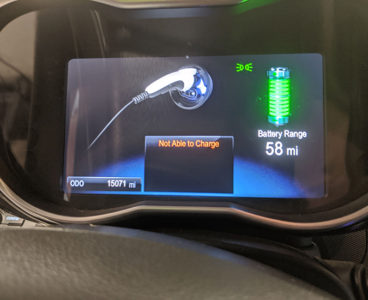
Engineers at Southwest Research Institute were able to interfere with the charging process of an electric vehicle (EV) by simulating a malicious attack as part of an automotive cybersecurity research initiative. The SwRI team reverse-engineered the signals and circuits on an EV and a J1772 charger, the most common interface for managing EV charging in…
R&D 100 winner of the day: Networked Amide Epoxy Polymer Electrolyte for Solid State Lithium-Ion Batteries (NAEPE)

Since Sony commercialized the first lithium-ion batteries (LIBs) containing organic liquid electrolytes in 1991, LIBs have been widely used in portable electronic devices and more recently in vehicles. However, as the energy density and/or size of cells increases, LIBs have incurred safety concerns due to volatile and flammable organic liquid electrolytes. Therefore, the world is…
The R&D 100 winner of the day: Porous graphitic framework (PGF) for sustainable high-performance Li-ion batterie

The insatiable demand for portable power, from handheld electronics to electric vehicles, continues to drive materials innovations for Lithium-Ion Batteries (LIBs). Current inorganic cathodes in LIBs have peaked in performance, yet still suffer from low capacity and energy density, limited structural versatility, environmental pollution and safety risks which have created hurdles in the consumer marketplace.…
High-precision electrochemistry: The new gold standard in fuel cell catalyst development
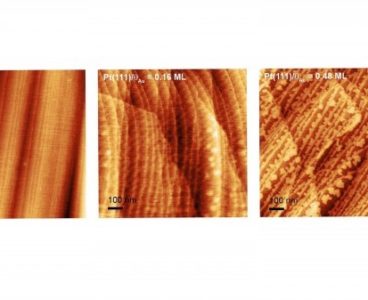
By Diana Anderson Vehicles powered by polymer electrolyte membrane fuel cells (PEMFCs) are energy-efficient and eco-friendly, but despite increasing public interest in PEMFC-powered transportation, current performance of materials that are used in fuel cells limits their widespread commercialization. Scientists at the U.S. Department of Energy’s (DOE) Argonne National Laboratory led a team to investigate reactions…
The shift to solid-state battery technology is next, reports IDTechEx
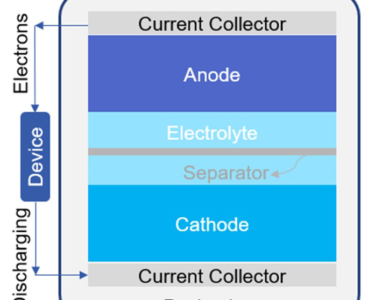
Electric vehicles are expected to include solid-state batteries as an innovative approach, according to IDTechEx’s research report “Solid-State and Polymer Batteries 2020-2030: Technology, Patents, Forecasts, Players“. The mature lithium-ion battery technology has its intrinsic limitations. Since commercialized in 1991, lithium-ion batteries have received a worldwide success. However, this cannot hide their intrinsic limitations in terms…
New anode material could lead to safer fast-charging batteries
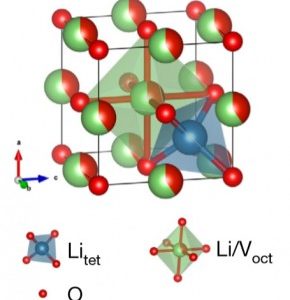
by University of California San Diego Scientists at UC San Diego have discovered a new anode material that enables lithium-ion batteries to be safely recharged within minutes for thousands of cycles. Known as a disordered rocksalt, the new anode is made up of earth-abundant lithium, vanadium and oxygen atoms arranged in a similar way as…
DOE selects Group14 Technologies in Energy Storage Grand Challenge to crack commercial hurdles for lithium-ion future
Group14 Technologies, a provider of silicon-carbon composite materials for global lithium-ion markets, announced today that it has been selected as a winner of the Department Of Energy’s Energy Storage Grand Challenge and will receive $3.96 million to integrate best-in-class synergistic technologies, delivering batteries that will meet the performance objectives for tomorrow’s electric vehicles. The Vehicle…
Preventing thermal runaway before it begins

Utility, industrial, commercial and government facilities are increasingly turning to Battery Energy Storage Systems (BESSs) in a variety of sizes and power outputs for reliable back-up power, to avoid peak demand charges and to store energy generated by renewable power systems for use at a later time. The market is expected to exceed more than…
Cadenza Innovation’s battery design prevents thermal propagation in grid energy storage applications
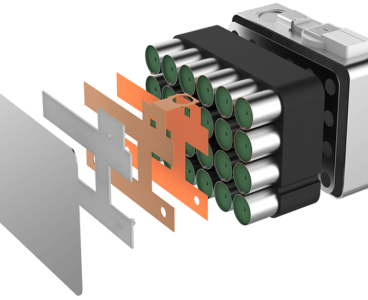
Validating the safety features of its patented lithium-ion (Li-ion) technology, Cadenza Innovation today announced that verifies that the company’s supercell battery architecture stops propagation when thermal runaway is induced inside the battery itself. By doing so, Cadenza’s technology solves a global industry safety issue seen in multiple battery fires and explosions in Arizona, South Korea…
Redesigning lithium-ion battery anodes for better performance
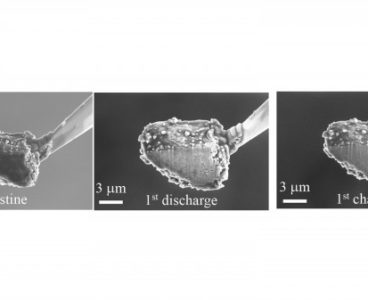
By Johnathon Briggs Scientists at Argonne National Laboratory have made progress toward a higher-capacity lithium-ion battery to meet rising consumer demand. With the growing number of electric vehicles on the road and an increasing reliance on consumer electronics, demand has never been greater for development of lithium-ion batteries (LIBs) that can sustain a higher energy…