A KAIST (Korea Advanced Institute of Science and Technology) research team made it one step closer to realizing safe energy storage with high energy density, high power density, and a longer cycle life. This hybrid storage alternative shows power density 100 times faster than conventional batteries, allowing it to be charged within a few seconds.…
Materials Contain New Quantum Behaviors
Layered transition metal dichalcogenides or TMDCs—materials composed of metal nanolayers sandwiched between two other layers of chalcogens— have become extremely attractive to the research community due to their ability to exfoliate into 2D single layers. Similar to graphene, they not only retain some of the unique properties of the bulk material, but also demonstrate direct-gap…
Nanotech Gets a New Field: ‘Electron Quantum Metamaterials’
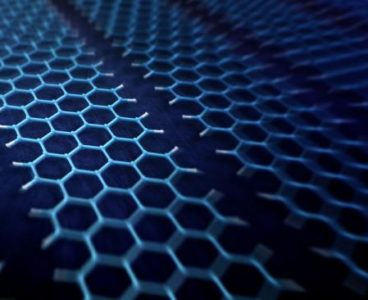
Iqbal Pittalwala, UC Riverside When two atomically thin two-dimensional layers are stacked on top of each other and one layer is made to rotate against the second layer, they begin to produce patterns — the familiar moiré patterns — that neither layer can generate on its own and that facilitate the passage of light and…
Innovative Semiconductor Nanofiber Creates Better Solar Cells
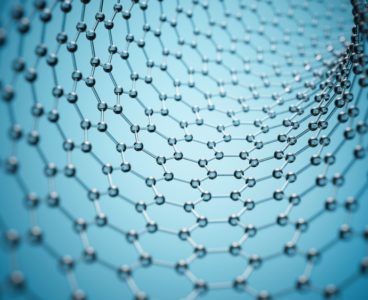
A team from The Hong Kong Polytechnic University (PolyU) has developed a novel nanostructure embedded into a semiconductor nanofiber that results in superb conductivity. The nanocomposite addresses a key inhibitor to conductivity, with the potential to improve a wide range of applications, from batteries and solar cells, to air purification devices. While semiconductors are widely…
Flexible Polymers Could be the Future of Nanoelectronics
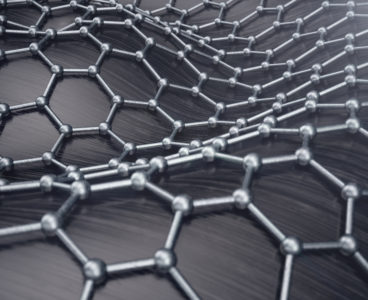
A team of scientists from Siberian Federal University (SibFU) together with foreign colleagues described the structural and physical properties of a group of two-dimensional materials based on polycyclic molecules called circulenes. The possibility of flexible design and variable properties of these materials make them suitable for nanoelectronics. The results are published in the Journal of…
Atoms Escape Graphene Cover through Tunnels
Graphene has held great potential for practical applications since it was first isolated in 2004. But we still don’t use it in our large-scale technology, because we have no way of producing graphene on an industrial scale. Physicists from Leiden University have now visualized for the first time how atoms behave in between graphene and…
Nanoribbon Tweaks Drastically Alter Heat Conduction
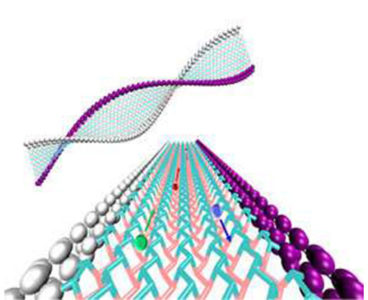
Black phosphorene, an unusual two-dimensional (2-D) compound, may offer strategies for avoiding damaging hot spots in nanoscale circuits, a new study from A*STAR researchers has revealed. While carbon atoms in graphene films sit perfectly flat on a surface, black phosphorene has a distinct wrinkled shape due to the bonding preferences of its phosphorus atoms. Investigations…
Graphene Shines as Star van der Waals Material
In the nanoworld, magnetism has proven to be truly surprising. Just a few atoms thick, magnetic 2D materials could help to satisfy scientists’ curiosities and fulfil dreams for ever-smaller post-silicon electronics. An international research team led by PARK Je-Geun at the Center for Correlated Electron Systems, within the Institute for Basic Science (IBS), has just…
Layered Chambers Open the Drug Release Window

Implantable arrays of microchambers show potential capacity for holding and releasing precisely controlled quantities of drugs on command, report A*STAR researchers with colleagues in Singapore, Russia, and the United Kingdom. A near-infrared laser beam acts to break open selected microchambers at the required time. “This near-infrared light is the perfect way to trigger drug release…
Nonlinear Optical Phenomena Solve Graphical Probabilistic Issues
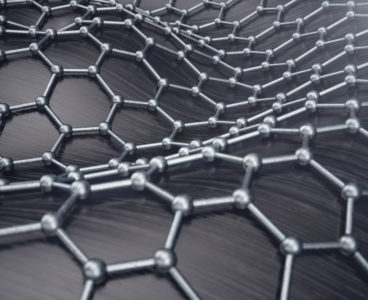
Researchers have introduced a technique to use optics in probabilistic computing. In their work, they demonstrated that there are nonlinear optical phenomena that are highly suitable for resolving a graphical probabilistic model. The graphene based thin films for optical computing were created at the University of Eastern Finland in Professor Yuri Svirko’s nanocarbon laboratory. “Graphical…
New Graphene Technique Enhances Thermal Properties of Nanofluids
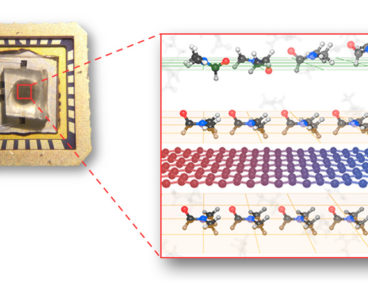
Heat transfer fluids are widely used as coolants in vehicles and industrial processes to dissipate heat and prevent overheating. However, the cooling potential of current fluids based on water and oils is typically too low to meet the ever more demanding needs of industry. In microelectronics, for instance, absolute temperature control is crucial for the…
Graphene Aerogel Helps Break Records in Lab Tests
Scientists at UC Santa Cruz and Lawrence Livermore National Laboratory (LLNL) have reported unprecedented performance results for a supercapacitor electrode. The researchers fabricated electrodes using a printable graphene aerogel to build a porous three-dimensional scaffold loaded with pseudocapacitive material. In laboratory tests, the novel electrodes achieved the highest areal capacitance (electric charge stored per unit…
Mussels Inspire Stronger Graphene

Researchers demonstrated the mussel-inspired reinforcement of graphene fibers for the improvement of different material properties. A research group at Korea Advanced Institute of Science and Technology (KAIST), under Professor Sang Ouk Kim, applied polydopamine as an effective infiltrate binder to achieve high mechanical and electrical properties for graphene-based liquid crystalline fibers. This bio-inspired defect engineering…
Conductivity Controlled by Graphene Nanotube Deformation
Scientists from the NUST MISIS Laboratory of Inorganic Nanomaterials, together with their international colleagues, have proved it possible to change the structural and conductive properties of nanotubes by stretching them. This can potentially expand nanotubes’ application into electronics and high-precision sensors such as microprocessors and high-precision detectors. The research article has been published in Ultramicroscopy.…
3D-printed Supercapacitor Electrode Breaks Records in Lab Tests
Producing Defectless Metal Crystals of Unprecedented Size
Research Redefines Knowledge of Oxygen Binding on Graphene
Fuels, plastics, and other products are made using catalysts, materials that drive chemical reactions. To design a better catalyst, scientists must get the right atoms in the right spot. Positioning the atoms can be difficult, but new research makes it easier. Researchers determined the exact location of single oxygen atoms, which act like anchors for…
Research Examines Whether Inhaled Graphene is Harmful

Graphene has been hailed as the material of the future. However, little is known about whether and how graphene affects our health if it gets into the body. A team of researchers from Empa and the Adolphe Merkle Institute (AMI) in Fribourg have now conducted the first studies on a three-dimensional lung model to examine…
Nanotechnology Solves a Sticky Situation
Scientists hard pressed to find a way to switch off forces that keep molecules stuck to 2D materials at the nanoscale say they have understood how it is possible, paving the way for the development of better filters that could be used to remove toxins from the air or store hydrogen and greenhouse gases. The…
Graphene Heterostructures Further Information Processing Technology
Graphene Flagship researchers have shown in a paper published in Science Advances how heterostructures built from graphene and topological insulators have strong, proximity-induced, spin-orbit coupling which can form the basis of novel information processing technologies. Spin-orbit coupling is at the heart of spintronics. Graphene’s spin-orbit coupling and high electron mobility make it appealing for long…
Graphene Looks to Exceed Future Bandwidth Demands

Researchers within the Graphene Flagship project, one of the biggest research initiatives of the European Commission, showed that integrated graphene-based photonic devices offer a unique solution for the next generation of optical communications. Researchers in the initiative have demonstrated how properties of graphene enable ultra-wide bandwidth communications coupled with low power consumption to radically change…
You Say You Want a Computing Revolution
Scientists have discovered new particles that could lie at the heart of a future technological revolution based on photonic circuitry, leading to superfast, light-based computing. Current computing technology is based on electronics, where electrons are used to encode and transport information. Due to some fundamental limitations, such as energy-loss through resistive heating, it is expected…
Graphene Goes Under the Hood
Two-dimensional Materials Find Synergy with Graphene
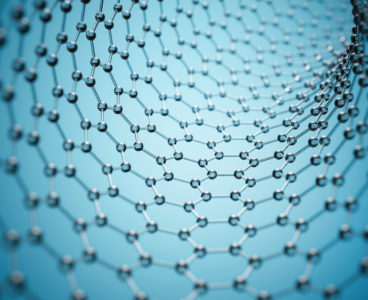
Where researchers who worked with two-dimensional materials and those who worked with membranes were once separate, synergistic opportunities are resulting in exciting new developments at their intersection, a Vanderbilt University chemical and biomolecular engineering professor has both opined and proven. In a review published earlier this year in Advanced Materials, Assistant Professor of Chemical and…
Novel Technique Gets Atoms to do a Switcharoo
A novel technique that nudges single atoms to switch places within an atomically thin material could bring scientists another step closer to realizing theoretical physicist Richard Feynman’s vision of building tiny machines from the atom up. A significant push to develop materials that harness the quantum nature of atoms is driving the need for methods…