Research & Development World

  • R&D World Home
  • Topics
    • Aerospace
    • Automotive
    • Biotech
    • Careers
    • Chemistry
    • Environment
    • Energy
    • Life Science
    • Material Science
    • R&D Management
    • Physics
  • Technology
    • 3D Printing
    • A.I./Robotics
    • Software
    • Battery Technology
    • Controlled Environments
      • Cleanrooms
      • Graphene
      • Lasers
      • Regulations/Standards
      • Sensors
    • Imaging
    • Nanotechnology
    • Scientific Computing
      • Big Data
      • HPC/Supercomputing
      • Informatics
      • Security
    • Semiconductors
  • R&D Market Pulse
  • R&D 100
    • 2025 R&D 100 Award Winners
    • 2025 Professional Award Winners
    • 2025 Special Recognition Winners
    • R&D 100 Awards Event
    • R&D 100 Submissions
    • Winner Archive
  • Resources
    • Research Reports
    • Digital Issues
    • Educational Assets
    • R&D Index
    • Subscribe
    • Video
    • Webinars
    • Content submission guidelines for R&D World
  • Global Funding Forecast
  • Top Labs
  • Advertise
  • SUBSCRIBE

What is a DNA sequencer?

By Paul Heney | September 14, 2020

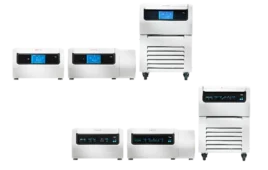
A DNA sequencer is a machine which automatically determines the sequence of nucleotides in deoxyribonucleic acid (DNA), the fundamental code which stores genetic information. DNA is a complex molecule made up of two long polynucleotide chains, known as strands, coiled around each other to form a double helix. Each strand is built up from a series of simpler units known as nucleotides. Each nucleotide contains one nucleobase, or simply base, as well as sugar and a phosphate group.

There are four different types of base, each of which can be denoted by a single letter:

  • Adenine (A)
  • Guanine (G)
  • Cytosine (C)
  • Thymine (T)

These bases always pair with the same partner to form a base pair. Guanine always pairs with cytosine and adenine always pairs with thymine. This pairing allows DNA to replicate itself during cell division and is also utilized during DNA sequencing.

Although small sections of DNA have been sequenced for many years, conventional methods were very labor intensive. The human genome is made up of approximately three billion base pairs, making manual sequencing an enormous undertaking. However, automated DNA sequencing methods have led to much more rapid sequencing. This enabled the Human Genome Project to sequence all of the base pairs in human DNA. The 13-year project cost $2.7 billion. Improvements in DNA sequencing mean that today, a complete human genome can be sequenced for a few thousand dollars.

There is no single DNA sequencing technique. The original, or ‘first generation’ automated sequencers used the Sanger sequencing method. This requires samples to be coped many times over in a process known as amplification and then senses different bases using a process known as electrophoresis which senses the migration of DNA fragments. So call Next Generation Sequencers (NGS) were developed during the human genome project and have greatly accelerated the rate of DNA sequencing. The latest methods are known as third-generation sequencers. Some of these do not require amplification and may use optical methods to sense base pairs.

Different methods give different sequencing rates and levels of accuracy. Comparing these can be difficult as there are currently no accepted standard methods to determine accuracy.




Related Articles Read More >

Why labs are embedding compliance into daily workflows
JLL: 2026 could be a realignment year for life science labs
Thermo Fisher launches X and S Series centrifuges with natural-refrigerant cooling
The low carbon lab buildout playbook for 2026
rd newsletter
EXPAND YOUR KNOWLEDGE AND STAY CONNECTED
Get the latest info on technologies, trends, and strategies in Research & Development.
RD 25 Power Index

R&D World Digital Issues

Fall 2025 issue

Browse the most current issue of R&D World and back issues in an easy to use high quality format. Clip, share and download with the leading R&D magazine today.

R&D 100 Awards
Research & Development World
  • Subscribe to R&D World Magazine
  • Sign up for R&D World’s newsletter
  • Contact Us
  • About Us
  • Drug Discovery & Development
  • Pharmaceutical Processing
  • Global Funding Forecast

Copyright © 2025 WTWH Media LLC. All Rights Reserved. The material on this site may not be reproduced, distributed, transmitted, cached or otherwise used, except with the prior written permission of WTWH Media
Privacy Policy | Advertising | About Us

Search R&D World

  • R&D World Home
  • Topics
    • Aerospace
    • Automotive
    • Biotech
    • Careers
    • Chemistry
    • Environment
    • Energy
    • Life Science
    • Material Science
    • R&D Management
    • Physics
  • Technology
    • 3D Printing
    • A.I./Robotics
    • Software
    • Battery Technology
    • Controlled Environments
      • Cleanrooms
      • Graphene
      • Lasers
      • Regulations/Standards
      • Sensors
    • Imaging
    • Nanotechnology
    • Scientific Computing
      • Big Data
      • HPC/Supercomputing
      • Informatics
      • Security
    • Semiconductors
  • R&D Market Pulse
  • R&D 100
    • 2025 R&D 100 Award Winners
    • 2025 Professional Award Winners
    • 2025 Special Recognition Winners
    • R&D 100 Awards Event
    • R&D 100 Submissions
    • Winner Archive
  • Resources
    • Research Reports
    • Digital Issues
    • Educational Assets
    • R&D Index
    • Subscribe
    • Video
    • Webinars
    • Content submission guidelines for R&D World
  • Global Funding Forecast
  • Top Labs
  • Advertise
  • SUBSCRIBE