Research & Development World

  • R&D World Home
  • Topics
    • Aerospace
    • Automotive
    • Biotech
    • Careers
    • Chemistry
    • Environment
    • Energy
    • Life Science
    • Material Science
    • R&D Management
    • Physics
  • Technology
    • 3D Printing
    • A.I./Robotics
    • Software
    • Battery Technology
    • Controlled Environments
      • Cleanrooms
      • Graphene
      • Lasers
      • Regulations/Standards
      • Sensors
    • Imaging
    • Nanotechnology
    • Scientific Computing
      • Big Data
      • HPC/Supercomputing
      • Informatics
      • Security
    • Semiconductors
  • R&D Market Pulse
  • R&D 100
    • 2025 R&D 100 Award Winners
    • 2025 Professional Award Winners
    • 2025 Special Recognition Winners
    • R&D 100 Awards Event
    • R&D 100 Submissions
    • Winner Archive
  • Resources
    • Research Reports
    • Digital Issues
    • Educational Assets
    • R&D Index
    • Subscribe
    • Video
    • Webinars
    • Content submission guidelines for R&D World
  • Global Funding Forecast
  • Top Labs
  • Advertise
  • SUBSCRIBE

Researchers Develop Heat Driven Transistor

By Kenny Walter | January 31, 2017

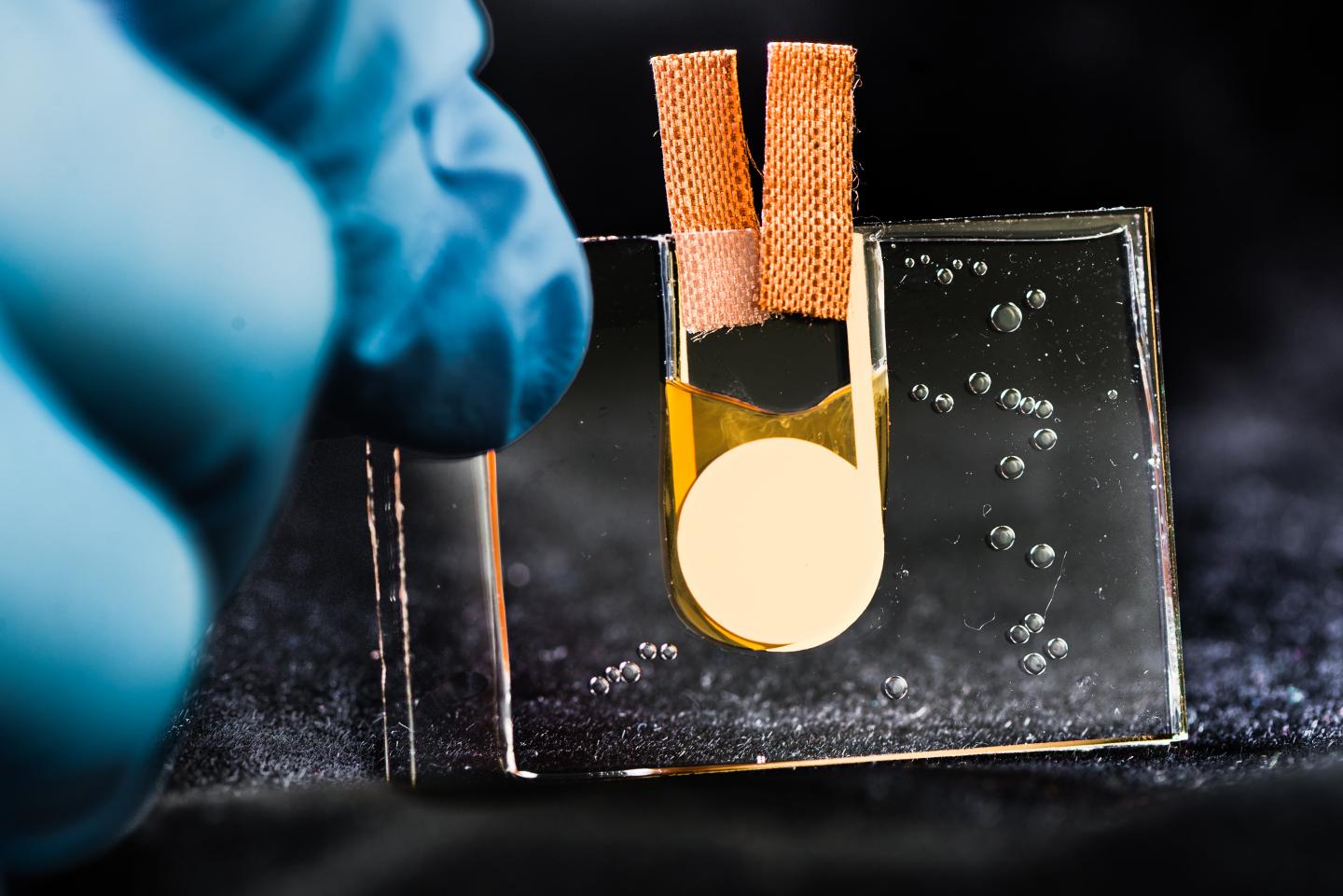
A new heat-driven transistor might lead to a number of new applications including use in heat cameras. Credit: Linköping University

A new heat-driven transistor may open up new possibilities for use in heat cameras and other applications.

Researchers from Linköping University in Sweden have developed a new transistor that can be used in a number of applications, including detecting small temperature differences and using functional medical dressings in which the healing process can be monitored.

“We are the first in the world to present a logic circuit, in this case a transistor, that is controlled by a heat signal instead of an electrical signal,” Xavier Crispin, a professor with the Laboratory of Organic Electronics at Linköping University, said in a statement.

The heat-driven transistor is an advancement of previous research that led to a supercapacitor being produced last year that was charged by the sun’s rays. In the capacitor, heat is converted to electricity and then stored in the capacitor until it is needed.

The transistor has a high sensitivity to heat, 100 times greater than traditional thermoelectric materials, which means that a single connector from the heat-sensitive electrolyte, which acts as a sensor to the transistor circuit, is sufficient.

Then one sensor can be combined with one transistor to create a “smart pixel.”

Then a matrix of smart pixels can be used instead of the sensors that are currently used to detect infrared radiation in heat cameras.

The new technology may potentially enable a new heat camera in a mobile phone at a low cost because the materials required are neither expensive, rare or hazardous.

The research team searched among conducting polymers and produced a liquid electrolyte—consisting of ions and conducting polymer molecules—with a 100 times greater ability to convert a temperature gradient to electric voltage than the electrolytes previously used.

The positively charged ions are small and move rapidly, while the negatively charged polymer molecules are large and heavy.

If one side is heated, then the small ions move rapidly towards the cold side and a voltage difference arises.

“When we had shown that the capacitor worked, we started to look for other applications of the new electrolyte,” Crispin said.

The study was published in Nature Communications

Related Articles Read More >

New video series: Travel for engineers
Advanced Manufacturing and Process Innovation Special Report: When you can’t hire, you automate
Pancreas or pancreatic cancer with organs and tumors or cancerous cells 3D rendering illustration with male body. Anatomy, oncology, disease, medical, biology, science, healthcare concepts.
AI tool used to detect pancreatic cancer in routine CT scans in China 
R&D 100 Red Carpet: DuPont’s triple win
rd newsletter
EXPAND YOUR KNOWLEDGE AND STAY CONNECTED
Get the latest info on technologies, trends, and strategies in Research & Development.
RD 25 Power Index

R&D World Digital Issues

Fall 2025 issue

Browse the most current issue of R&D World and back issues in an easy to use high quality format. Clip, share and download with the leading R&D magazine today.

R&D 100 Awards
Research & Development World
  • Subscribe to R&D World Magazine
  • Sign up for R&D World’s newsletter
  • Contact Us
  • About Us
  • Drug Discovery & Development
  • Pharmaceutical Processing
  • Global Funding Forecast

Copyright © 2026 WTWH Media LLC. All Rights Reserved. The material on this site may not be reproduced, distributed, transmitted, cached or otherwise used, except with the prior written permission of WTWH Media
Privacy Policy | Advertising | About Us

Search R&D World

  • R&D World Home
  • Topics
    • Aerospace
    • Automotive
    • Biotech
    • Careers
    • Chemistry
    • Environment
    • Energy
    • Life Science
    • Material Science
    • R&D Management
    • Physics
  • Technology
    • 3D Printing
    • A.I./Robotics
    • Software
    • Battery Technology
    • Controlled Environments
      • Cleanrooms
      • Graphene
      • Lasers
      • Regulations/Standards
      • Sensors
    • Imaging
    • Nanotechnology
    • Scientific Computing
      • Big Data
      • HPC/Supercomputing
      • Informatics
      • Security
    • Semiconductors
  • R&D Market Pulse
  • R&D 100
    • 2025 R&D 100 Award Winners
    • 2025 Professional Award Winners
    • 2025 Special Recognition Winners
    • R&D 100 Awards Event
    • R&D 100 Submissions
    • Winner Archive
  • Resources
    • Research Reports
    • Digital Issues
    • Educational Assets
    • R&D Index
    • Subscribe
    • Video
    • Webinars
    • Content submission guidelines for R&D World
  • Global Funding Forecast
  • Top Labs
  • Advertise
  • SUBSCRIBE