Research & Development World

  • R&D World Home
  • Topics
    • Aerospace
    • Automotive
    • Biotech
    • Careers
    • Chemistry
    • Environment
    • Energy
    • Life Science
    • Material Science
    • R&D Management
    • Physics
  • Technology
    • 3D Printing
    • A.I./Robotics
    • Software
    • Battery Technology
    • Controlled Environments
      • Cleanrooms
      • Graphene
      • Lasers
      • Regulations/Standards
      • Sensors
    • Imaging
    • Nanotechnology
    • Scientific Computing
      • Big Data
      • HPC/Supercomputing
      • Informatics
      • Security
    • Semiconductors
  • R&D Market Pulse
  • R&D 100
    • 2025 R&D 100 Award Winners
    • 2025 Professional Award Winners
    • 2025 Special Recognition Winners
    • R&D 100 Awards Event
    • R&D 100 Submissions
    • Winner Archive
  • Resources
    • Research Reports
    • Digital Issues
    • Educational Assets
    • Subscribe
    • Video
    • Webinars
    • Content submission guidelines for R&D World
  • Global Funding Forecast
  • Top Labs
  • Advertise
  • SUBSCRIBE

New Exoskeleton Could Help Paraplegics Stand, Walk

By Kenny Walter | November 27, 2017

A new exoskeleton may help paralyzed people stand and possibly walk.

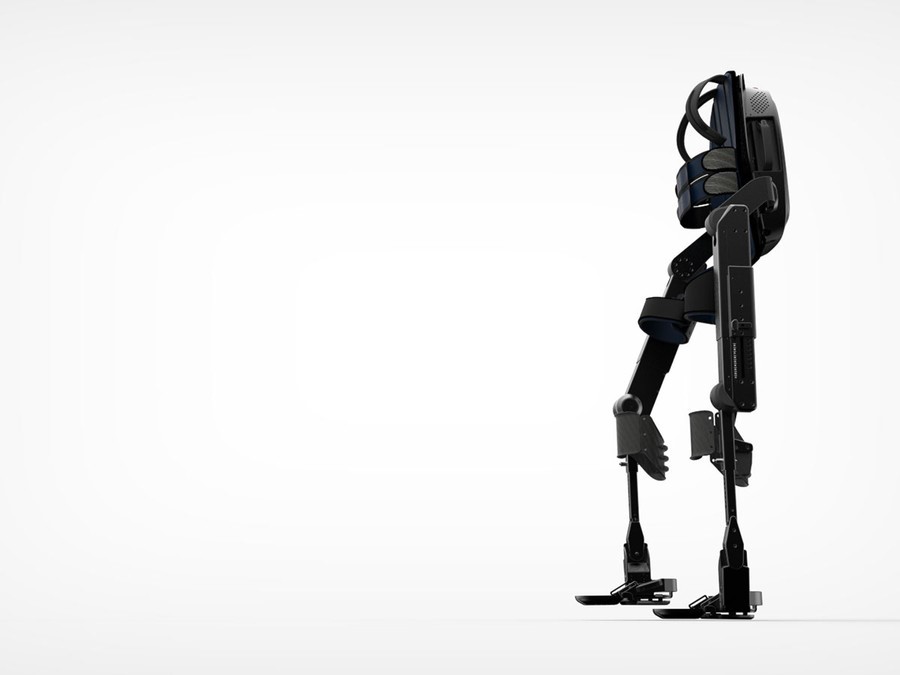
Bionik Laboratories, based in Boston and Toronto, has created ARKE, a one-size fits all exoskeleton that connects to the company’s cloud software to assist wheelchair-bound individuals with standing and walking during rehabilitation.

Michal Prywata, Bionik’s co-founder and chief technology officer, said in an interview with R&D Magazine, that the exoskeleton, which is currently in clinical testing, was created to help disabled people regain some normalcy in their lives.  

“It’s essentially an exoskeleton that allows people who are severely disabled to walk,” he said. “The device has a series of sensors and control algorithms that allow the person to do that.

“Not that someone who is paralyzed could 100 percent recover because their spine is severed, but there are a lot of negative side effects of being seated all day,” he added.

ARKE is constructed with carbon fiber, aluminum and steel and connects to Bionik’s cloud software where data is analyzed and displayed back to the physiotherapist in real-time. ARKE would be the first exoskeleton with tablet control integration.
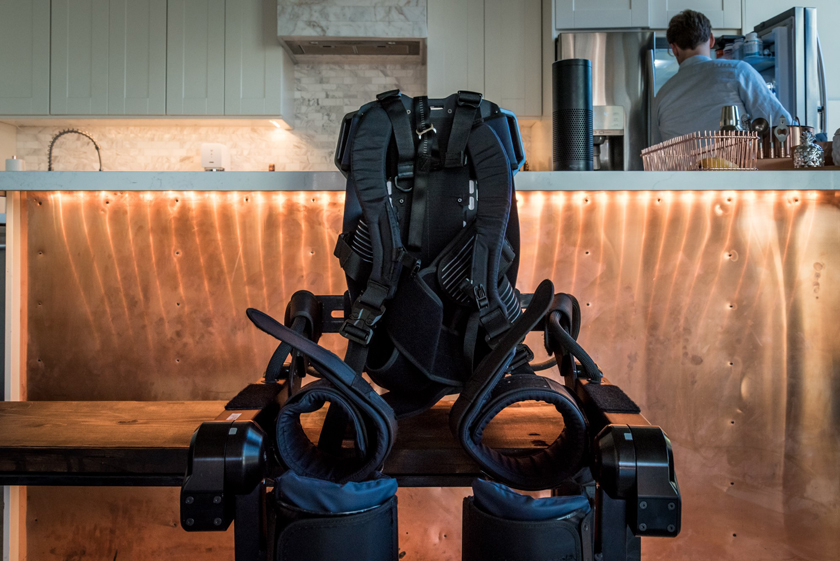
Prywata said ARKE’s major advantage over other exoskeletons is its ability to contort to the individual user.

“We’ve developed dynamic walking gait trajectories based on the user’s profile,” he said. “The device senses their weight, it knows their size, their height and it basically will adjust how it walks based on the person that’s inside of it.

“It is kind of like a one device fits all because it is fully adjustable for any type of person that goes into it,” he added. “All those sensors work in unison, sending information to the main processing unit, which sends information to the motors on how they are supposed to behave. What that information tells the central processing unit is the balance of the person, how they are shifting their body weight.”

Prywata explained developing exoskeletons is difficult because, unlike other forms of assistive technology, an exoskeleton must account for several human variables.

“With the exoskeleton technology it is a little riskier because they are paralyzed and you are taking them from a wheel chair and putting them upright, they are not used to it,” he said. “The technology involved is a little more difficult, there is a lot more sensing that has to happen, there is a lot more real-time analysis that has to happen, there is machine learning involved.

“There’s a lot more that could potentially go wrong, so it is just a riskier situation,” he added. “What happens when they lose their balance or take a wrong step, the system has to be able to compensate for those things.”

According to Prywata, ARKE is designed for therapy use and is unlikely to be able to be used by patients at home.

However, Bionik is creating an exoskeleton that would be more suitable for consumer use in the home, targeting older individuals who may be struggling to walk.

“They just need that extra boost to be able to comfortably walk,” Prywata said, adding that there are an estimated 18 million people in the U.S. who cannot walk more than a quarter of a mile.    
Related Articles Read More >

New video series: Travel for engineers
Advanced Manufacturing and Process Innovation Special Report: When you can’t hire, you automate
Pancreas or pancreatic cancer with organs and tumors or cancerous cells 3D rendering illustration with male body. Anatomy, oncology, disease, medical, biology, science, healthcare concepts.
AI tool used to detect pancreatic cancer in routine CT scans in China 
R&D 100 Red Carpet: DuPont’s triple win
rd newsletter
EXPAND YOUR KNOWLEDGE AND STAY CONNECTED
Get the latest info on technologies, trends, and strategies in Research & Development.

R&D World Digital Issues

Fall 2025 issue

Browse the most current issue of R&D World and back issues in an easy to use high quality format. Clip, share and download with the leading R&D magazine today.

R&D 100 Awards
Research & Development World
  • Subscribe to R&D World Magazine
  • Sign up for R&D World’s newsletter
  • Contact Us
  • About Us
  • Drug Discovery & Development
  • Pharmaceutical Processing
  • Global Funding Forecast

Copyright © 2026 WTWH Media LLC. All Rights Reserved. The material on this site may not be reproduced, distributed, transmitted, cached or otherwise used, except with the prior written permission of WTWH Media
Privacy Policy | Advertising | About Us

Search R&D World

  • R&D World Home
  • Topics
    • Aerospace
    • Automotive
    • Biotech
    • Careers
    • Chemistry
    • Environment
    • Energy
    • Life Science
    • Material Science
    • R&D Management
    • Physics
  • Technology
    • 3D Printing
    • A.I./Robotics
    • Software
    • Battery Technology
    • Controlled Environments
      • Cleanrooms
      • Graphene
      • Lasers
      • Regulations/Standards
      • Sensors
    • Imaging
    • Nanotechnology
    • Scientific Computing
      • Big Data
      • HPC/Supercomputing
      • Informatics
      • Security
    • Semiconductors
  • R&D Market Pulse
  • R&D 100
    • 2025 R&D 100 Award Winners
    • 2025 Professional Award Winners
    • 2025 Special Recognition Winners
    • R&D 100 Awards Event
    • R&D 100 Submissions
    • Winner Archive
  • Resources
    • Research Reports
    • Digital Issues
    • Educational Assets
    • Subscribe
    • Video
    • Webinars
    • Content submission guidelines for R&D World
  • Global Funding Forecast
  • Top Labs
  • Advertise
  • SUBSCRIBE